


/file/publisher-c1a3f893382d2b2f8a9aa22a654d9c97/2022/09/1b760ce7b834f4c861dc0eaa148c3078.jpg)

HISTORY | Malaya was never a British colony?
HISTORY | Recently, a local academic in a TikTok video claimed that Malaya was never colonised. Similarly, about a decade ago, an academic from the National Professors’ Council argued that Malaya, with the exception of the Straits Settlements, was never a British colony. The Malay states were deemed to be protectorates.
In a similar vein, a leading Malaysian historian in 2011 commented that from a legal point of view, Malaya was never colonised because the rulers of the Malay states maintained sovereignty. He added further that the British never ruled Malaya; they had merely taken over the administration of Malaya.
How valid are these claims? Who really ruled Malaya – the Malay rulers or the British...
HISTORY | Recently, a local academic in a TikTok video claimed that Malaya was never colonised. Similarly, about a decade ago, an academic from the National Professors’ Council argued that Malaya, with the exception of the Straits Settlements, was never a British colony. The Malay states were deemed to be protectorates.
In a similar vein, a leading Malaysian historian in 2011 commented that from a legal point of view, Malaya was never colonised because the rulers of the Malay states maintained sovereignty. He added further that the British never ruled Malaya; they had merely taken over the administration of Malaya.
How valid are these claims? Who really ruled Malaya – the Malay rulers or the British?
Let’s begin by clarifying the terms “colony” and “protectorate”. As defined in the Oxford Advanced Learner’s Dictionary (2015), a colony is “a country or an area that is governed by people from another, more powerful, country”. A colony is directly possessed by the colonial power (suzerain state).
In the case of a protectorate, it has been defined as “a country that is controlled and protected by a more powerful country”. A protectorate is a sovereign entity that depends on another stronger power for protection from invasion.
Hence, technically, there are structural differences between a colony and a protectorate. A colony is governed internally and externally by a foreign power, whilst a protectorate is a political unit that governs itself internally with the foreign power controlling its external relations.
In the case of the British Empire, a colony is generally placed under the control of a governor. On the other hand, a protectorate generally has its local rulers with autonomy in terms of governance and internal affairs. It is not directly possessed and is usually established by treaty arrangements.
It is true that pre-war Malaya was divided into three distinct groups of states: the Straits Settlements of Penang, Malacca, and Singapore which were British colonies and administered directly by the Colonial Office in London; the Federated Malay States of Perak, Selangor, Pahang, and Negeri Sembilan were protectorates with British Residents, and strictly speaking were not colonies; and the Unfederated Malay States of Perlis, Kedah, Kelantan, Terengganu, and Johor with British Advisers were also protectorates.
Historically, the Colonial Office took over control of the Straits Settlements, which was formed in 1826, from India in 1867. The Straits Settlements became a Crown Colony with direct rule under a governor. British control was absolute and all those born in the Straits Settlements were British subjects.
With regard to the Malay states of Perak, Selangor, Negeri Sembilan, and Pahang, the British introduced the Residential System, a system of indirect rule through the appointment of British Residents. Under the Residential System, the Malay rulers maintained their sovereignty but the British Resident’s advice “must be acted upon on all questions other than those touching Malay religion and customs.”
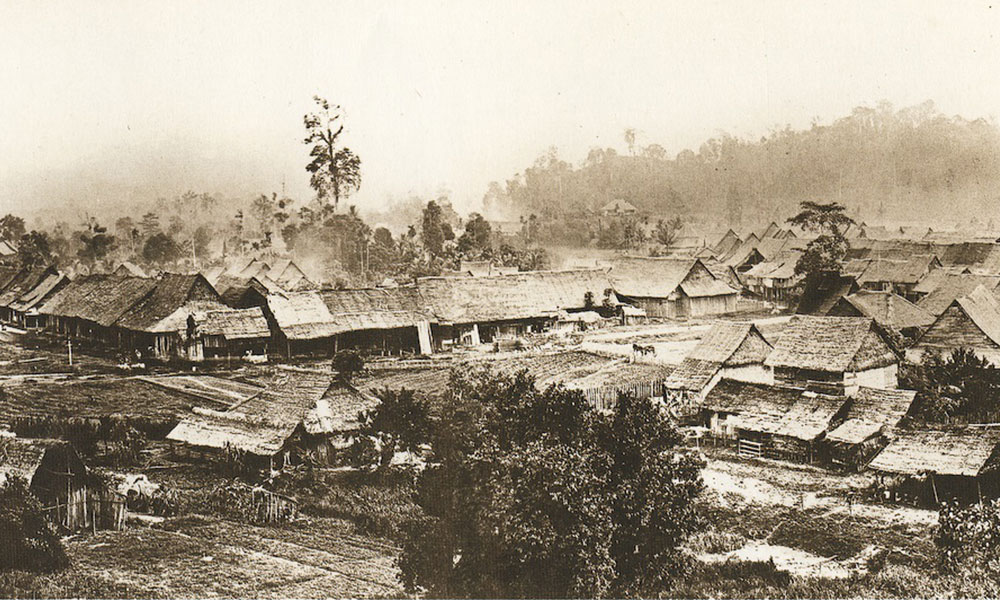
Subsequently, in 1896, the stated four Malay States were amalgamated to form the Federated Malay States (FMS) with its capital in Kuala Lumpur and placed under the overall control of the Resident-General, the first being Sir Frank Swettenham.
To enlarge British Malaya, Britain in 1909 gained control of the four northern Malay states of Kedah, Perlis, Kelantan, and Terengganu from Siam (now Thailand) through the Anglo-Siamese Treaty of 1909.
In 1914, the Johor sultan agreed to accept a British General Adviser. These five Malay States came to be known as the Unfederated Malay States (UMS).
‘Ceremonial figureheads’
It can be argued that the FMS, despite being labelled as protectorates, were in terms of an administrative structure operating as a colony.
The executive head of each state government was the British Resident and the day-to-day administration was completely in the hands of British officers. Each state was divided into a number of administrative districts under the charge of British district officers. Additionally, the federal departments were dominated by British officers.
As stated by AC Milner, a renowned historian, the sultans were essentially “ceremonial figureheads”. Similarly, Robert Heussler in his book ‘British Rule in Malaya’, concluded that the “FMS royals were nothing more than marionettes.”
In this regard, Sultan Iskandar Shah, the enlightened ruler of Perak who spoke English fluently, visited London in 1924 to express his dissatisfaction with the loss of political power. He spoke with the king and conferred with the secretary of state. Sultan Iskandar Shah lamented that the State Council had no power; power was centralised in the Federal Council.
It is an undeniable historical fact, as succinctly stated by John Gullick in his book ‘Malaysia: Economic Expansion and National Unity’, that the “Malay rulers (particularly in the FMS) had lost most of their political and economic power to the British-dominated bureaucracy.” He adds further that “the final authority for the whole of Malaya lay with the Colonial Office in London.”
The nature of British rule in Malaya is probably best summed up by Lennox A Mills in his book ‘Malaya: A Political and Economic Appraisal’: “In actual practice, there was little difference between the administration of the crown colony and the protectorates. British authority was much the same in both. The real rulers of Malaya were the British although, legally, every act of the government was done in the name of the ruler.”
Mills’ opinion is buttressed by that of Heussler: “In many respects, the Straits Settlements and the federated states were a unified British colony, although the sovereignty of the states remained a legal fact.”
Interestingly, British rule in Malaya which was geared towards economic development, particularly in the FMS, resulted in the creation of a plural society.
In the words of Rupert Emerson, a renowned American professor of political science and international relations, the FMS had “largely lost their Malay character and have taken on a markedly Chinese-Indian-British complexion.”
It is important to note that British control in the UMS was much looser compared to that of the FMS. The UMS had a British Adviser (known as General Adviser in Johor), and not Resident. In executing his duties, the British Adviser in the UMS had a few British administrators.
For example, in Kelantan, besides the British Adviser, there was an assistant adviser, a collector of land and revenue, a High Court judge, a magistrate, a chief of police, a medical officer, and two Public Works officers, of whom all were Europeans.
In the UMS, as stated by NJ Ryan in his book ‘The Making of Modern Malaya’, the Malay rulers remained more independent than their counterparts in the FMS whilst the British Advisers remained more like advisers and less like executive officers. As aptly summed up by John Gullick, “the government of the UMS retained more of its Malay character although subject to considerable British influence.”
To conclude, the British were indeed the de facto rulers of Malaya. How else can one explain the necessity of seeking independence from Britain in 1957 and the annual celebration of ‘Hari Kemerdekaan’? Let’s not muddle up our history by playing with semantics and stretching the truth.
RANJIT SINGH MALHI is an independent historian who has written 19 books on Malaysian, Asian, and world history. He is highly committed to writing an inclusive and truthful history of Malaysia based on authoritative sources.
The views expressed here are those of the author/contributor and do not necessarily represent the views of Malaysiakini.
/file/publisher-c1a3f893382d2b2f8a9aa22a654d9c97/2022/09/2274ab3d69514999c40c08a6a21e0343.jpg)



Are you sure you want to delete this comment?
This action cannot be undone.