


/file/1051/db65da8b07074ab531588dbb5d41aaab.jpg)

COMMENT | Marching on in the next decade
COMMENT | Who wouldn’t like a little bit of nostalgia? Of when things were simpler when we knew who the good guys were, and who were the bad guys (or so we thought).
Reading through the oral histories of Bersih 1.0 certainly offers that little bit of relief as we fumble around in the present. How did they pull it off? Could we do it again?
I am therefore grateful that Danny Lim has written “We are Marching Now”, published by Matahari Books, which chronicles the behind-the-scenes development of Bersih 1.0 through recollections of the (then) young-ish activists and politicians involved (disclaimer: Matahari is also my publisher).
It is able to make clear the thinking, challenges, and frustrations involved in building broad-based movements, with the added benefit of being an enjoyable read cover-to-cover. Anyone seriously interested in making a change should read this book...
COMMENT | Who wouldn’t like a little bit of nostalgia? Of when things were simpler when we knew who the good guys were, and who were the bad guys (or so we thought).
Reading through the oral histories of Bersih 1.0 certainly offers that little bit of relief as we fumble around in the present. How did they pull it off? Could we do it again?
I am therefore grateful that Danny Lim has written “We are Marching Now”, published by Matahari Books, which chronicles the behind-the-scenes development of Bersih 1.0 through recollections of the (then) young-ish activists and politicians involved (disclaimer: Matahari is also my publisher).
It is able to make clear the thinking, challenges and frustrations involved in building broad-based movements, with the added benefit of being an enjoyable read cover-to-cover. Anyone seriously interested in making a change should read this book.
There is no need to go into great detail about the book, as others already have. What I took away from it is the pattern of established political parties and non-governmental organisations going into defence mode after suffering major setbacks.
In 2004, it was the general election, in 2020, it was the Sheraton Move. Either way, we see similar paralysis in responding to recapture the public’s imagination. It required the imagination of the band of individuals with the vigour and big-picture vision of creating a cross-society platform able to inspire Malaysians and yank major players out of their stupor.
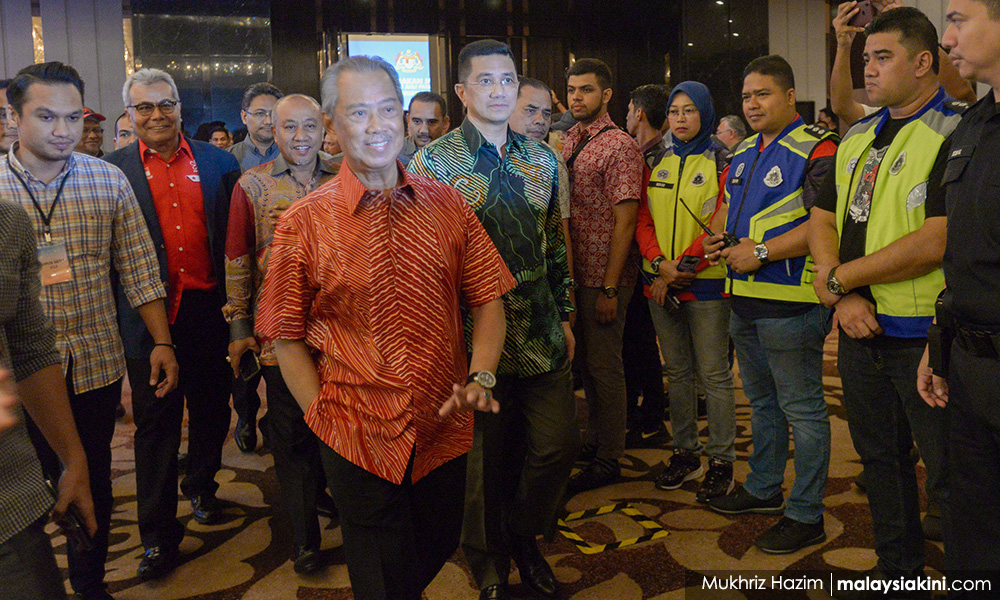
This is not to say that no political imagination exists today. In fact, the opposite is true; there are exponentially more groups and platforms seeing more visions than before, with their respective communication platforms and followings, making it hard to keep track of who’s saying what and where.
Aksi (action) is also more commonplace than it was in the bad old days when tear gas and beatings were the norms. There is no doubt that we are in a different phase of democratic development, perhaps it is also helpful to think about whether the same recipe will still work.
Bargain-hunting voters
Beyond the growth and expansion of the internet, social media and smartphones, the increasing bargaining power of voters may be where things are most significantly different than in the period leading up to the 12th general election.
There are more credible choices available and all parties have to compete fiercely among themselves for a majority. Electorally, the situation today is more complex (but not unprecedented) and parties cannot take any single voter for granted.
Voters’ mindsets are also a lot more sophisticated. There is a more cost-benefit take on political choices, where voters would look for candidates and parties with the best incentives and credibility to be given their trust.
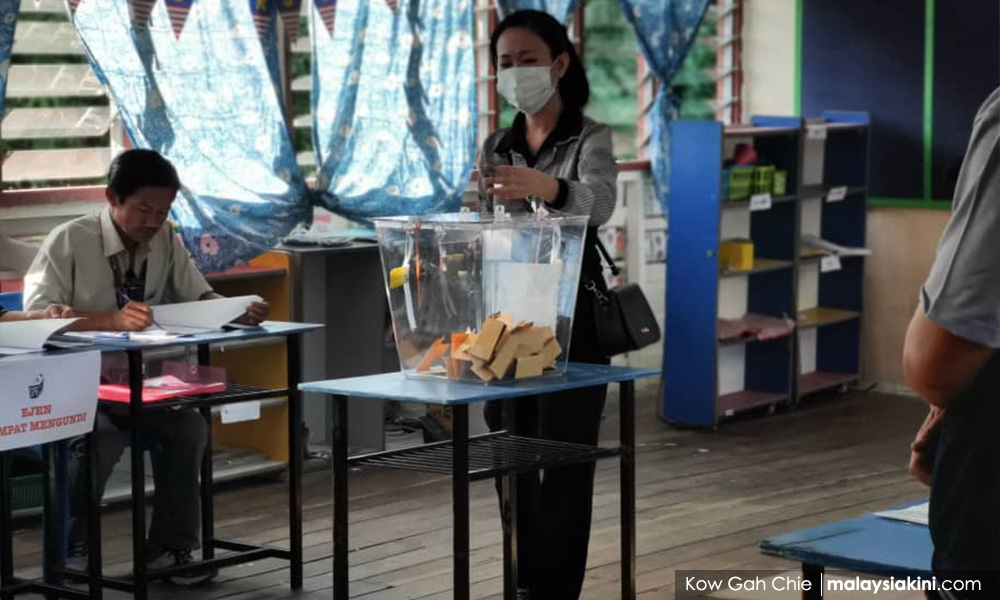
In a way, established parties have it harder, since their track record can be a disadvantage. Voters will be more sceptical of their ability to fulfil what is promised during the election campaign.
This is not necessarily bad, as weakened political parties can be forced to think beyond their immediate gains to be relevant to the larger population. Political scientist Daron Acemoglu proposed that governments that are “consensually strong” but composed of weak parties that are easily replaced, can govern efficiently if citizens can be satisfied that the political players will act responsibly.
Proper education, not propaganda
This more selfish view may be at odds with what will be of benefit to the larger Malaysian population. What will be personally beneficial to an individual often comes at a communal cost, for example, lower import duties on cars, which will promote greater car ownership when urban roads are already congested.
I agree with my former colleague Hafiz Noor Shams that we first need to collectively decide what we want for Malaysia and agree on overarching goals for healthcare, education, economy and other areas of policy.

Additionally, there is still a lot of education that needs to be done to fully understand what our strengths and shortcomings are, based on a lot of research that still needs to be done.
Otherwise, political decisions will continue to be informed by perceptions and biases, made worse by industrial-strength targeted misinformation and propaganda that push people further apart.
We may still be able to come to a consensus today based on the lowest common denominator, but it may only be slightly better than the status quo.
This is the project that needs to be tackled by progressive groups over the next decade. Where the running thread of the Bersih 1.0 story was winning over the handful of top political leaders, this phase requires the capture of hundreds of thousands, or even millions of Malaysian hearts of minds, from all walks of life.
Elections and legislative control remain important, but for a major paradigm shift, we will need Malaysians to know and want better.
LUTFI HAKIM ARIFF is co-founder and podcaster at Waroeng Baru, a not-for-profit collective to promote democratic participation and resilience. He is also the co-author of the book "Parliament, Unexpected" and an unrepentant believer in the power of local independent media. Lutfi tweets at @ltf_ha.
The views expressed here are those of the author/contributor and do not necessarily represent the views of Malaysiakini.
/file/publisher-c1a3f893382d2b2f8a9aa22a654d9c97/2022/09/f9decc74a1b052c98789d7c3df59bb6f.jpg)
/file/publisher-c1a3f893382d2b2f8a9aa22a654d9c97/2020/10/aef2b00854807196d5d5054cfba4b041.jpg)
/file/publisher-c1a3f893382d2b2f8a9aa22a654d9c97/2022/03/1339be035f41140ddae54e5ef8c7d6cc.jpg)
/file/1015/2e02a4d094a55db9b13837bba41aa75f.jpg)
/file/publisher-c1a3f893382d2b2f8a9aa22a654d9c97/2019/08/9d2a83314c0a4cd130198ec1c44c2cbb.jpg)


Report this comment
Are you sure you want to delete this comment?
This action cannot be undone.