


/file/publisher-c1a3f893382d2b2f8a9aa22a654d9c97/2022/11/33d43cb8972a00b201a1952920655cf2.jpg)

COMMENT | Journalism under attack again
About 20 years ago, a group of American students on an exchange programme turned up at the office wanting to know about the media in Malaysia. After the customary tour of the office, it was question time.
The session went along these lines:
“Where does the government agent sit? I was told that all the news in Malaysian newspapers is censored,” one of the students said.
“Who let out this secret?” I asked in jest.
“My Malaysian host told me that you can’t believe anything that is reported,” she continued.
“Oh, the censor? He only comes into the office in the evening and occupies the editor’s chair. With a red pencil in his hand, he goes through the printouts of the day’s news and deletes whatever is not palatable to him,” I answered.
She seemed to have accepted the answer until I told her it was a myth and that the editor had the final say in what went out the next morning.
This summed up the public’s perception of newspapers in the bad old days when ‘patriotic editors’ occupied their seats to facilitate what the government wanted you to read.
The situation has changed drastically over the years...
COMMENT | About 20 years ago, a group of American students on an exchange programme turned up at the office wanting to know about the media in Malaysia. After the customary tour of the office, it was question time.
The session went along these lines:
“Where does the government agent sit? I was told that all the news in Malaysian newspapers is censored,” one of the students said.
“Who let out this secret?” I asked in jest.
“My Malaysian host told me that you can’t believe anything that is reported,” she continued.
“Oh, the censor? He only comes into the office in the evening and occupies the editor’s chair. With a red pencil in his hand, he goes through the printouts of the day’s news and deletes whatever is not palatable to him,” I answered.
She seemed to have accepted the answer until I told her it was a myth and that the editor had the final say in what went out the next morning.
This summed up the public’s perception of newspapers in the bad old days when ‘patriotic editors’ occupied their seats to facilitate what the government wanted you to read.
The situation has changed drastically over the years. To his credit, Abdullah Ahmad Badawi who succeeded Dr Mahathir Mohamad gave the media more space and independence.
But his successor, Najib Abdul Razak, made no attempts to curb such freedom until the 1MDB scandal made the headlines all over the world in 2015.
His media team went into overdrive and it came to a stage when the word “1MDB” was banned or prevented from being published unless it was complimentary of the prime minister or the government.
Those who reported the issue were either demonised or the publication was suspended under the Printing Presses and Publications Act 1984.
Who could forget the interview over national television where three senior editors ‘exonerated’ Najib with a series of scripted questions and answers?
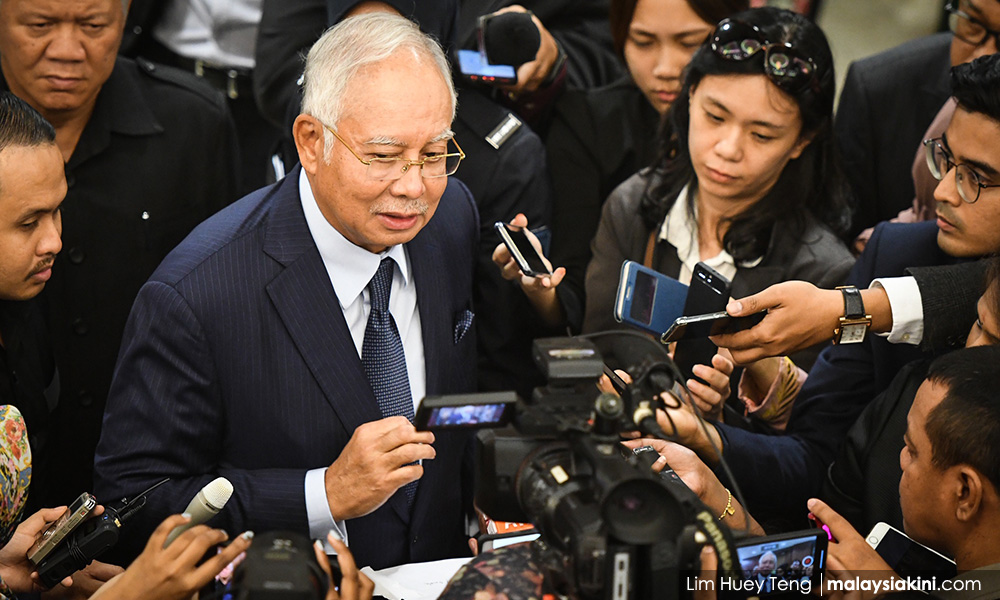
Various editorials and columnists extolled the virtues of him and his wife, blatantly ignoring the voluminous reports from the foreign media on the scandal. Anyone not toeing the line was vilified and some even lost their jobs.
Winds of change
In 2018, a new government was in place and thereafter, there were intermittent incidents of attempting to rein in the media. There was hardly any open “interference” by the governments of Muhyiddin Yassin or Ismail Sabri Yaakob.
However, the political appointees did the needful to ensure negative stuff was kept out.
Upon taking office, Anwar Ibrahim never lost the opportunity to hammer home his promise of press freedom.
At that time, I wrote: “Now, with a new government and a new prime minister who has promised openness and accountability, the media should ensure that similar shenanigans will not be repeated and the people will not have to be burdened by the theft of public money.”
Anwar has continuously repeated his mantra on media freedom.
“The government is committed to ensuring the freedom and openness of the media in addition to guaranteeing that the checks and balance processes continue to thrive and function well,” he said in May after Malaysia’s position in the 2022 World Press Freedom Index released by Reporters Without Borders (RSF) improved.
Then, in July, he reiterated his stand by saying that for the rakyat to be provided with fair and accurate news and information, media freedom should be uplifted and empowered.
But has this been all empty talk or are some hidden hands undermining his initiative?
On the contrary
The events of the past week and the statement by the MCMC seem to contradict and defy Anwar’s promises.
The commission even went on to suggest how newsmen should present their reports claiming “that some reporting has been weaponised to manipulate the content and fuel disrespectful and divisive narrative”.
Emphasising the importance of accurately representing the context of speeches delivered at Parliament and not using the content to spread hatred or incite provocation, it said in a statement last Friday: “It is essential that media practitioners exercise ethical judgment and refrain from weaponising news content to spread disinformation.”
This stemmed from what happened in Parliament and like millions of other Malaysians, I too saw what happened because the incident was telecast live and the video clip went viral.
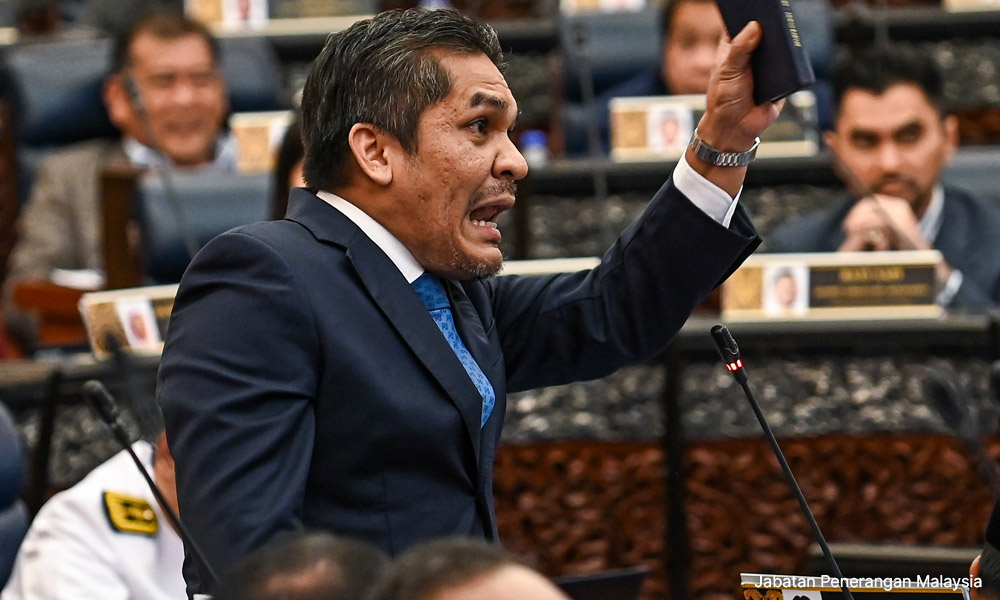
The rowdy exchange between government and opposition lawmakers, which led to Putrajaya MP Radzi Jidin being removed from the Dewan Rakyat, was there for all to see.
The incident was viewed and presented in many ways and some totally abstained from reporting it.
MCMC, wanting to play big brother, demanded amendments to or the withdrawal of an article published by MalaysiaNow, which ignored the request at the time of writing and is still accessible.
The commission claimed the article in question had reported parliamentary proceedings out of context with the intent to “spread hatred or incite provocation”.
So, what is the fuss, MCMC? What was so wrong about it? Who decided it was taken out of context and who ruled that it spread hatred?
Enough is enough
Like many other concerned journalists on the conduct of our MPs, my commentary was a pitiless assessment of what took place.
Are we supposed to portray the government MPs as angels and the others across the floor as devils?
I agree with the strong words of a group of media veterans who were of the view that the response from MCMC is a reflection of the shallowness of understanding of the roles and responsibilities of the media, claiming that it proves that the commission is “hiding behind the Communication and Multimedia Act of 1998 to justify its existence and actions”.
What will they decree next? Will they tell journalists how to present their stories on lifestyle and entertainment? Or will they order us to use specific photographs and sizes of government leaders and their spouses?
While the prime minister is walking the talk, why are the MCMC officials doing otherwise? Or are they insinuating that the government is beyond question?
In an article earlier this month on the same subject, I had alluded that we going back to the bad old days.
Enough is enough. Let us do our jobs diligently without fear or favour. Pardon me for the over-used cliché, but you should facilitate, not frustrate journalists.
R NADESWARAN is a veteran journalist who writes on bread-and-butter issues. Comments: citizen.nades22@gmail.com
The views expressed here are those of the author/contributor and do not necessarily represent the views of Malaysiakini.
/file/publisher-c1a3f893382d2b2f8a9aa22a654d9c97/2023/09/ecb46d6f3fe5f0adc8fc4cbe5fef9770.jpg)
/file/publisher-c1a3f893382d2b2f8a9aa22a654d9c97/2023/09/9da2bfb934c6caea51091c720234ccd9.jpg)
/file/publisher-c1a3f893382d2b2f8a9aa22a654d9c97/2022/08/5032a84dc32ef0c22c26a44dffeb91d9.jpg)
/file/publisher-c1a3f893382d2b2f8a9aa22a654d9c97/2023/09/42d601ad1a2d22286e9bee3fc09b6009.jpg)
/file/publisher-c1a3f893382d2b2f8a9aa22a654d9c97/2023/09/2dedf58ddc2260becaefebf33fe5d73a.jpg)
/file/publisher-c1a3f893382d2b2f8a9aa22a654d9c97/2021/03/c8eeedb0294e2440c6eceec47c868b11.jpg)
/file/publisher-c1a3f893382d2b2f8a9aa22a654d9c97/2023/07/9631d4dd9d832a1949f9cc8672e6e4a1.jpg)
/file/publisher-c1a3f893382d2b2f8a9aa22a654d9c97/2023/09/e649cfd97ed4c4e34fd9c457f5e61a48.jpg)
/file/publisher-c1a3f893382d2b2f8a9aa22a654d9c97/2021/03/d26efc7bdeda884931039d8312086278.jpg)


Report this comment
Are you sure you want to delete this comment?
This action cannot be undone.