




Who am I? Pt 1: A schizophrenic existence
Who am I? Who are you?
These are questions of personal identity that will haunt us in our moments of lucid aloneness.
In race crazed Malaysia, the first answer to these questions is one based on race. I am Chinese/Malay/Indian/others. I would be very uncomfortable if I come under the ambiguous and demeaning category of "others". Fortunately, I do not. By the decree of the Federal Constitution, I am a "Chinese", pure and simple. By and large, by my name and my appearance, I am pigeon-holed by my fellow countrymen over something outside my control: my birth.
If only I know what being a "Chinese" means!
Who am I? Who are you?
These are questions of personal identity that will haunt us in our moments of lucid aloneness.
In race crazed Malaysia, the first answer to these questions is one based on race. I am Chinese/Malay/Indian/others. I would be very uncomfortable if I come under the ambiguous and demeaning category of "others". Fortunately, I do not. By the decree of the Federal Constitution, I am a "Chinese", pure and simple. By and large, by my name and my appearance, I am pigeon-holed by my fellow countrymen over something outside my control: my birth.
If only I know what being a "Chinese" means!
As many of my Chinese friends would proclaim, "I am proud to be a Chinese." They are proud to be Chinese, they say, because of the five thousand years of very refined Chinese culture. I am sure it is a great culture, with which most people who are proud to be Chinese do not bother to acquaint themselves.
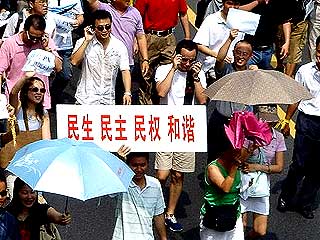 Who in Malaysia, would spend long hours meditating over the works of great Chinese thinkers like Confucius, Lao Tze, Zuang Tze, and the other one hundred great Chinese thinkers of the Spring/Autumn period 2,500 years ago? Indeed, how many Chinese people would buy and read Chinese books, listen to Chinese classical music, dabble in brush painting on rice paper, or practise the
Tai Chi
?
Who in Malaysia, would spend long hours meditating over the works of great Chinese thinkers like Confucius, Lao Tze, Zuang Tze, and the other one hundred great Chinese thinkers of the Spring/Autumn period 2,500 years ago? Indeed, how many Chinese people would buy and read Chinese books, listen to Chinese classical music, dabble in brush painting on rice paper, or practise the
Tai Chi
?
Then again, wholly English educated Chinese would still identify themselves as proud members of the ethnic group, even though they know little of Chinese high culture, and what goes on in the Chinese speaking community. The race based politics of Malaysia may have something to do with it.
Myth of blood ties powerful
Naturally, there is that undertone of blood ties. Many years ago, when I married a non-Chinese woman, I was roundly scolded by some Chinese women. They asked me accusatively whether all the Chinese women in the world had died off. Perhaps, in their eyes, I had committed the mortal sin of diluting or polluting the superior genes of my race.
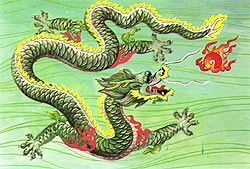 The myth of blood ties is a powerful one. In the Chinese speaking world, some people like to refer to themselves as the "descendents of the Dragon". It happens to be the title of a very popular and rousing Chinese pop song. .
When addressing fellow Chinese people, you call them "Tung Pao" in Mandarin, or literally "people from the same womb".
Nevertheless, the racist superstition in the magic of blood ties may not be valid scientifically. Having a common ancestor would mean propagation of the race through incest or marriage between siblings and close relatives, resulting in deformed children. Those with a basic general knowledge in the science of genetics would tell you that the purity of blood ties between members of a race may be detrimental to the future of the race!
In any case, I am told by experts that in the 5000-year old history of the Han Chinese in Mainland China, there had been numerous instances of conquest and migration of various ethnic groups. The possibility of keeping the blood pure in such a large chunk of land over five millennia is near zero.
Perhaps then the sense of ethnic belonging is nurtured, through one's social and family conditioning from a very young age. The entire ethnic myth could be just a cultural construct. The trouble with Chinese culture is that it is never statistic and that well defined. Even the term "culture" itself resists precise definition.
All we know is that Chinese culture tends to evolve differently in different loci of space-time. I have met many Chinese from overseas, including people from Mainland China, Taiwan, Hong Kong, and other parts of Asia, and - on reflection - I actually feel less sense of kinship with them than I would with the Ibans of Sarawak. But then, the problem could have been me, and not them, or the Chinese in general.
'Identity marker'
Nobody can deny his ethnic roots I suppose. My ethnic identity is an established empirical fact, thanks to my parents. I have had no say in the matter.
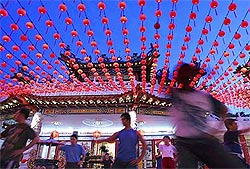 My Chinese friend says that self-identification with one's ethnic group is a useful identity "marker". Unfortunately, my intelligence and many years of reading thick volumes of books have failed me. I do not understand what is meant fully my "identity marker". I suppose it means something like a characteristic that identifies who you are to yourself and to others.
If, so there are many other "identity markers". I am right-handed or left handed, tall or short, dark or fair, male or female, Muslim or non-Muslim, young, old or middle-aged, Malaysian or non-Malaysian, and so on ad infinitum. Why am I not proud of being a member of any of the above?
Perhaps the question lies in the meaning in the scheme of things. Being a Chinese/Malay/Indian is important to many Malaysians; it gives the most meaning to their life. As we know, nobody can live with facts alone: there must be a meaning and a purpose in life.
In this sense, another "identity marker" is one's occupation. Often, strangers meeting for the first time would identify themselves as a doctor, a lawyer, an engineer, a computer expert, a journalist, a government officer and so on. Again, they are often proud of what they do.
This is understandable. Work gives us a valuable place in our society. We are somebody useful. By announcing our job, we also broadcast certain information about our skills, our level of education, our income and standard of living, and the well-being of our children.
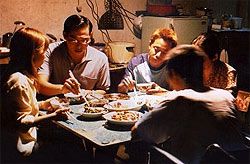 But consider poor me who has never had a steady job in my life. And now I have no job at all, being a pensioner. Every where I go to give a speech, people introduce me as an "ex-MP". Come to think of it, I am "ex" everything as I near 60. Soon I will be "ex" human being. No wonder people at various shopping centres, hawker stalls, and government departments look at me with either disdain or pity. I have no identity.
In this case, one can be proud of this "identity marker" only if one's job is something to be proud about. If you happen to be a garbage collector, a mail man, a prostitute, a gangster, then perhaps you would not want other people to know your occupation.
But do all these so-called identity markers solve the problem of who I am, really?
To a great extent, they tell others something about us, as an individual member of a group. They are particularly useful in social and political life. They are what we appear to others.
I am still unique
But appearance is not reality. All of us know that there are moments when people just do not understand us as individuals. Even long married people can be often struck with that sense of alienation and loneliness.
In the end, our private persona does not always coincide with our public face. There are many reasons for this anomaly. In most cases, people have something to hide. Perhaps it is the sense of protecting the privacy of the inner self. Perhaps individuals project a public image for some ulterior purposes. Naturally, that public face may distort the inner self, until the individual mistakes their mask for the skin of their face. This happens a lot in politics.
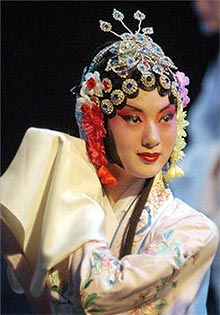 This is where most people make the mistake of believing in the public image portrayed by celebrities, political leaders, pop stars, and sports personalities. The culprit is inevitably the media. They tend to create a false picture of these public figures, making them into larger-than-life near-immortal beings almost like the Olympian gods of ancient Greece, when in fact, they are just ordinary, fallible, gullible, weak and mortal human beings like the rest of humanity.
Then again, the weak human race always need some false gods to worship on the high alter of public gaze anyway.
In any case, there will always be this gaping chasm between our inner and our outer lives. Despite all our so called identity markers, we know we are unique, and that there is only one "me" in this entire universe.
I may be classified as a Chinese, but I am different from approximately 1.5 billion Chinese in the world.
Why, I may be a human being, and a member of the ape family. I am still unique, and different from the six billion other human beings on this earth!
So who am I, really?
To be continued.


Are you sure you want to delete this comment?
This action cannot be undone.