


/file/publisher-c1a3f893382d2b2f8a9aa22a654d9c97/2022/10/21bb919a34e618d09f40dad377604c79.jpg)

COMMENT | What's in a name?
COMMENT | We Malaysians have been saying for years and years now that we don’t know whether to cry or to laugh when our politicians open their mouths and say something they think is clever or helpful.
Like Ismail Sabri Yaakob recently, regarding the naming of housing estates. I laughed till I cried.
When Shakespeare asked the above question in his play “Romeo and Juliet”, he meant that names themselves...
COMMENT | We Malaysians have been saying for years and years now that we don’t know whether to cry or to laugh when our politicians open their mouths and say something they think is clever or helpful.
Like Ismail Sabri Yaakob recently, regarding the naming of housing estates. I laughed till I cried.
When Shakespeare asked the above question in his play “Romeo and Juliet”, he meant that names themselves are a convention to distinguish people or things from one another and that these names do not have any worth or meaning.
But fortunately, useful words unlike names have a story worth telling.
Take the supposedly Malay word “denda” (fine). Given the cases of corruption and abuse of power piling up in our courts at a staggering rate, its usage is growing by leaps and bounds. Our jails will soon be full and many a wrongdoer may be given a rap on his knuckles and you guessed it, a denda, a fine.
Words like denda, unlike a name like Ismail, have evolved over time in their usage and meaning. When their origins are traced, they tell the story of a people and a country that no revisionist historian can hide or a “kangkung” (low quality) professor takes for a spin that exposes his real credentials.
Beauty of Sanskrit
Imagine a time centuries ago when the mighty empires of Srivijaya in Sumatra and Majapahit in Java ruled the roost of the Nusantara, the watery world of Southeast Asia. Imagine the glory of newly built Prambanan and Borobudur and the rajahs and menteri of these kingdoms.
Court language and religious liturgy relied greatly on what Ismail would have termed a “foreign language”, Sanskrit. Over the centuries the vocabulary of this language enriched the languages and dialects of the Malay world whether the Ismails of the day liked it or not.
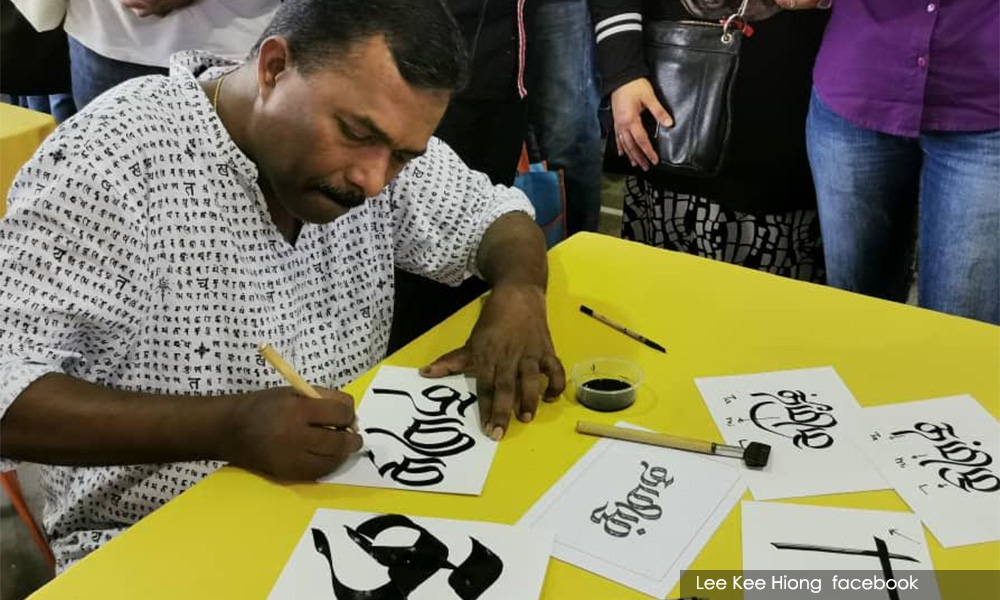
Like our beloved word denda whose origins can be traced back to Hindu/Buddhist mythology and religion. In these two religions, there is no concept of heaven or hell as places of permanent punishment or eternal enjoyment.
But like all religions, there is the concept of punishment for sin and transgression.
A mythical figure called Dandapani dishes out the punishment for sin using a cane, a danda in Sanskrit. It’s believed a single searing stroke of the danda will bring about the redemption of the sinner by making him realise his past mistakes and wrongs. Can you blame me for thinking of the 1MDB goons?
Anyway, as they say, pun intended, “different folks, different strokes” and we will leave it at that. The danda of Dandapani over time became associated with sin, crime and punishment much in the same way the Chinese word, “kawtim”, meaning “to settle” or “resolve” has entered the everyday Malay lexicon.
Get real!
I predict that in 100 years or less, kawtim will enter the Dewan Bahasa dan Pustaka dictionary. Reason: suffixes and prefixes are being attached to this word with great alacrity by Malaysians, particularly those with authority. Like, “Perkara ini boleh dikawtimkan” (This matter can be settled). Nice!
There are many, many other words like denda. Over millennia, thousands and thousands of words from all over the world have entered the Malay language - Tamil, Arabic, Chinese, English, Thai - you name it! The genius of the Malay language, like all languages, lies in it making all these words its own!
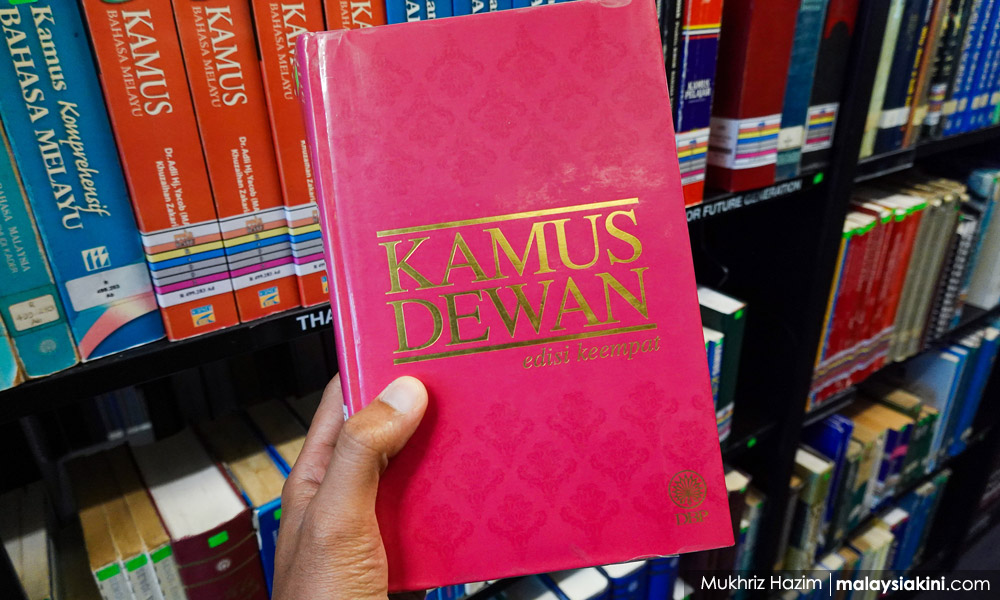
Check out your copy of the dictionary, Ismail! I am afraid Taman Batu, Taman Kayu and Taman Pokok are no match for Taman Gembira, Taman Bahagia and Taman Jaya.
Surely the country has more important priorities to deal with than the names of housing estates. Matters like the unfolding horrors of Global Ikhwan Service and Business Holdings.
Perhaps the time has come for our Parliament to denda politicians who, frankly speaking, cakap nonsen (speak nonsense)!
Hopefully, this to-be-enacted law will encourage them to be more progressive and more original, asli, in their thinking.
By the way, asli is from asl of Sanskrit which means “real”.
Let’s get real!
MURALE PILLAI is a former GLC employee. He runs a logistics company.
The views expressed here are those of the author/contributor and do not necessarily represent the views of Malaysiakini.
/file/publisher-c1a3f893382d2b2f8a9aa22a654d9c97/2022/10/21bb919a34e618d09f40dad377604c79.jpg)
/file/publisher-c1a3f893382d2b2f8a9aa22a654d9c97/2023/01/d69e3aeaf75e5a09c46f9efd86f1a3ac.jpg)
/file/publisher-c1a3f893382d2b2f8a9aa22a654d9c97/2019/09/38681b4d46848ee8ccf37f5e8eca92c8.jpg)
/file/publisher-c1a3f893382d2b2f8a9aa22a654d9c97/2024/09/5ff256737c7d70e092b8c760d21feb62.jpg)
/file/1341/70a98ff5e6a80db304b9f8eeb1a4edf9.jpeg)
/file/publisher-c1a3f893382d2b2f8a9aa22a654d9c97/2023/03/f580b33de540a67ab593d62d8c1f1a1d.jpg)


Report this comment
Are you sure you want to delete this comment?
This action cannot be undone.