


/file/publisher-c1a3f893382d2b2f8a9aa22a654d9c97/2021/01/28e3a7819cb08fd32673c653399ab96a.jpg)

COMMENT | Why our campuses are losing their soul
COMMENT | Merely amending the Universities and University Colleges Act (UUCA) to make it less restrictive is not enough to empower students, and it cannot be expected to rekindle their involvement in society.
Our universities are experiencing a phenomenon called “academic dehumanisation”, as coined by prominent Muslim scholar Khairuddin Al Juneid.
We need to treat and perceive our students and academicians not just as mere animated tools for capital production but as intellectual, moral, and humane beings who contribute to society’s social needs and transformation.
This problem should be tackled by initiating a social reform in the culture of universities.
This requires robust political will, as universities have undeniably been seamlessly structured and appropriated into corporatised institutions rather than intellectual hubs based on a culture of ideas, critique, and ingenuity.
COMMENT | Merely amending the Universities and University Colleges Act (UUCA) to make it less restrictive is not enough to empower students, and it cannot be expected to rekindle their involvement in society.
Our universities are experiencing a phenomenon called “academic dehumanisation”, as coined by prominent Muslim scholar Khairuddin Al Juneid.
We need to treat and perceive our students and academics not just as mere animated tools for capital production but as intellectual, moral, and humane beings who contribute to society’s social needs and transformation.
This problem should be tackled by initiating a social reform in the culture of universities.
This requires robust political will, as universities have undeniably been seamlessly structured and appropriated into corporatised institutions rather than intellectual hubs based on a culture of ideas, critique, and ingenuity.
Centralisation leads to degradation
Universities have been mired in a culture of political subordination that has become strongly entrenched.
The root of the problem lies in the centralisation of universities under the minister’s authority.
The minister has the power to appoint vice-chancellors, which undoubtedly gives the minister great influence over the universities, compromising their autonomy. Political appointments are made from top to bottom of the university’s administration.
You won’t ever see university boards speaking up against the government as they depend on the minister. This results in a collaborative ecosystem where integrity, ingenuity and good governance are placed at a lower standard among university stakeholders.
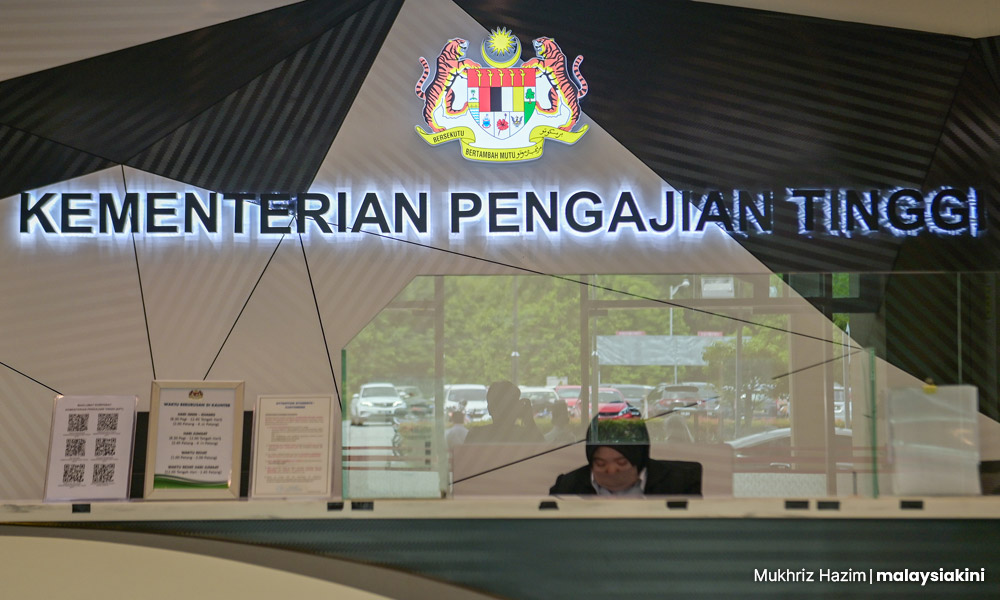
The recent Auditor-General’s Report can attest to this, as the National Council of Professors has allegedly misappropriated funds.
Academic dishonesty is widespread in universities. Lecturers sometimes unfairly take credit for students’ work, copy from others, manipulate results, and engage in unethical practices.
Recently, Malaysia gained attention for being ranked eighth in journal retractions, with 17.2 percent out of 10,000 journals.
Not to mention, the administrative workload placed upon lecturers causes a toll on their mental health and job satisfaction. This stifles the lecturers’ intellectual creativity to deliver knowledge to students with the utmost effectiveness.
Social inequalities in higher education
Australian sociologist Raewyn Connel’s analysis found that universities have strayed from their original purpose and contributed to social inequalities.
The issue with National Higher Education Fund (PTPTN) study loans in Malaysia is that only students who graduate with first-class honours are eligible for debt cancellation.
More affluent borrowers are also able to repay their debts compared to the underprivileged.
Based on research by Penang Institute into PTPTN, graduates who achieve first-class honours are more likely to secure high-paying jobs, while those who do not can hardly secure a job with a living wage. This contributes to the rising inequality between the rich and the poor.

Dying role of social sciences and humanities
Universities favour STEM subjects - science, technology, engineering, and maths - because they generate more marketable research.
This poses a problem for the humanities because they don’t receive enough attention to support their role in shaping students’ moral, intellectual, and spiritual growth.
This is rooted in our higher education’s inclination to climb up global rankings at the expense of manifesting a “good university”.
One aim of the faculties of social sciences and humanities is to prepare students for shaping future policies.

Yet, according to the Higher Education Ministry’s Graduate Tracker Study 2022, social science graduates have high unemployment rates.
Most students from this field of study also work in areas far removed from their own field of study. This indicates the declining role of the social sciences in universities in preparing students to become shapers of our nation.
The ideas from the social sciences regarding culture, politics and social issues should be a backbone and precursor to our national development.
Worryingly, universities continue to invest more in STEM subjects.
This produces workers and “servants” who continue to uphold Western neoliberal values. Such values emphasise profitability while neglecting the students’ role in building humanistic values.
This is why we still see many young people meddling cluelessly around issues touching on the 3Rs - race, religion, and royalty - because we are not taught about Malaysia’s political philosophy deeply enough.
Young people need to be taught about the Federal Constitution, social unity, political Islam, and capitalism-socialism to navigate a morally twisted and uncertain world.
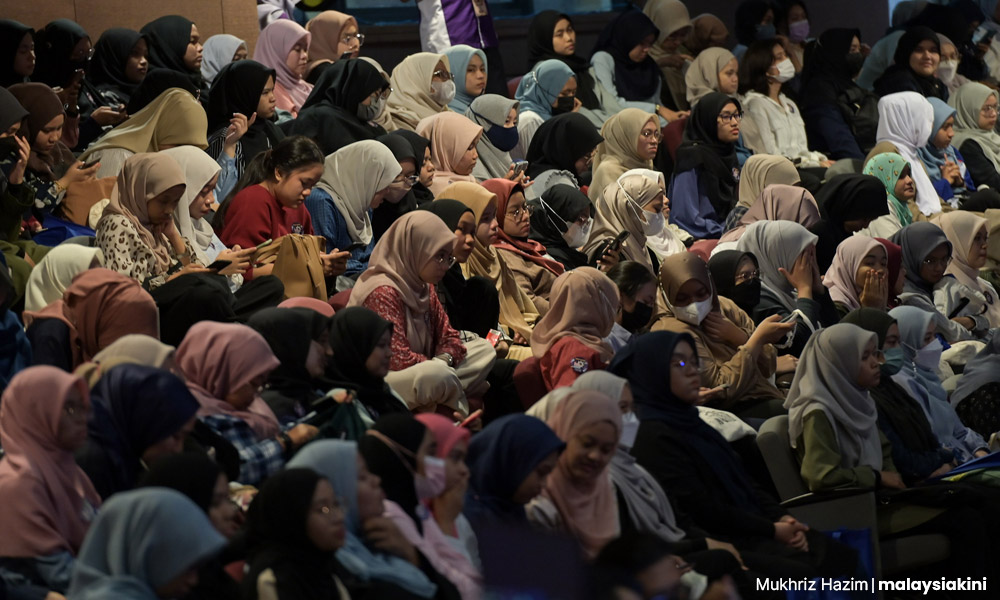
These are important for them to learn how to become more humane and to protect them from plunging into immorality or at least political and social apathy.
The way forward
All said, holistic action must be taken to humanise our education. Here are several suggestions:
Lift the restriction of the Statutory Bodies 605 Act upon academicians to guarantee academic freedom and stronger checks on academicians who practise academic dishonesty.
Strengthen civil society-university partnerships to foster deeper student engagement with marginalised communities.
Allocate investment and draft a holistic action plan to spur initiatives for students from the social sciences and humanities.
Decentralise the ministry’s control over university administration and appointments.
Reconsider the PTPTN debt cancellation criteria based on graduates’ salary, commitment cost, household size, and living location. This would target underprivileged graduates more effectively.
These suggestions, if implemented with care, would improve the occupational satisfaction of our academicians, spur intellectual prowess, and loosen the fetters of market rationality on higher education.
They would also reduce the politicisation of our higher education while raising the role of the humanities in national policy-making.
All this would lead to more humane universities that create more humane students.
AMMAR SYABIL MOHAMMAD AZAM is active in the campus student movement as a Demokrat UKM activist and deputy speaker of the university’s student union. He graduated with a degree in psychology from the university’s Faculty of Social Sciences and Humanities.
The views expressed here are those of the author/contributor and do not necessarily represent the views of Malaysiakini.
/file/publisher-c1a3f893382d2b2f8a9aa22a654d9c97/2024/08/9dd95ab1e82e0be1630d5c7f1f438c54.jpg)
/file/publisher-c1a3f893382d2b2f8a9aa22a654d9c97/2024/09/6ad7e9dcbb9e7b7afc0f7302f2755662.jpg)
/file/publisher-c1a3f893382d2b2f8a9aa22a654d9c97/2024/09/afff26e5075cc6b83e7c111fb7c81886.jpg)
/file/publisher-c1a3f893382d2b2f8a9aa22a654d9c97/2023/01/179c79c2e6f275efd481a50f2d9fd70a.jpg)
/file/publisher-c1a3f893382d2b2f8a9aa22a654d9c97/2024/07/0c7abf19b135422cdcd47a799c20b618.png)
/file/publisher-c1a3f893382d2b2f8a9aa22a654d9c97/2023/08/21d5b052869083d3d0c240e1965f8a36.jpg)


Report this comment
Are you sure you want to delete this comment?
This action cannot be undone.