


/file/publisher-c1a3f893382d2b2f8a9aa22a654d9c97/2024/10/0e31645d58cc5e299094ac368cfc93ea.jpg)

COMMENT | Save kids from statelessness, help Shima get citizenship
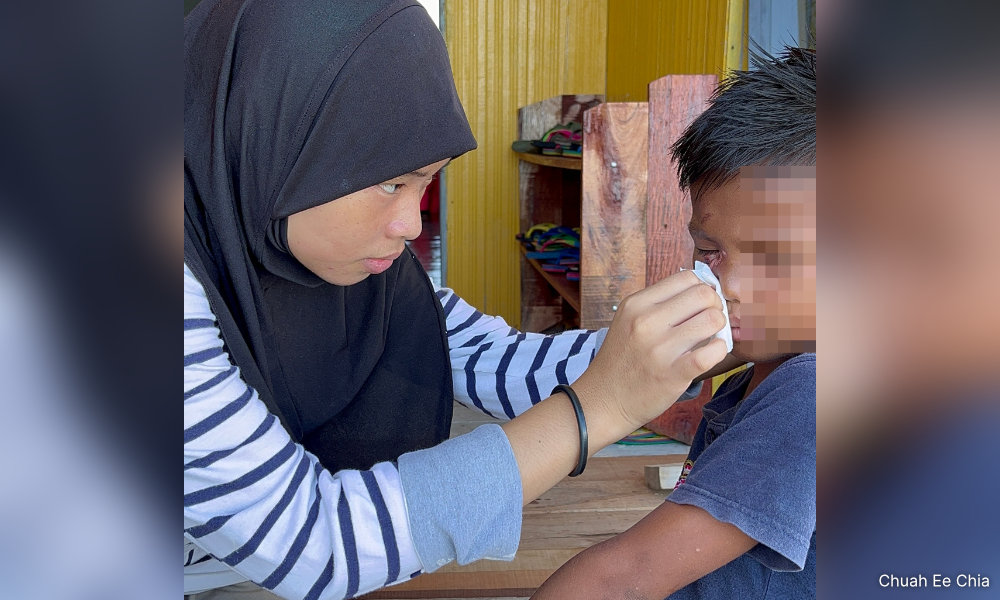
The girl is a stateless Bajau Laut child. She stepped on a shell and cut her foot. She immediately went to Iskul for medical help from Shima. Calmly, Shima washed the wound, applied yellow lotion, and covered it with a plaster - a scene she had become accustomed to by now.
The above is an almost daily occurrence for Shima. In addition to teaching the stateless Bajau Laut children at Iskul Sama DiLaut Omadal on Omadal Island in Semporna, Sabah, she also serves as the coordinator and community health helper of Iskul’s community health centre.
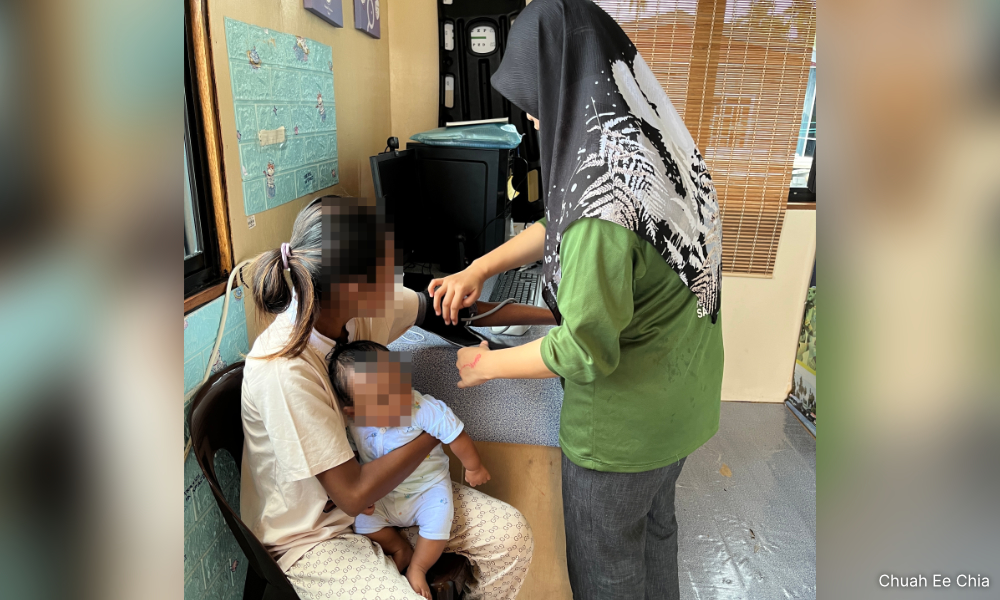
Beyond providing first aid, Shima administers basic medications for conditions such as fevers, headaches, flu, scabies, boils, diarrhoea, cough, toothache, and more, to patients of all ages including infants.
She underwent two weeks of basic medical training at a clinic in Semporna, along with three other community members. She is the backbone of the community health centre. Since July 2022, the community health centre has handled more than 536 cases out of a population of over 1,000 people in Pulau Omadal.
Shima is 18 years old this year. Being a community health helper is the closest she can get to her dream of becoming a doctor or nurse. She has given up hope of ever studying in medical school.
She is disappointed, but she has accepted it.
Despite being born to a Malaysian father, Shima has...
COMMENT | “Cikgu Shima!” a girl shouted, pointing to her injured foot in pain, seeking medical assistance.
The girl is a stateless Bajau Laut child. She stepped on a shell and cut her foot. She immediately went to Iskul for medical help from Shima. Calmly, Shima washed the wound, applied yellow lotion, and covered it with a plaster - a scene she had become accustomed to by now.
The above is an almost daily occurrence for Shima. In addition to teaching the stateless Bajau Laut children at Iskul Sama DiLaut Omadal on Omadal Island in Semporna, Sabah, she also serves as the coordinator and community health helper of Iskul’s community health centre.
Beyond providing first aid, Shima administers basic medications for conditions such as fevers, headaches, flu, scabies, boils, diarrhoea, cough, toothache, and more, to patients of all ages including infants.
She underwent two weeks of basic medical training at a clinic in Semporna, along with three other community members. She is the backbone of the community health centre. Since July 2022, the community health centre has handled more than 536 cases out of a population of over 1,000 people in Pulau Omadal.
Shima is 18 years old this year. Being a community health helper is the closest she can get to her dream of becoming a doctor or nurse. She has given up hope of ever studying in medical school.
She is disappointed, but she has accepted it.
Despite being born to a Malaysian father, Shima has yet to be recognised as a Malaysian citizen. In other words, she is stateless, even though her birth certificate states she is a “warganegara” (citizen).
She completed her primary school education in Semporna but could not continue to secondary school because she did not have the required identity card for registration.
Her mother is undocumented, and her parents were married only in a religious ceremony.
In Malaysia, it is not possible to register a marriage with an undocumented or stateless person. As a result, all children born from this marriage are considered illegitimate, and the father cannot pass his citizenship to his children.
In theory, Shima can apply for citizenship under Article 15(A) of the Constitution. However, to do so, she would need to update her birth certificate.
If and when she updates it, her status will be changed to “bukan warganegara” (non-citizen), as happened with her elder brother. He was then asked to apply for MyKAS or kad pengenalan sementara (temporary identity card).
Citizenship constitutional amendment
Why is a child of a Malaysian father being asked to apply for MyKAS instead of being granted citizenship by the National Registration Department?
She requested to update her birth certificate from JPN in September 2022, when she was 16 years old. Now, two years later, she is still waiting to be called.
Shima will turn 19 next year, and it is unlikely her birth certificate will be updated by the end of this year. Even if it were, she would not be able to apply for citizenship under 15(A) in time if the current citizenship amendment is passed in Parliament this month.
The Constitution currently allows stateless children and youth up to the age of 21 to apply for citizenship, but the citizenship amendment proposes to reduce the age from 21 to 18.
If that happens, Shima would miss her rightful pathway to citizenship. What would happen to her then?
This means she would continue living in fear of being questioned by the authorities: “Do you have any documents?”
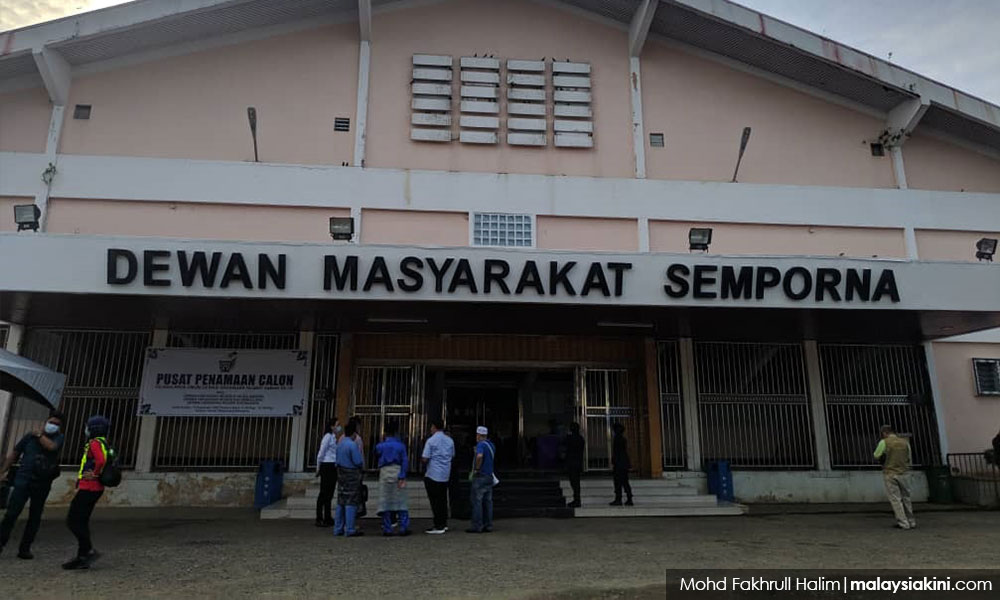
This is a common question police ask whenever they see anyone who looks dishevelled on the streets of Semporna.
She would keep living as “the other” - one of those without documents, discriminated against simply for not having proper identification.
She would not be able to live freely or go wherever she wants, instead, she would be confined to one place for the rest of her life. There would be no way for her to further her education or fulfil her dreams.
Dreams? What dreams? She would be forced to stay silent when wronged by others, even though it is not her fault, because how can an undocumented or stateless person stand up for themselves? At best, they face the threat of being reported to the police.
Does she dare to fall in love and start a family? No, because she does not want her future children to be stateless and suffer like her. This cycle of statelessness will never end if the government does not resolve its systemic causes and continues to aggravate the problem with the regressive amendments in the citizenship amendments.
The government needs to address these key areas:
1. Marriage recognition: Allow the registration of marriages between Malaysians and stateless individuals to ensure their children can inherit citizenship from their Malaysian fathers.
2. Equal rights for fathers: Eliminate discriminatory laws that prevent unmarried fathers from passing citizenship to their children.
3. Protect citizenship rights: Maintain the current age limit of 21 for applying for citizenship under Article 15(A) to avoid further discrimination against stateless youth. Decouple the three regressive citizenship amendments.
4. Amend Article 14: Allow equal rights to Malaysian mothers for their children born overseas.
There are too many “Shimas” in Sabah. Don’t make “Shimas” stay in the statelessness cycle forever by passing the regressive amendments in the Citizenship Bill and creating more “Shimas” in the process.
CHUAH EE CHIA cannot unsee how statelessness harms children born to Malaysian fathers with undocumented persons, and those from the indigenous maritime community in Sabah.
The views expressed here are those of the author/contributor and do not necessarily represent the views of Malaysiakini.
/file/publisher-c1a3f893382d2b2f8a9aa22a654d9c97/2024/10/94889519ed935b411fc5d3b193a86913.jpg)
/file/publisher-c1a3f893382d2b2f8a9aa22a654d9c97/2019/01/759a1a5dfd328c649ba539161da6bbf1.jpg)
/file/publisher-c1a3f893382d2b2f8a9aa22a654d9c97/2024/03/05e10cacaa4d0c5a579710c936984bd6.jpg)
/file/publisher-c1a3f893382d2b2f8a9aa22a654d9c97/2023/11/532e54de9e95c46ab558ca033fd26038.jpg)


Report this comment
Are you sure you want to delete this comment?
This action cannot be undone.