


/file/publisher-c1a3f893382d2b2f8a9aa22a654d9c97/2023/11/b3be79485a8ac95914bde903c3ffdec9.jpg)

COMMENT | How to put food on the table, Peja?
COMMENT | Ahmad Faizal Azumu is still out of touch with Malaysians. He was an insignificant and ineffective former Perak menteri besar and how he became the special adviser to a former PM is simply mindboggling.
He may not have completed his studies in Perth, but he graduated with first-class honours in “ampu-bodekology”, from the Umno Baru Putra University in Putrajaya.
In an interview with Malaysiakini, Faizal (above), who is also the Bersatu vice-president, told Malaysians that there were more pressing issues to focus on...
COMMENT | Ahmad Faizal Azumu is still out of touch with Malaysians. He was an insignificant and ineffective former Perak menteri besar and how he became the special adviser to a former PM is simply mindboggling.
He may not have completed his studies in Perth, but he graduated with first-class honours in “ampu-bodekology”, from the Umno Baru Putra University in Putrajaya.
In an interview with Malaysiakini, Faizal (above), who is also the Bersatu vice-president, told Malaysians that there were more pressing issues to focus on, instead of the ongoing scandal involving allegedly corrupt Sabah assemblymen.
Why is he trying to downplay the crisis in Sabah? Is he afraid that if we were to dwell on the alleged Sabah corruption, Malaysians may be reminded about the Jana Wibawa initiative?
Like many affirmative action programmes designed to help the Malays, Jana Wibawa was yet another vehicle which was abused to benefit the elite Malays and their non-Malay cronies. It is a classic case of the well-connected Malay abusing the rakyat’s money, in the name of the Malays.
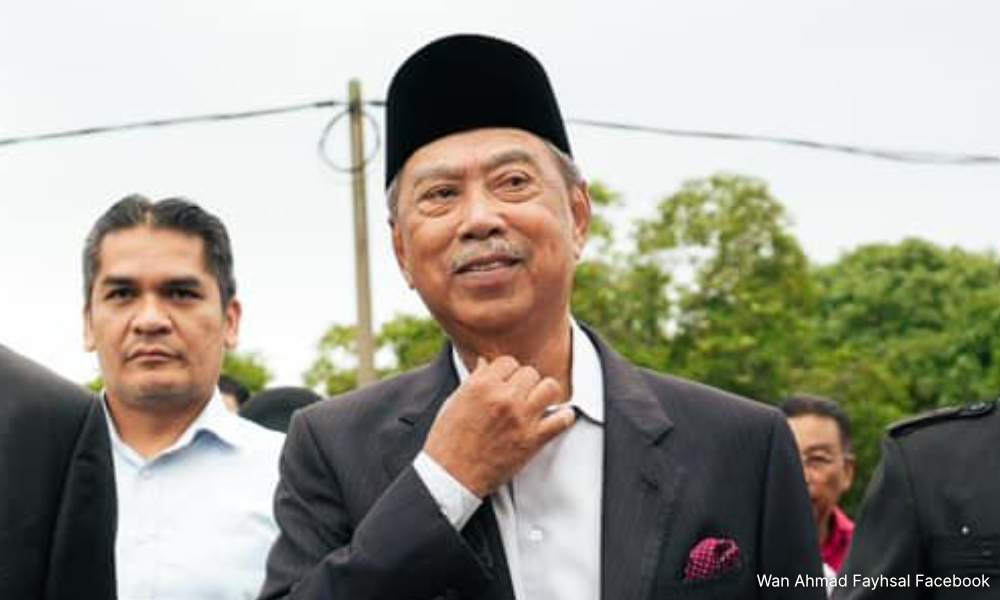
The Bersatu vice-president urged Malaysians to improve their quality of life and future, instead of thinking about the Sabah crisis. He said they could concentrate on other things, like putting food on the table or providing a good education for their children.
Is Faizal aware that a father cannot afford to feed his family, because corruption issues in the supply chain for certain foods have made it impossible for him to purchase the item?
Corruption need not be about money exchanging hands. A few years ago, an MIC branch leader, whose day job was as a Tamil school teacher, was reported to have solicited sex from teenage girls in exchange for employment opportunities for them.
How does one impress upon Faizal that Malaysians are deeply concerned about corruption, not just in Sabah but throughout Malaysia?
Corruption a way of life
From crematorium maintenance to the supply of chicken eggs, from the construction of sports stadiums to the provision of scholarships, corruption has become a way of life in Malaysia. It is embedded deep in our culture and the Malaysian psyche. It is like a cancer that is destroying our public services.

Can he tell us if there is any government department, ministry, or GLC, that is corruption-free?
Corruption destroys jobs. A young woman I know was forced to resign when the others in her university department made her working life a living hell.
She refused to join her departmental peers, in their corrupt activities, like fixing the books, benefiting from various contracts, or receiving “rewards” from contractors providing various services.
Corruption siphons much-needed government funds and prevents hard-working people from enjoying the benefits that rightfully belong to them. Corruption diverts vital resources from schools and hospitals, and the money is redirected to the bank accounts of a few individuals.
Faizal said he was not interested in discussing the Sabah issue, and that it was better left to the authorities to investigate.
Deep mistrust of authorities
Perhaps he is not aware that many Malaysians also have a deep level of mistrust of the authorities when it comes to tackling corruption. In the past, those who reported a corrupt official found that he then became the subject of investigation.
We may have a Whistleblower Protection Act, but few feel confident about using it for fear of their safety, being disbelieved and possibly losing their rice bowl.

How many senior politicians who abused their powers, and allegedly stole billions of ringgits of the rakyat’s money, but who were eventually let off with a full acquittal or granted a discharge not amounting to an acquittal (DNAA)? No! We're not referring to the convicted felon who is in Kajang prison.
There are good cops and bad ones, but sometimes, our police officers behave as if they are a law unto themselves while our politicians behave as if they are above the law.
At one time, Malaysians trusted our leaders and government agencies to get rid of institutional corruption, but the leaders abused our trust. Few if any fulfilled their promises at election time.

If the Hong Kong police were able to clean up their department, why can’t we? There appears to be no political will to stop corruption.
The annual national audit is a revelation into corrupt activities in government, but in the following year, more of the same happens. There is no will to stem the tide of corruption.
We don’t just lose money, we have lost hardware like oceangoing ships and helicopters. Nothing has come of these losses, and no one in authority has been put on trial.
We read about millions of ringgit in various foreign currencies stashed away under the mattress, in a suitcase, or a secret panel behind a false wall of houses belonging to civil servants. How did they amass these fortunes?
You read about the children of politicians owing the Inland Revenue Board several million ringgit, but a secret deal was done, and the tax arrears were wiped clean.
Politicians launder their ill-gotten gains via moneychangers or have their aides carry suitcases of money, who then pass unchallenged via diplomatic channels at airports. Most of this money pays for high-value properties, especially in London.
Back in Malaysia, the poor remain in the poverty trap.
Will Madani help them?
MARIAM MOKHTAR is a defender of the truth, the admiral-general of the Green Bean Army, and the president of the Perak Liberation Organisation (PLO). Blog, X.
The views expressed here are those of the author/contributor and do not necessarily represent the views of Malaysiakini.
/file/publisher-c1a3f893382d2b2f8a9aa22a654d9c97/2024/11/3da1042793f6c356929830521bc7cf90.jpg)
/file/publisher-c1a3f893382d2b2f8a9aa22a654d9c97/2024/11/f00b0cc145f1cb6f709a9287cc3e7888.jpg)
/file/publisher-c1a3f893382d2b2f8a9aa22a654d9c97/2023/09/ff86b299e7600e593efeab3b66b4255a.jpg)
/file/publisher-c1a3f893382d2b2f8a9aa22a654d9c97/2023/11/c9748c8695880c3abbb4e861299029f8.jpg)
/file/publisher-c1a3f893382d2b2f8a9aa22a654d9c97/2021/05/eb003bd6c328bfd621ae8e5e9b4d9ee8.jpg)
/file/publisher-c1a3f893382d2b2f8a9aa22a654d9c97/2024/11/c62b2375dc180c23f4c593a00027e1af.jpg)
/file/publisher-c1a3f893382d2b2f8a9aa22a654d9c97/2024/11/62d307f3efa9543ec130f3b954fbd236.jpg)


Report this comment
Are you sure you want to delete this comment?
This action cannot be undone.