


/file/publisher-c1a3f893382d2b2f8a9aa22a654d9c97/2024/10/4b28efd1bdebfddfdb0499b948424e34.jpg)

COMMENT | Dewan Rakyat or Dewan Lelaki - How to include more women
One woman candidate, pregnant and tirelessly canvassing, tragically suffered a miscarriage mid-campaign. Yet, she was expected to plaster on a smile and keep shaking hands, because a woman who doesn’t smile can seem “unlikable” or “unfriendly” to voters.
Doctors conducted the removal of fetal remains from her body only after the campaign ended.
Another woman candidate, newly widowed, was told by a mufti that campaigning would violate Islamic law; leaving her house wasn’t an option for her. The candidate was practically under “house arrest” during the mourning period imposed on her.
How many others suffered like these two women did?
COMMENT | Politics is a battlefield, but for women, it’s a battlefield with unique obstacles not faced by men. Here are two stories from the 15th general election that really opened up my perspective.
One woman candidate, pregnant and tirelessly canvassing, tragically suffered a miscarriage mid-campaign. Yet, she was expected to plaster on a smile and keep shaking hands, because a woman who doesn’t smile can seem “unlikable” or “unfriendly” to voters.
Doctors conducted the removal of fetal remains from her body only after the campaign ended.
Another woman candidate, newly widowed, was told by a mufti that campaigning would violate Islamic law; leaving her house wasn’t an option for her. The candidate was practically under “house arrest” during the mourning period imposed on her.
How many others suffered like these two women did? They’re the lived experiences of female politicians in Malaysia who face unique hurdles, disadvantages, and discrimination as they’re up against a system designed for men, and we have the data to prove it.
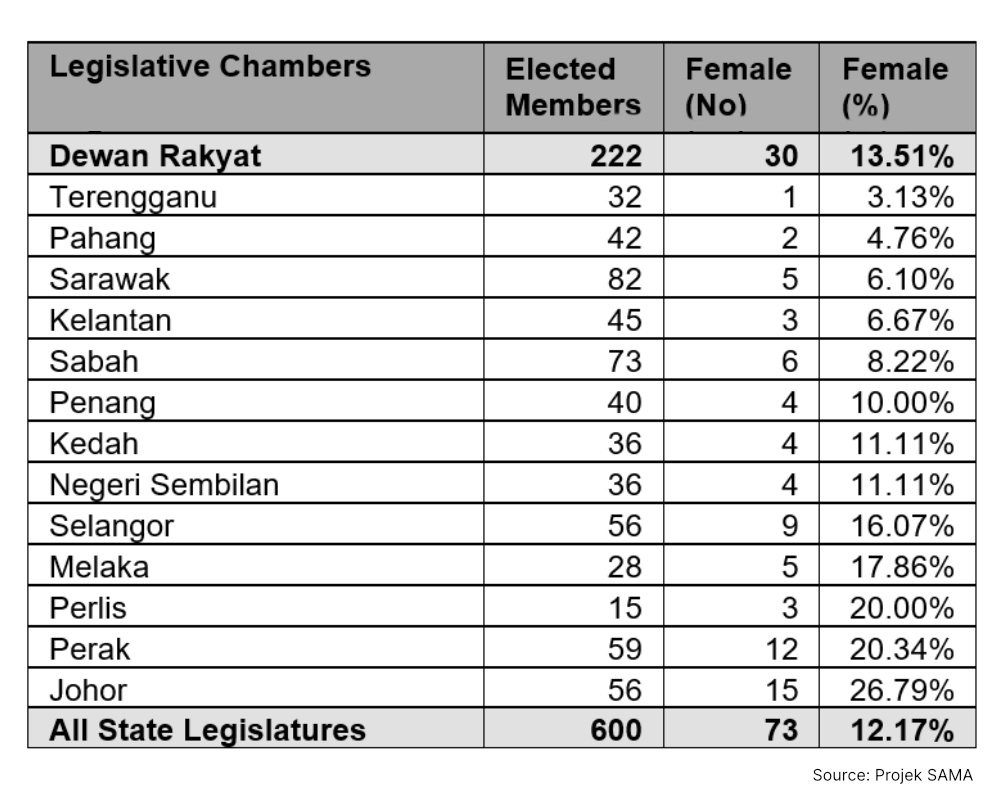
Despite forming 47.5 percent of the population, women only made up 13.5 percent of elected representatives in the Dewan Rakyat.
According to a database compiled by Projek Sama, as of March 2024, we have fewer than one woman for every seven members of parliament (MPs) and fewer than one woman for every eight state assemblypersons (Aduns).
Across the 13 state legislatures, the lowest female representation is 3.13 percent in Terengganu and the highest is 26.79 percent in Johor.
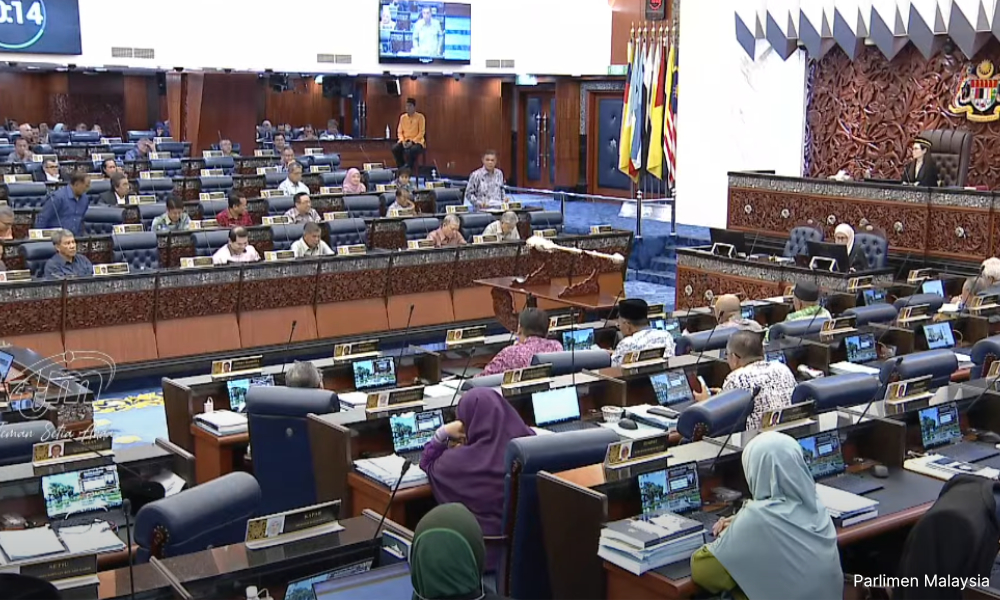
Nearly seven decades after independence, Malaysian women are still denied inclusive representation and remain stifled by structural barriers and societal norms. The political arena may be open to women, but it’s still a man’s world in many ways.
Barriers to women’s political participation aren’t personal - they’re systemic and rooted in historical disadvantages and structural barriers.
A 2022 report by the Westminster Foundation for Democracy found that, in Asean, structural issues represent the most enduring barriers to improving women’s political participation and leadership.
Structural disadvantages don’t disappear by simply encouraging “free competition”; indeed to do so is to deny the very existence of these obstacles.
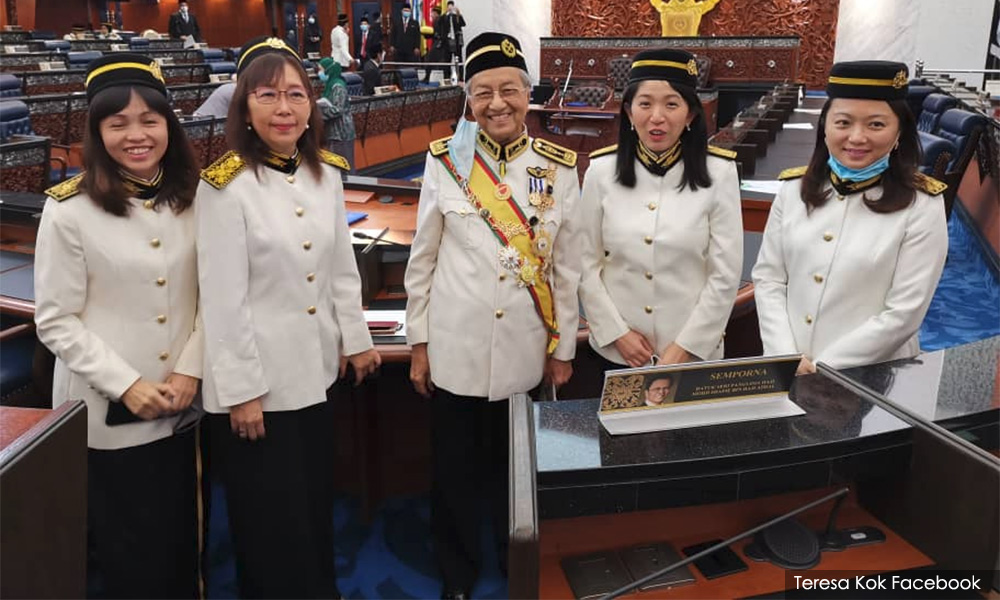
Yes, we see exceptions like Youth and Sports Minister Hannah Yeoh rising to prominence, or even Dr Wan Azizah Wan Ismail becoming our first female deputy prime minister, but those are the exceptions, not the rule.
An outlier’s success does not negate systematic disadvantages faced by a group of people, like how Barack Obama’s successful election in 2008 didn’t eradicate racism in the US (Hello 2024!).
If inequality is built into the system, then only deliberate policy intervention can dismantle the obstacles. So what policy design could we have?
Providing incentives: money and quotas
In a paper I authored in 2021 published by Bersih titled “Public Funding of Political Parties in Malaysia: Debates, Case Studies, and Recommendations”, we recommended a seat-based public funding initiative in Malaysia to boost women’s political representation by allocating RM10 million a year from the annual budget.
Parties that have at least one elected female MP would be eligible, with funds distributed proportionally based on the number of women MPs in each party.
The more female MPs that a party has, the more public funding it receives on an annual basis.
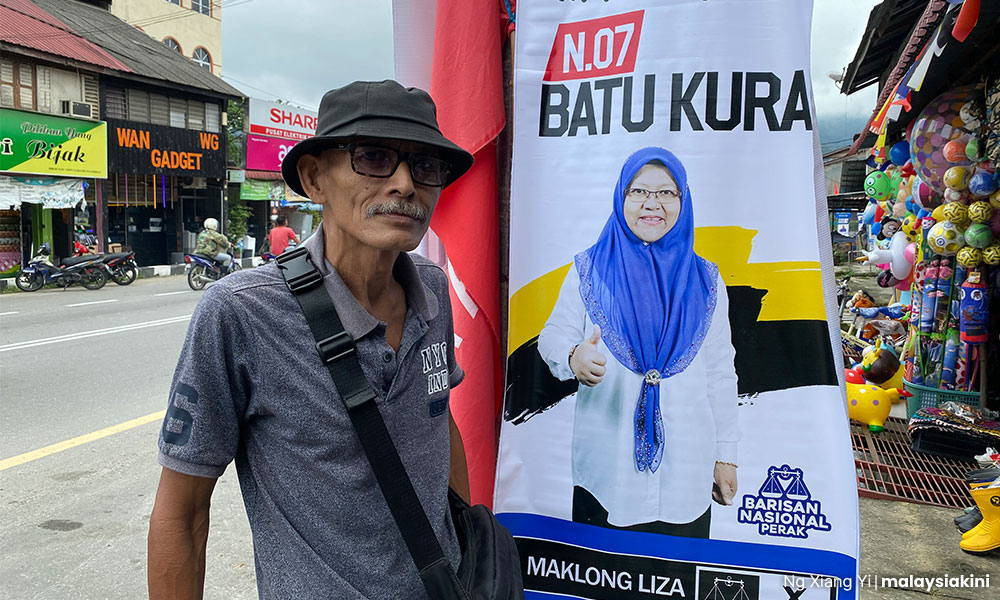
This approach incentivises parties to field female candidates in winnable seats (and not just in “sure die” seats where they put up female candidates so they can score brownie points about political inclusion).
Financial incentives work. That’s why governments provide tax rebates. That’s how corporations are made to “do good” via corporate social responsibility (CSR) initiatives.
We accept that financial incentives are effective in encouraging desirable behaviours and decision-making in certain areas, so why not provide them to create a more inclusive political representation?
Beyond offering financial incentives, another proven strategy is to implement gender quotas. Gender quotas can be tailored in various ways, with flexible designs to fit specific political systems and contexts (relax, male readers).
More than a third of countries around the world have some type of mandated gender quota, which the International Institute for Democracy and Electoral Assistance (International Idea) categorises into three types:
Legislated Candidate Quotas which reserve a number of places on electoral lists for female candidates
Reserved Seats which reserve a number of seats in a legislative assembly for women
Voluntary Political Party Quota which are rules or targets set by political parties to include a certain percentage of women as election candidates.
These provisions may be mandated in different quota sources such as the national/state constitution, electoral law, or political party statutes.
Additional seats model
While working at Penang Institute years ago, I had the opportunity to observe and contribute to the conceptualisation of the Top-Up Women-Only Additional Seats (TWOAS) model.
It’s a pioneering initiative (later developed into a White Paper by the state government) designed by political scientist Wong Chin Huat and advocated by Penang Women’s Development Corporation (PWDC) to increase female representation in state assemblies without waiting for federal-level changes.
In brief, the TWOAS model aims to achieve at least 30 percent female representation in the Penang state legislative assembly in line with the Penang2030 vision.
This is achieved through a “Non-Constituency Supplementary Members” (NCSMs) system, where additional seats are allocated for women if elected female assemblypersons fall short of the 30 percent target. NCSMs are distributed proportionally across political parties based on their vote share.
Will Penang Chief Minister Chow Kon Yeow commit to fulfilling this vision before he steps down by the end of this term? This is his chance to leave a lasting legacy that fosters inclusive political representation for generations to come.
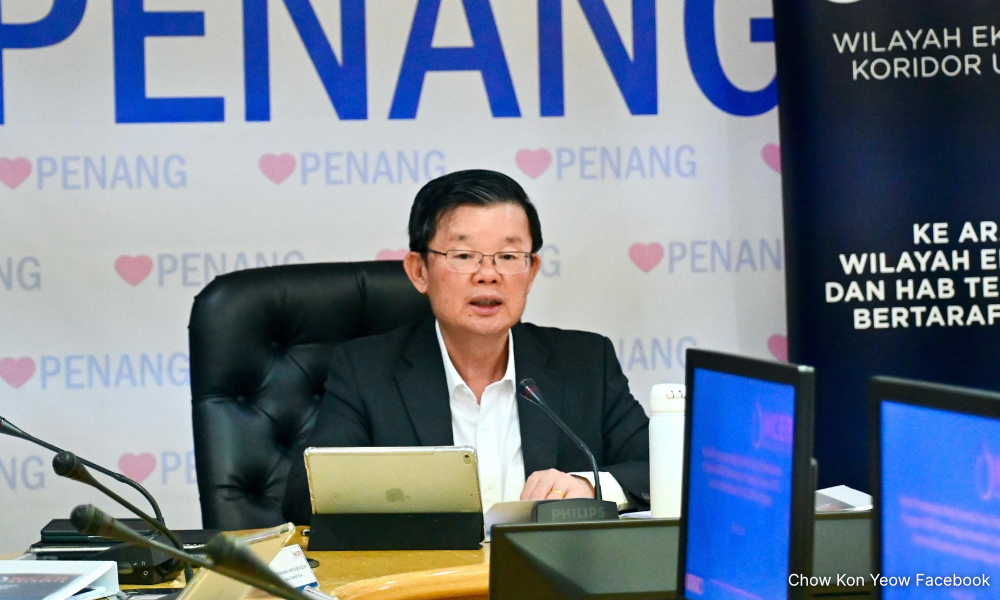
If Penang (or any other state) implements a system like TWOAS, it could set a powerful precedent for other states to follow, sparking a wider movement toward gender equity in politics.
Rwanda provides a compelling example of the potential impact of gender quotas. Since adopting a 30 percent female quota in 2003, Rwanda has seen women’s representation soar, with women securing over 50 percent of seats in its lower house in less than a decade, making it the first country globally with a female-majority Parliament. If Rwanda boleh, tak kan Malaysia tak boleh?
‘Level up’ our democracy
Next week on Nov 23, the human rights group Empower will launch a campaign called Projek30% at a conference at the Paum Clubhouse. The campaign aims to push all political parties to field at least 30 percent of women candidates at all levels.
I hope increased media coverage will encourage more people to attend and engage with the campaign, given the significant resistance to gender quotas and financial incentives to support women’s political participation.
Malaysia can’t claim to be a modern democracy while sidelining half its population from political representation - and consequently, power.
To achieve progress (and not just talk about it), we need public funding incentives to push political parties to nominate female candidates in winnable seats. And we need initiatives like TWOAS and Projek30% to set and achieve concrete representation benchmarks.
Other nations are accelerating past us in terms of inclusive political representation. If Malaysia wants to “level up” our democracy, it must put its money where its mouth is to prioritise gender equality in politics.
We can keep our Parliament a man’s club, or we can redefine it as a house that’s representative of, and looks like, its people.
OOI KOK HIN is a political sociologist who dabbles in civil society.
The views expressed here are those of the author/contributor and do not necessarily represent the views of Malaysiakini.
/file/publisher-c1a3f893382d2b2f8a9aa22a654d9c97/2024/10/0ab0e2cbac6dc8cdc2a8ad02338af5e4.jpg)
/file/publisher-c1a3f893382d2b2f8a9aa22a654d9c97/2024/07/9c5633e62759cc48fb28a5a84ec6098d.jpg)
/file/publisher-c1a3f893382d2b2f8a9aa22a654d9c97/2023/12/f192ce9cb09793e2ee71ab140c130196.jpg)
/file/publisher-c1a3f893382d2b2f8a9aa22a654d9c97/2023/09/594fdac64cbb1bbeb960876ed8353b99.jpg)


Are you sure you want to delete this comment?
This action cannot be undone.