


/file/publisher-c1a3f893382d2b2f8a9aa22a654d9c97/2024/12/a05ece8440d005f9b32109b3bff5fa99.jpg)

BOOK REVIEW | Top banker gives rare candid view of 7 missed opportunities
BOOK REVIEW | Being a top banker in the nation’s most important government-owned bank is a privileged position.
Doors open as one wanders through the corridors of power, gourmet lunches served as the inner workings of politics and business are laid bare. A nod, a smile, or a calculated silence - what more a signature - can easily sway markets or dent fortunes.
Belonging to a class and tribe of their own, banking insiders adhere to unwritten rules. Astute financiers willingly adopt intellectual constraints, turning a blind eye when the gears of power require it - knowing that defiance could exile them to the wilderness of the unprivileged masses.
Thus, more than a few eyebrows were raised when Maybank stalwart and former deputy president Mohammed Hussein, published his take on the nation’s historic journey in “How Malaysia Missed 7 Chances at Nation Building”.
BOOK REVIEW | Being a top banker in the nation’s most important government-owned bank is a privileged position.
Doors open as one wanders through the corridors of power, gourmet lunches served as the inner workings of politics and business are laid bare. A nod, a smile, or a calculated silence - what more a signature - can easily sway markets or dent fortunes.
Belonging to a class and tribe of their own, banking insiders adhere to unwritten rules. Astute financiers willingly adopt intellectual constraints, turning a blind eye when the gears of power require it - knowing that defiance could exile them to the wilderness of the unprivileged masses.
Thus, more than a few eyebrows were raised when Maybank stalwart and former deputy president Mohammed Hussein, published his take on the nation’s historic journey in “How Malaysia Missed 7 Chances at Nation Building”.
The premise of the book is a call to collectively learn from the past, and consider what it would take to make better decisions concerning the fate of the nation. A fair question indeed, as a country seven decades into its existence remains divided, more state than nation.
A trip through history
What are the seven missed chances? The first was in 1945 when the Japanese were forced to surrender Malaya after the horrific US atomic bombings of Hiroshima and Nagasaki.
What if - like Indonesia - Malaysia did not cede power back to the British? Were we in a position to demand, and perhaps fight for Merdeka? How would that have changed our country?
The second is Umno’s founder and first president Onn Jaafar’s call to open the party to non-Malays. Rejected, Onn left the party he championed. What if Umno had agreed and became a party for Malaysians rather than Malays?

In his third chapter, the author explores the intricate negotiations leading to Merdeka.
Driven by Tunku Abdul Rahman’s determination to achieve independence without bloodshed, the Merdeka Constitution emerged as a carefully balanced compromise.
It sought to reconcile competing interests: preserving British economic dominance, ensuring the continuity of the royal houses, safeguarding Malay claims to indigenous rights and privileges, and meeting Chinese and Indian demands for citizenship.
This arrangement functioned as a truce - a social contract - yet left unresolved the long-term tensions between rights and privileges, rooted in the imbalance of political and economic power.
Was May 13, 1969 - the tragedy that it was - another missed chance?
Mohammed argues that dissolving the National Operations Council or Mageran within two years was a rushed return to democracy.
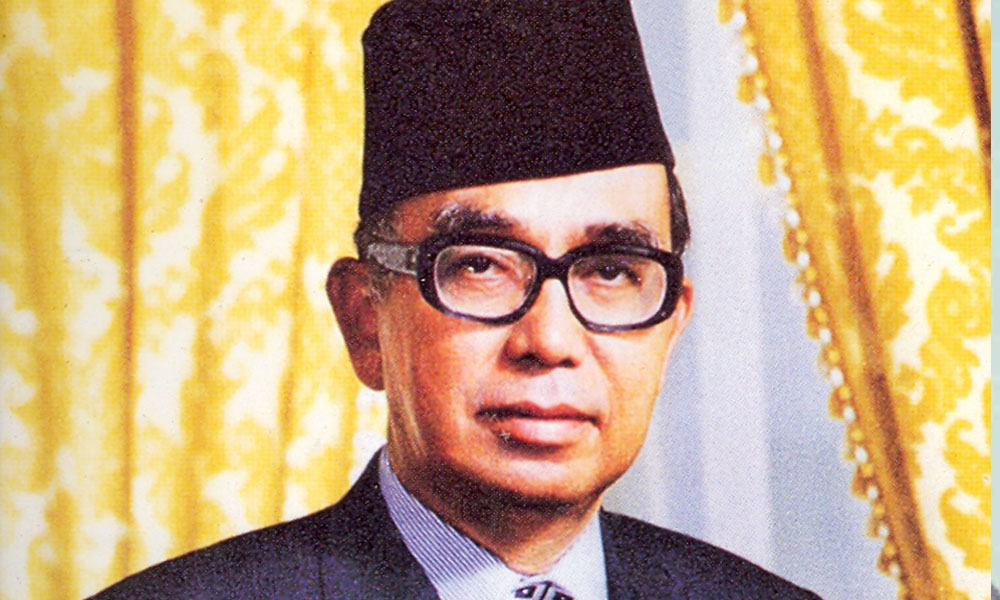
He wonders whether second prime minister Abdul Razak Hussein as a benevolent dictator could have undertaken more radical changes, to lay the basis of a cohesive nation.
‘NEP never meant to stay’
Dato MH, as he is often referred to, then moves to his home ground - economics and business. He takes a piercing look at the National Economic Policy and the Bumiputera Agenda.
He cites former deputy prime minister Ismail Abdul Rahman’s understanding of the NEP as a golf handicap, a leveller in the game.
“I regard the special position of the Malays as a handicap given to the Malays with the consent of all the other races who have become citizens of this country so as to enable the Malays to compete on equal footing for equal opportunity in this country.
“That and that alone is the only aim of the special position of the Malays... this handicap will enable them to be good players, as in time, as in golf the handicap will be removed.
“The Malays must not think of these privileges as permanent: for then, they will not put their efforts to the tasks. In fact, it is an insult for Malays to be getting these privileges.”
In examining the NEP, he probes the extent to which the policy genuinely uplifted the Malay middle class and broader community, versus serving as a mechanism to consolidate power among the Malay political elite.
A more thoughtfully designed policy, or improved implementation, could have better served the broader Malay community and narrowed the economic gap between races - an essential foundation for fostering a more united nation.
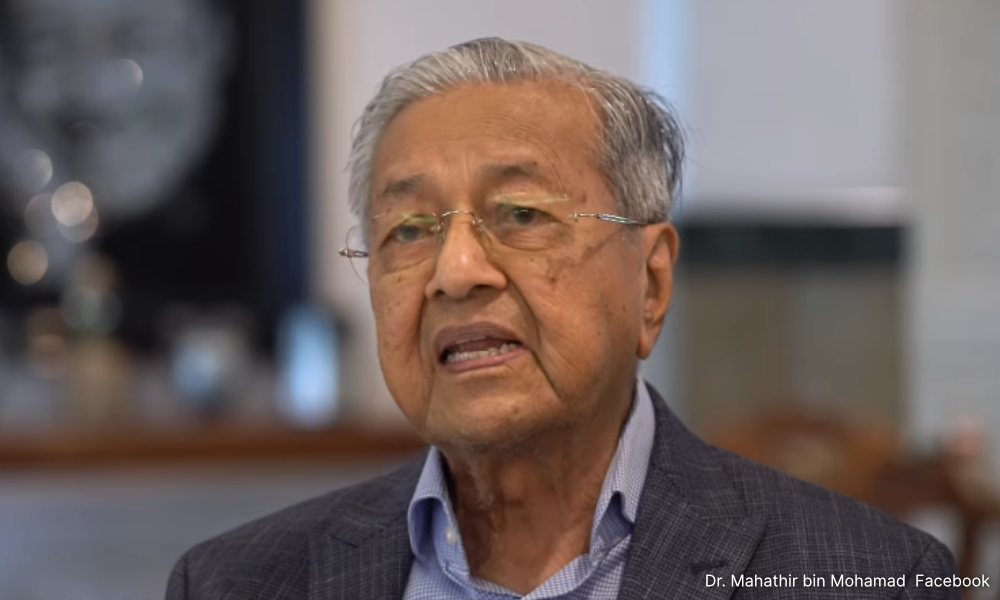
The sixth opportunity came under the stewardship of Malaysia’s longest-serving leader, Dr Mahathir Mohamad, through his ambitious Vision 2020.
Announced in 1991, the vision of a developed, united, and confident nation by 2020 was so compelling that even Mahathir’s fiercest critics had to acknowledge its aspirations.
The author focuses particularly on the nine strategic challenges outlined in the vision.
Why weren’t government policies realigned to address these challenges? Were our institutions and decision-makers at the time - and perhaps even now - unprepared or unwilling to make the difficult choices necessary to realise such a bold agenda?
For the seventh opportunity, he pulled together other missed moments - from Abdullah Ahmad Badawi’s landslide victory in 2004 to Pakatan Rakyat and Mahathir’s return to power in 2018.
Again the opportunity to leverage political momentum for change simmered but never came to a boil.
Aspirations
Mohammed uses the second half of his book to look forward, asking what are the aspirations of the nation and how do we get there.
Using plain language, he said: “We cannot continue to tai chi and pass the buck to the next generation because the problem will get bigger and become too big to solve.”
He bravely names some of the elephants in the room, issues all too familiar - ignored by government after government - a failing education system, bloated and unproductive government spending, a critical review of the bumiputera agenda and policies, and the dire need to encourage religious tolerance.
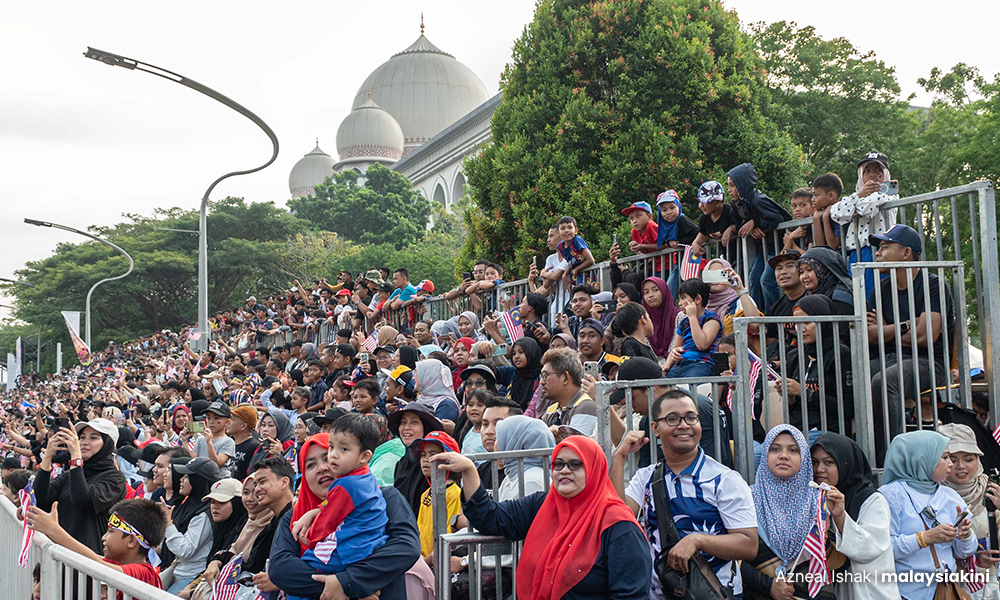
In publishing this critical review of our history, Hussein stands like a sailor who, having safely navigated a storm, now critiques the very vessel that carried him through.
Critics may brand him as un-Malay for daring to air our flaws openly - what Malays call membuka pekung di dada (revealing a wound on one’s chest).
Hussein does not deny the charge but instead anchors himself in a key facet of Malay identity: his unwavering commitment to his religion.
Islam calls us to speak truth to power, to right injustice, and to serve the greater good. Mohammed knows he wins no friends by challenging the status quo, yet, he remains steady on his ship.
As corporate figure Azman Mokhtar writes in his review - agree, disagree, but never disagreeable - a thought-provoking read, for us to reflect on and, most of all, to act to build and rebuild our nation.
A chance to break the cycle
Is reform even possible? Prime Minister Anwar Ibrahim is caught in his own web - holding together his fragile political alliance, territories no longer willing to tolerate a dominant federal government, a civil service that believes they will outlive any government of the day, the need to seek legitimacy through the Malay vote, the subsidy economy, and the rent-seeking business elite, all while still reaffirming the aspirations of his Reformasi supporters.
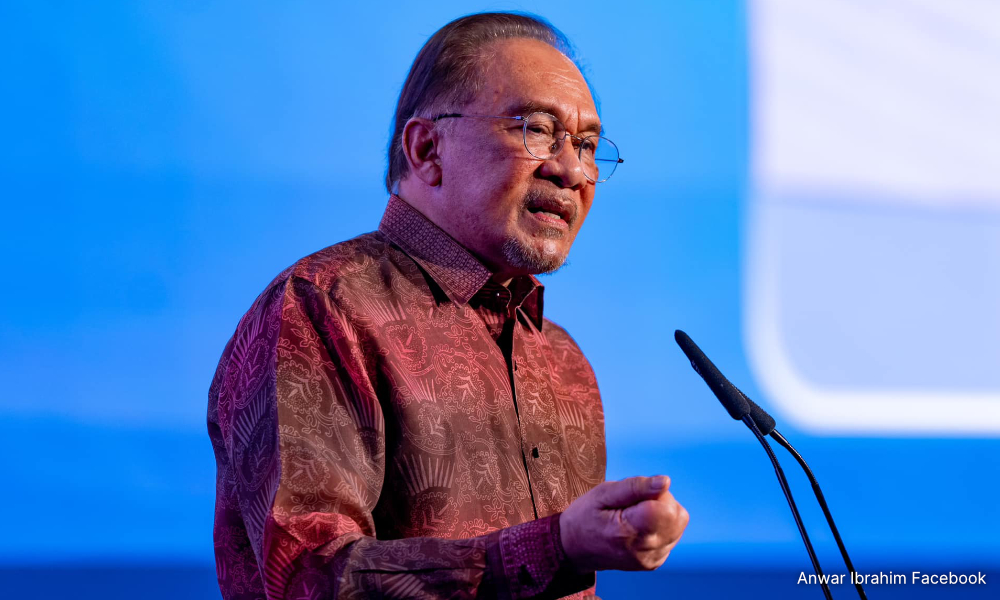
And yet, Malaysia’s centennial milestone lies on the horizon. In just three decades, we will reflect on our choices and their consequences. Will we once again squander the opportunity to build a great nation from a fledgling state?
Mohammed’s review of our missed opportunities is not merely a critique but a call to action - a challenge to break the cycle and chart a different course. In doing so, he offers us a profound service, bearing the weight of truth for the benefit of us all.
PREMESH CHANDRAN is the co-founder and former CEO of Malaysiakini.
The views expressed here are those of the author/contributor and do not necessarily represent the views of Malaysiakini.
/file/publisher-c1a3f893382d2b2f8a9aa22a654d9c97/2024/11/099e2c6e085ade667697401c3a71337b.jpg)
/file/publisher-c1a3f893382d2b2f8a9aa22a654d9c97/2024/12/cf8c93fbeed6347962d75ec757e6f18d.jpg)
/file/publisher-c1a3f893382d2b2f8a9aa22a654d9c97/2020/03/dc905d7f6ae2c6e92b220add1e56abca.jpg)
/file/publisher-c1a3f893382d2b2f8a9aa22a654d9c97/2024/12/8205062aa57104d522323cc967b90e0e.jpg)
/file/publisher-c1a3f893382d2b2f8a9aa22a654d9c97/2024/08/474c26f9d15c44de4f46142be2243c7e.jpg)


Are you sure you want to delete this comment?
This action cannot be undone.