


/file/publisher-c1a3f893382d2b2f8a9aa22a654d9c97/2025/04/7949f63a7a87d859d345ea9c16320d53.png)

COMMENT | Putra Heights blaze: Act of God or failure to act?
COMMENT | Carole King once sang, “I feel the earth move under my feet.” On the morning of April 1, the residents of Putra Heights did not just feel the earth move - they lived through a nightmare. And it was no April Fool’s joke!
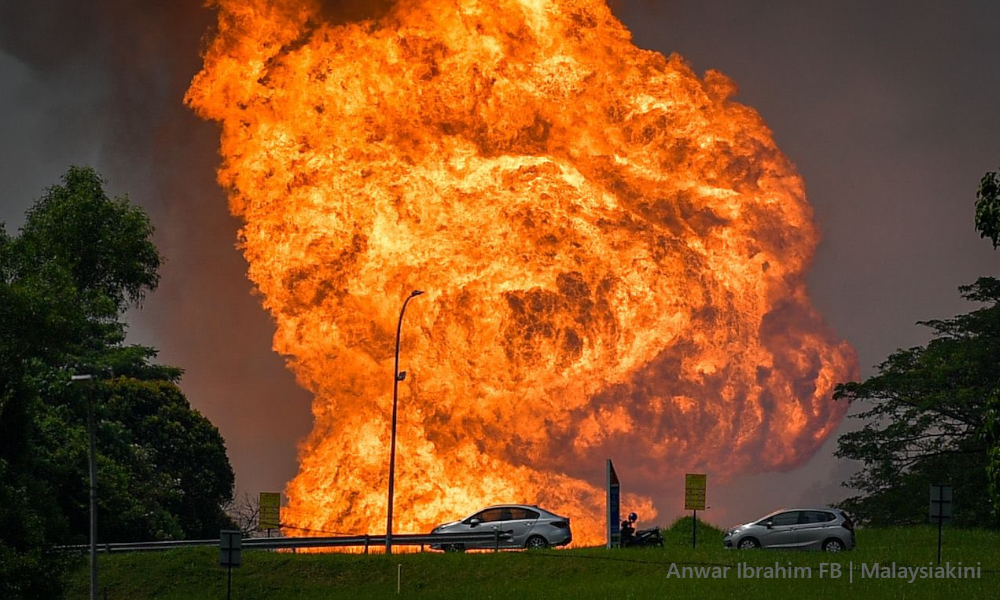
A buried gas pipeline ruptured with such fury that a fireball 30m high scorched the sky. By the time the flames were out, over 200 homes were damaged, 81 severely. Some families have still not returned.
Investigations have since ruled out sabotage or negligence, pointing instead to long-term ground subsidence - 24.3 cm of soil settlement over 25 years.
The verdict: nature moved, the pipe cracked, gas escaped, and a spark triggered devastation. No human hands are to blame, they say.
But is that truly the end of the story?
COMMENT | Carole King once sang, “I feel the earth move under my feet.” On the morning of April 1, the residents of Putra Heights did not just feel the earth move - they lived through a nightmare, and it was no April Fool’s joke!
A buried gas pipeline ruptured with such fury that a fireball 30m high scorched the sky. By the time the flames were out, over 200 homes were damaged, 81 severely. Some families have still not returned.
Investigations have since ruled out sabotage or negligence, pointing instead to long-term ground subsidence - 24.3cm of soil settlement over 25 years.
The verdict: nature moved, the pipe cracked, gas escaped, and a spark triggered devastation. No human hands are to blame, they said.
But is that truly the end of the story?
Slow-moving disaster
Selangor Menteri Besar Amirudin Shari, citing a multi-agency probe, confirmed that the subsidence, not mismanagement, was the culprit.
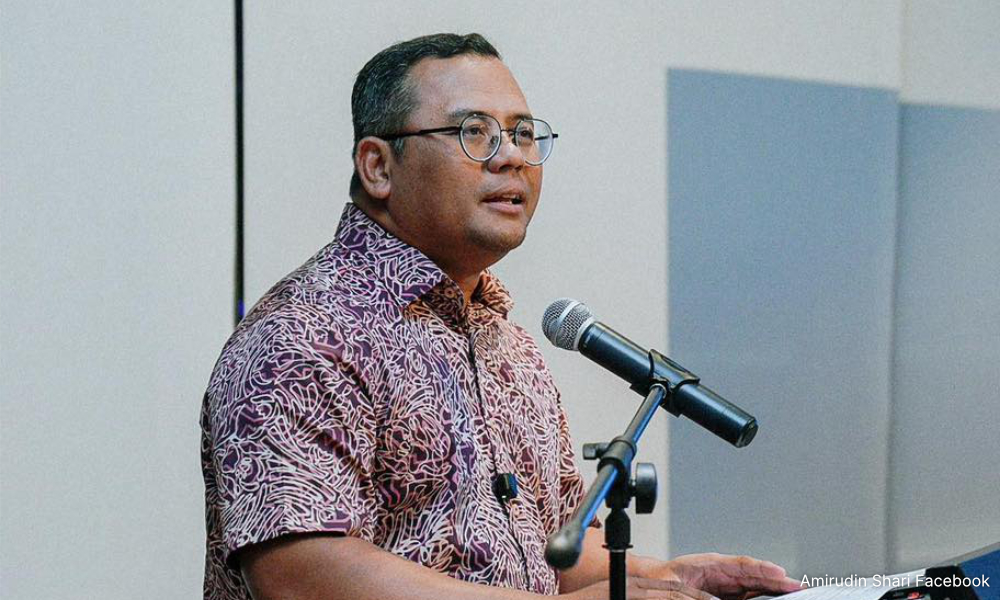
True, the findings revealed unstable soil, damaged culverts, groundwater accumulation, and fatigue in the pipe.
But that only raises further questions: Why was there no regular subsurface risk assessment over two decades? Did nobody notice the warning signs?
If the terrain was known to be geologically unstable, why weren’t preventive measures stepped up?
Lessons not yet learned
Malaysia is not new to infrastructure-related tragedies - the Highland Towers collapse, the Jaya Supermarket demolition disaster, the 2021 Shah Alam floods, etc.
Each time, the headlines scream, and then we move on. But the people of Putra Heights cannot move on. Some have lost everything. Many are waiting to rebuild.
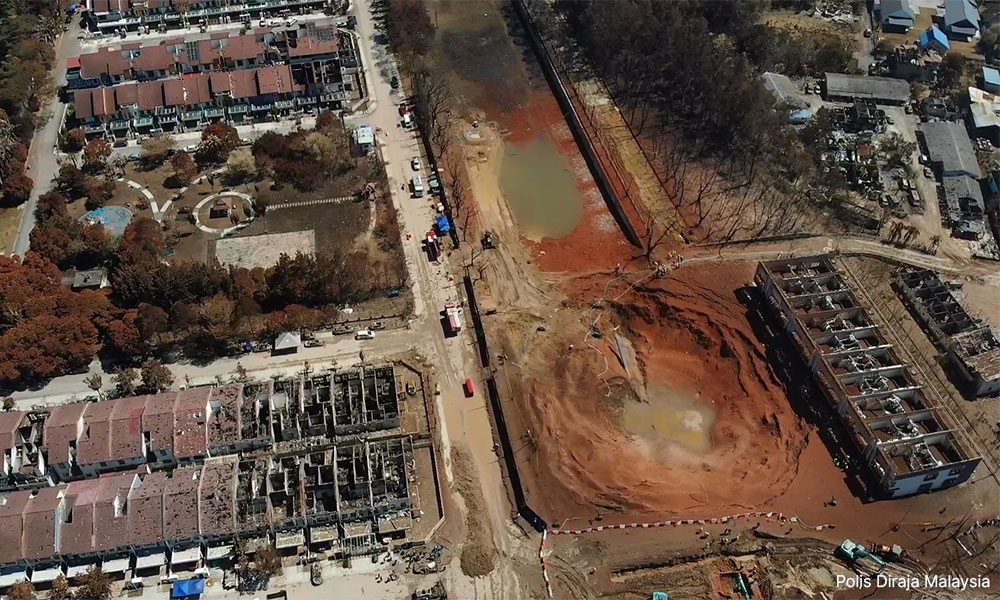
Their pain should force a reckoning not just in Selangor but across the country: How many more hidden dangers lie buried under our feet - ageing pipes, corroded cables, sunken roads - while we keep expanding, building, and approving projects without enough foresight?
We must ask: Who is watching over our ageing infrastructure? Whose job is it to say, “This ground is moving - stop”?
No one to blame or everyone?
It is convenient to absolve human hands of fault, but that ignores the systemic neglect that allows such risks to fester. A 9.8m crater does not form overnight.
Like many disasters, this was slow-moving, invisible until it exploded - quite literally - into view.
The state’s plan to form a special committee and review planning and safety protocols is welcome.
But committees don’t rebuild lives. Swift policy changes, tighter geological assessments, transparency in pipeline inspections - these are urgent.
As the climate crisis intensifies and soil stability becomes a national risk, “business as usual” is no longer acceptable.
Taking responsibility
Back in the early 2000s, then-works minister Samy Vellu infamously dismissed a highway collapse as “an act of God”.
The phrase became a national punchline - and a tragic metaphor for shrugging off responsibility.
The Putra Heights tragedy now risks becoming another such footnote - a catastrophe wrapped in technical language and geological explanations, filed away with no one held accountable.
But we must not allow that. For the sake of those who lost homes, peace of mind, and the time they can never get back, we must demand more.
Nature may have shifted the ground, but it was human inaction that allowed tragedy to take root.
JOSEPH MASILAMANY is a veteran journalist residing in Borneo. He doesn’t just report the news - he detonates complacency.
The views expressed here are those of the author/contributor and do not necessarily represent the views of Malaysiakini.
/file/publisher-c1a3f893382d2b2f8a9aa22a654d9c97/2024/10/8c63d5745181d2aed4f4b5a6f8aa2a4f.jpg)
/file/publisher-c1a3f893382d2b2f8a9aa22a654d9c97/2025/06/905a3e6c53a22bb4114cd9e131401288.jpg)
/file/publisher-c1a3f893382d2b2f8a9aa22a654d9c97/2025/04/307ccfa7c3b00825b9019ea21c140e19.jpg)
/file/publisher-c1a3f893382d2b2f8a9aa22a654d9c97/2025/04/7f927ff1fd57c249dcfd494f00c27e6a.png)
/file/publisher-c1a3f893382d2b2f8a9aa22a654d9c97/2025/04/032c66f66ce0c8056e7f1728b74578af.jpg)
/file/publisher-c1a3f893382d2b2f8a9aa22a654d9c97/2025/04/8254e2a794a743baf6cbb0b33441c644.jpg)


Report this comment
Are you sure you want to delete this comment?
This action cannot be undone.