


/file/publisher-c1a3f893382d2b2f8a9aa22a654d9c97/2025/09/9732b80ae2d77ff3337857cac286345e.jpg)

COMMENT | 7 players, 7 questions - Malaysia's Fifa reckoning
The reason? Forged documents were used to field naturalised footballers.
The penalty was severe. FAM faced a 350,000 Swiss francs fine - nearly RM1.9 million. Seven players received 12-month suspensions from all football activities. Each player also faced individual fines of 2,000 Swiss francs.
The scandal made global headlines. Malaysia became famous for all the wrong reasons.
The trouble began on June 10, 2025. Malaysia’s national team, “Harimau Malaya”, faced Vietnam in the AFC Asian Cup qualifiers.
Seven naturalised players took the field. Malaysia won 4-0, their first victory over Vietnam in 11 years.
But victory came at a cost. Complaints about player eligibility reached Fifa. The world football body investigated. What they found was shocking: doctored documents submitted to prove nationality.
Fifa’s Disciplinary Committee found...
COMMENT | Malaysia’s football dreams crashed in September 2025. The International Federation of Association Football (Fifa) imposed crushing sanctions on the Football Association of Malaysia (FAM) and seven star players.
The reason? Forged documents were used to field naturalised footballers.
The penalty was severe. FAM faced a 350,000 Swiss francs fine - nearly RM1.9 million. Seven players received 12-month suspensions from all football activities. Each player also faced individual fines of 2,000 Swiss francs.
The scandal made global headlines. Malaysia became famous for all the wrong reasons.
The trouble began on June 10, 2025. Malaysia’s national team, “Harimau Malaya”, faced Vietnam in the AFC Asian Cup qualifiers.
Seven naturalised players took the field. Malaysia won 4-0, their first victory over Vietnam in 11 years.
But victory came at a cost. Complaints about player eligibility reached Fifa. The world football body investigated. What they found was shocking: doctored documents submitted to prove nationality.
Fifa’s Disciplinary Committee found FAM guilty of breaching Article 22 of the Fifa Disciplinary Code. This article deals with forgery and falsification.
The players in question
The sanctioned players came from across the globe.
Three were Argentine: Facundo Tomas Garces, Rodrigo Julian Holgado, and Imanol Javier Machuca.
Joao Vitor Brandao Figueiredo is Brazilian, who traces his heritage to Negeri Sembilan.
Gabriel Felipe Arrocha, Jon Irazabal Iraurgui, and Hector Alejandro Hevel Serrano hail from Spain.
Garces stood out among them. The 26-year-old centre-back became the first naturalised Malaysian to play in Spain’s La Liga football league.
He received Malaysian citizenship on June 2 - just eight days before his international debut.
Citizenship laws and Fifa’s rules
The acquisition of Malaysian citizenship arises from one of three paths. Citizens can be born Malaysian, register through descent or marriage, or apply for naturalisation. The Federal Constitution governs all three processes.
Naturalisation requires specific criteria. Foreigners must live in Malaysia for two to five years. They must show good character. Most crucially, they need to show adequate knowledge of Bahasa Malaysia.
Malaysia’s strict dual citizenship ban creates complications. The Constitution’s Article 24 prohibits holding two nationalities.
Citizens who acquire a foreign nationality automatically lose Malaysian citizenship.
Fifa’s eligibility rules leave no room for doubt. Players must have clear, permanent, and legal nationality, as proven through authentic documents.
Any player with permanent nationality, not dependent on residence, can represent that country. Switching nationalities requires meeting strict criteria. Players over 18 must continuously reside in the new country for five years.
The only exception: when parents or grandparents were born in the new country.
This is the exception that triggered the Malaysian team’s failure. The seven players could not prove such ancestral links.
Act of forgery
National associations must follow precise procedures. They submit proof of nationality through birth, descent, or lawful naturalisation. Documentation must be genuine: passports, birth certificates, and proof of parental birth in the country.
Fifa reviews and confirms eligibility. Once approved, players can participate in official competitions. But trust has limits. When an allegation of forgery surfaces, Fifa acts decisively.
FAM’s breach of this legal requirement triggered sanctions per Article 22 of the Fifa Disciplinary Code.
Article 22(1) states: “Anyone who, in football-related activities, forges a document, falsifies an authentic document, or uses a forged or falsified document will be sanctioned with a fine and a ban of at least six matches or for a specific period of no less than 12 months.”
Article 22(2) goes on to state: “An association or a club may be held liable for an act of forgery or falsification by one of its officials and/or players.”
Fifa’s “initial approval”, accepted in good faith, becomes irrelevant when any such deception emerges.
Impact on global reputation
Malaysia joins an unfortunate club of nations which were caught cheating. Qatar attempted a similar deception in 2004. They tried naturalising foreign players with no family or residency links. Fifa intervened and tightened eligibility rules.
Equatorial Guinea faced expulsion from the 2020 Olympic qualifying in 2016. They used false documents for an ineligible player. Their appeals failed.
Bolivia lost World Cup qualification the same year. They fielded Nelson Cabrera, who had represented Paraguay. He failed residency requirements. The Court of Arbitration for Sport upheld Fifa’s decision.
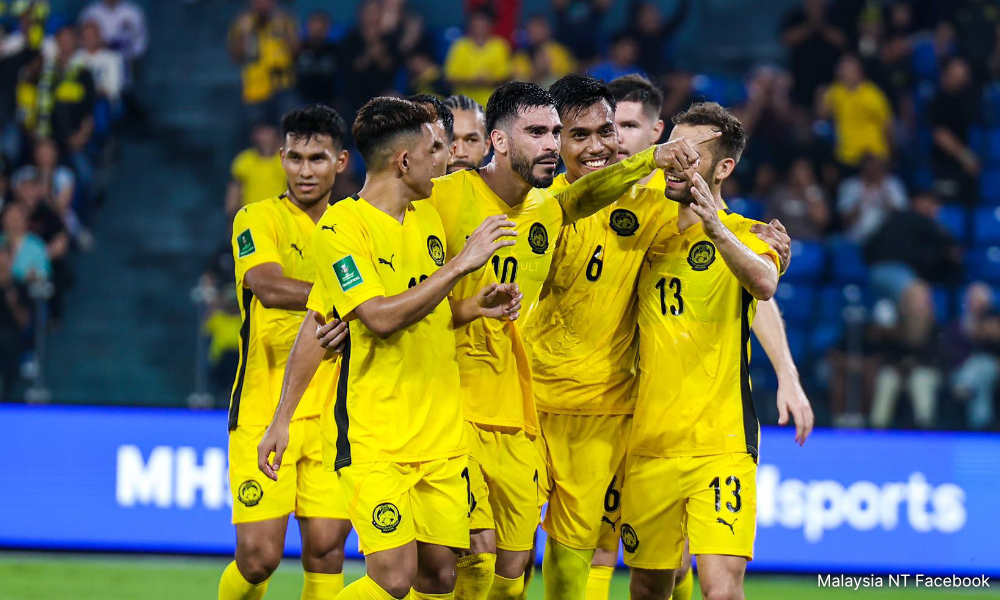
The scandal’s impact extends beyond football. Malaysia’s sporting reputation lies in tatters. Past victories now face legitimacy questions. The country’s commitment to international sporting norms appears doubtful.
Future foreign talent recruitment becomes harder. Diplomatic relations with other football associations suffer a strain.
Malaysia’s standing as a fair competitor faces serious jeopardy.
Criminal implications and appeal
The scandal carries potential criminal consequences. Malaysia’s Federal Constitution and Penal Code address document forgery.
Creating or knowingly using forged documents is criminal. Penalties include up to two years’ imprisonment or fines, but prosecution requires proving intent.
If FAM officials knowingly submitted falsified documents, a criminal investigation becomes possible. However, clear personal culpability must be established.
International examples exist. Russia (2014) and Equatorial Guinea (2016) saw association staff prosecuted for document fraud.
FAM has also launched an appeal. They have 10 days from Fifa’s decision to formally challenge. The Fifa Appeals Committee will re-examine facts and legal arguments.
If unsuccessful, the case may reach the Court of Arbitration for Sport (CAS).
CAS can uphold, vary, or overturn Fifa’s decision. However, most appeals fail when forgery is proven.
FAM acting president Hamidin Amin has travelled to Zurich to meet Fifa officials. The association awaits Fifa’s detailed judgment before revealing its appeal strategy.
The human cost
Beyond legal complexities lies human tragedy.
Malaysians once celebrated sporting heroes like Abdul Ghani Minhat, Mokhtar Dahari, “Towkay” Soh Chin Aun, M Chandran, and “Spiderman” Arumugam. These legends brought lasting honour to the nation.
They must now mourn the loss of national pride. A sense of shame and helplessness has gutted the nation. No political excuses or blame-shifting can repair this damage.
Malaysian athletes face a long journey to regain foreign respect. And that is the greatest tragedy of all.
GK GANESAN is a lawyer and an international commercial arbitrator.
The author thanks UK Menon, Jadadish Chandra, KN Geetha, Lydia Jaynthi, TP Vaani, and JN Lheela.
Malaysiakini has obtained permission to republish this article, which first appeared here.
The views expressed here are those of the author/contributor and do not necessarily represent the views of Malaysiakini.
/file/publisher-c1a3f893382d2b2f8a9aa22a654d9c97/2023/10/2f3b0de67916cb47b4d95db0b4647993.jpg)
/file/publisher-c1a3f893382d2b2f8a9aa22a654d9c97/2020/09/f1021eed491c0bca68e98baf714e1d4a.jpg)
/file/1213/411c72c1f7bb0fd1ceb40c634e89030e.jpeg)
/file/publisher-c1a3f893382d2b2f8a9aa22a654d9c97/2025/08/64f4a2934746a9260cbe2147ce83835c.jpg)


Are you sure you want to delete this comment?
This action cannot be undone.