


/file/publisher-c1a3f893382d2b2f8a9aa22a654d9c97/2021/08/6943bf19c02990484599c62aeba2ad75.jpg)

COMMENT | Anwar's challenge bigger than corruption
COMMENT | Malaysia has been dealing with a low-wage problem for far too long. Salaries have increased over time, but the gap between those at the bottom and those at the top remains wide.
In March 2026, the bottom 10 percent of formal workers earned RM1,700 or less a month, while those in the top 10 percent earned at least RM11,500. This is not simply about inflation or the latest minimum wage.
It reflects an economic structure that depended for too long on cheap labour, weak productivity growth and uneven income distribution. Much of this structure was built during decades of BN rule.
The governments that came after inherited problems that cannot be fixed within a single term. But at some point, history can no longer be used as an excuse. The government of the day still has to find a way to raise people’s incomes without destroying the businesses that provide those jobs.
That is why the Malaysian Trades Union Congress proposal to raise the minimum wage to RM3,100 deserves...
COMMENT | Malaysia has been dealing with a low-wage problem for far too long. Salaries have increased over time, but the gap between those at the bottom and those at the top remains wide.
In March 2026, the bottom 10 percent of formal workers earned RM1,700 or less a month, while those in the top 10 percent earned at least RM11,500. This is not simply about inflation or the latest minimum wage.
It reflects an economic structure that depended for too long on cheap labour, weak productivity growth and uneven income distribution. Much of this structure was built during decades of BN rule.
The governments that came after inherited problems that cannot be fixed within a single term. But at some point, history can no longer be used as an excuse. The government of the day still has to find a way to raise people’s incomes without destroying the businesses that provide those jobs.
That is why the Malaysian Trades Union Congress proposal to raise the minimum wage to RM3,100 deserves a rational discussion rather than an immediate yes or no. The figure did not come out of nowhere. RM3,100 has already been used as a living-wage benchmark for permanent employees in selected GLICs and GLCs.

MTUC is also right to raise another problem that receives far less attention: workers who have served for many years but remain stuck close to the minimum wage. Someone who has worked for ten years, gained experience and taken on greater responsibilities should not be earning almost the same as someone who has just entered the job.
Malaysia does not only have a low minimum wage problem. It also has a wage progression problem.
From the worker’s point of view, RM1,700 is increasingly difficult to consider enough, especially in major cities. After statutory deductions, the remaining income has to cover rent, food, transport, bills and family needs.
Belanjawanku itself shows that basic living costs in the Klang Valley are already well above that figure in many situations. Inflation may have been only around 1.8 percent in July 2026, but low inflation does not mean prices have gone down.
It only means prices are rising more slowly. Things that have already become expensive remain expensive. That reality is not always captured by headline economic figures.
Raising minimum wage
But raising the minimum wage directly from RM1,700 to RM3,100 is also not a small decision. It would be an increase of RM1,400, or 82.4 percent, in one move. RM3,100 is already above the national median wage for formal workers, which stood at around RM3,027 in March 2026.
If RM3,100 becomes the new minimum, employers will not only have to increase the salaries of those earning RM1,700. Workers earning RM2,200, RM2,600 or RM3,000 will also ask why their experience, skills and responsibilities are now worth almost the same as those of a new worker. In the end, the entire salary structure would have to be adjusted.
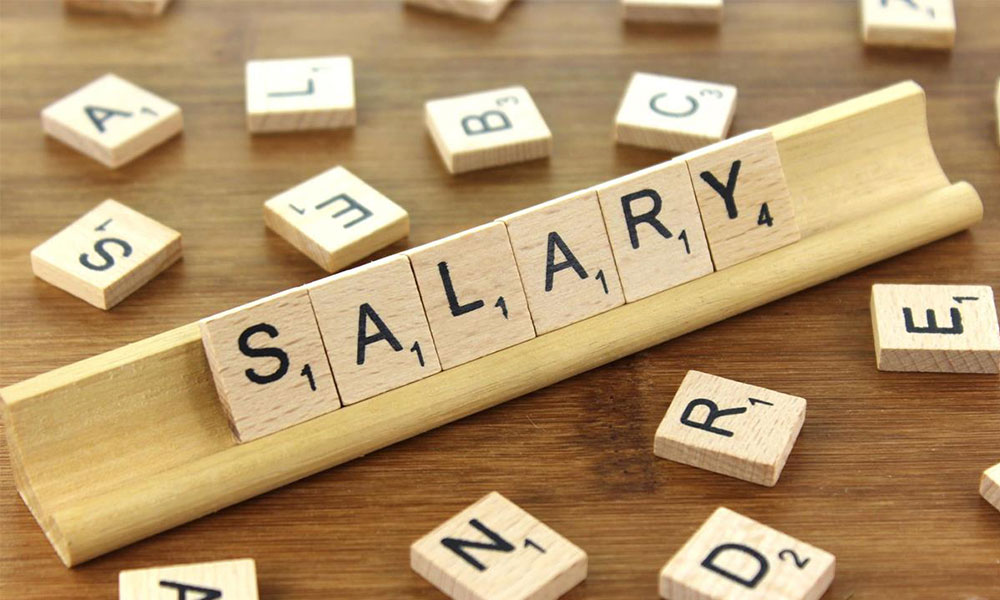
The differences between states make a single national figure even more complicated. The median formal wage in Kuala Lumpur was around RM4,527, but only RM1,827 in Kelantan, RM1,855 in Perlis and RM2,082 in Sabah. RM3,100 may increasingly look reasonable as a living wage in the Klang Valley, but its impact on a small business in Kota Bharu, Kangar or parts of Sabah would be very different.
Malaysia certainly needs to move towards higher wages, but it is unrealistic to assume that every state has the same productivity levels, operating costs and business capacity.
Higher wages still bring many benefits. Workers gain stronger purchasing power, larger EPF contributions, greater ability to service debt and more money to spend in the domestic economy.
Higher labour costs can also push companies to stop relying too heavily on cheap manpower and start investing more seriously in automation, technology and training. Malaysia cannot keep talking about becoming a high-income country while continuing to defend a business model built on low wages.
At the same time, the burden on employers cannot be ignored. Raising one worker’s salary from RM1,700 to RM3,100 adds RM16,800 a year to basic wage costs, before employer contributions and other expenses. Multiply that across 20 or 50 workers, and the number becomes significant.
This matters because micro, small and medium enterprises make up more than 96 percent of business establishments in Malaysia. Some companies can afford the increase. Some will raise prices. Others may reduce their workforce, stop hiring new workers or speed up automation.
A good policy should not result in higher salaries on paper while job opportunities shrink in reality.
Building wage ladder
A more practical solution is to build a proper wage ladder. The minimum wage should continue rising gradually, but salary progression based on skills, experience, productivity and years of service also needs to be taken seriously.
GLCs, large companies and high-productivity sectors should move more quickly towards RM3,100, while smaller businesses should be given time and support to adjust.
Automation assistance, worker training, tax incentives and access to technology should move together with wage reform. At the same time, the government must also reduce the cost of living itself.
Affordable rental housing, reliable public transport, cheaper childcare and accessible healthcare have a direct impact on people’s real incomes. An RM500 salary increase means little if rent, food and transport rise by the same amount.
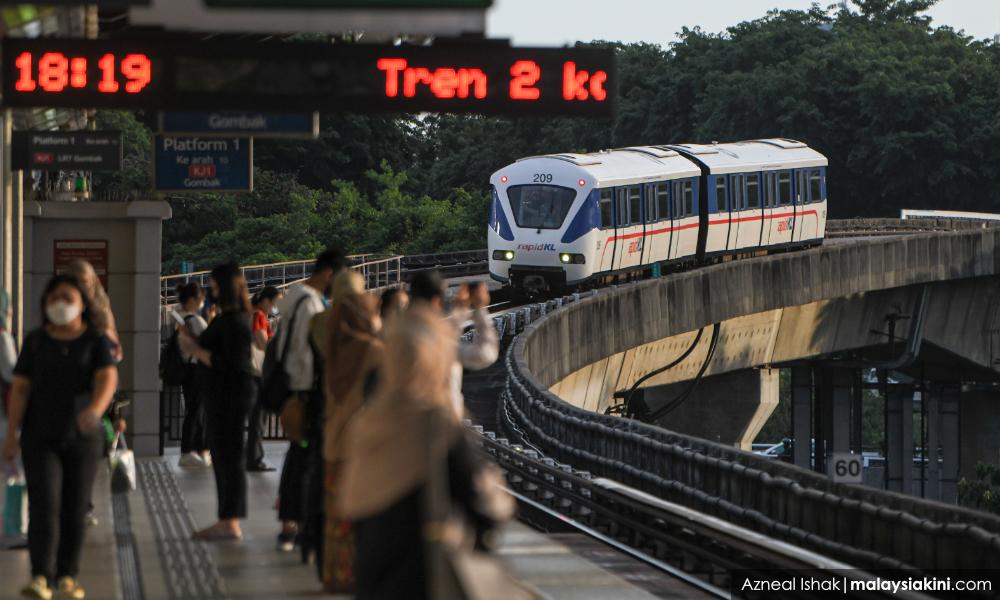
For Malays and bumiputera, this issue is even more sensitive. Decades of economic policies have successfully produced bumiputera professionals, entrepreneurs and asset owners.
The latest data also show that bumiputera household income inequality improved between 2022 and 2024. That progress should be acknowledged. But many lower- and middle-income bumiputera families are still struggling with wages, housing, debt and the cost of raising children.
After decades of affirmative policies, success should no longer be measured only by how many Malays become millionaires. It should also be measured by how many ordinary Malay families can move steadily from B40 into the middle class without depending permanently on subsidies and government assistance.
Fighting corruption
This is where corruption and governance become part of the economic discussion. Corruption is not the only reason wages are low, and not every fiscal problem in Malaysia can be blamed on corruption. But every major leakage gives the government fewer choices.
When project costs are inflated to make room for commissions or kickbacks, the government pays more for the same thing. When public investments fail because of poor management, institutions carry the losses. When projects are badly completed, the government pays to build them and then pays again to repair them.
Money lost this way is not just a number. It is money that could have gone to schools, hospitals, roads, scholarships, subsidies or support for lower-income families.
Malaysia has seen enough examples to understand this. 1MDB became a symbol of how political power, public funds and weak institutions can create damage that takes years to repair.
That is why issues involving Felda or Tabung Haji cannot be treated like ordinary corporate problems. These institutions carry the interests and expectations of Malays. If there is mismanagement or abuse, the people who eventually carry the consequences are not those sitting in the boardroom, but settlers, depositors and taxpayers.
On this issue, Prime Minister Anwar Ibrahim deserves credit. The follow-up to the Tabung Haji royal commission of inquiry findings has moved into investigations and the arrests of several former senior officials and related individuals. Arrest does not mean guilt, and due process must be respected, but allowing investigations to reach former senior officeholders is important.
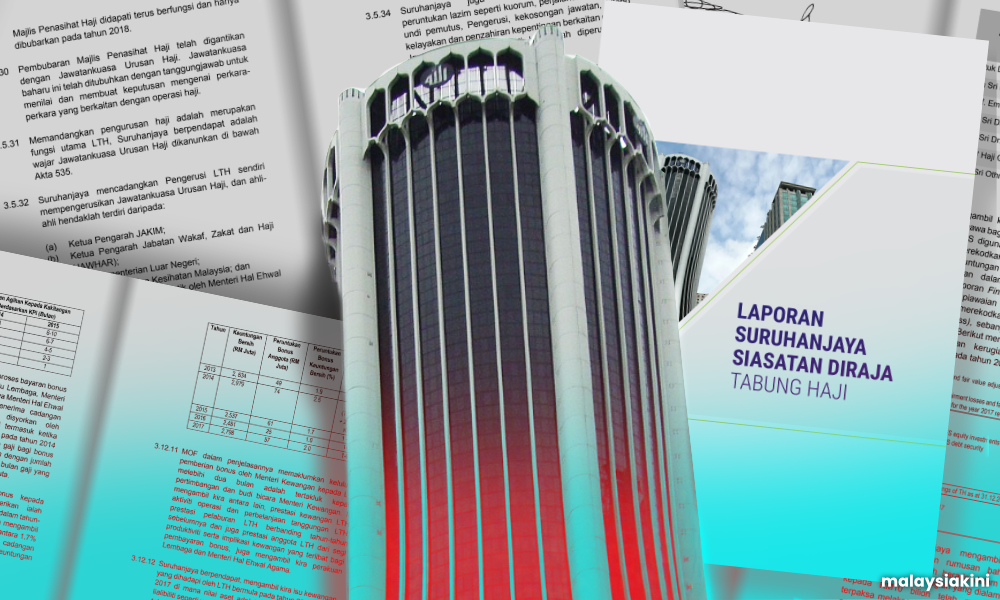
The same principle should apply to Felda. If wrongdoing took place, rank, political party, race or previous position should not provide protection. If there was no wrongdoing, a transparent investigation is equally important to clear those who are innocent.
The anti-corruption fight must eventually be felt in the economy. Every ringgit lost through corruption, inflated projects or careless management reduces what the government can do elsewhere.
When money becomes tight, recruitment is delayed, maintenance is cut, development projects are rearranged, scholarships are reduced, and subsidies have to be targeted more narrowly.
Corruption does not need to bankrupt a country overnight to hurt ordinary people. It is enough for it to make every ringgit of public revenue deliver less than it should.
Repairing structural problems
BN must carry responsibility for many structural weaknesses and governance failures that developed during its decades in power. But that cannot remain an excuse forever. Pakatan Harapan and Perikatan Nasional have both had experience governing the federal government since 2018 under different arrangements.
Structural problems do take time to repair, but reform must eventually produce changes that people can see and feel.
This is where Anwar will be judged. On corruption, reopening sensitive files and allowing institutions such as Tabung Haji and Felda to be examined more closely is the right move. On wages, the government has raised the minimum wage to RM1,700 and introduced the RM3,100 living-wage idea through GLICs and GLCs.
But the real test is how to raise workers’ incomes without squeezing small businesses to the point where they can no longer hire. Supporting workers alone does not solve the problem if businesses close. Supporting employers alone is equally unacceptable if workers continue living on wages that are simply too low.
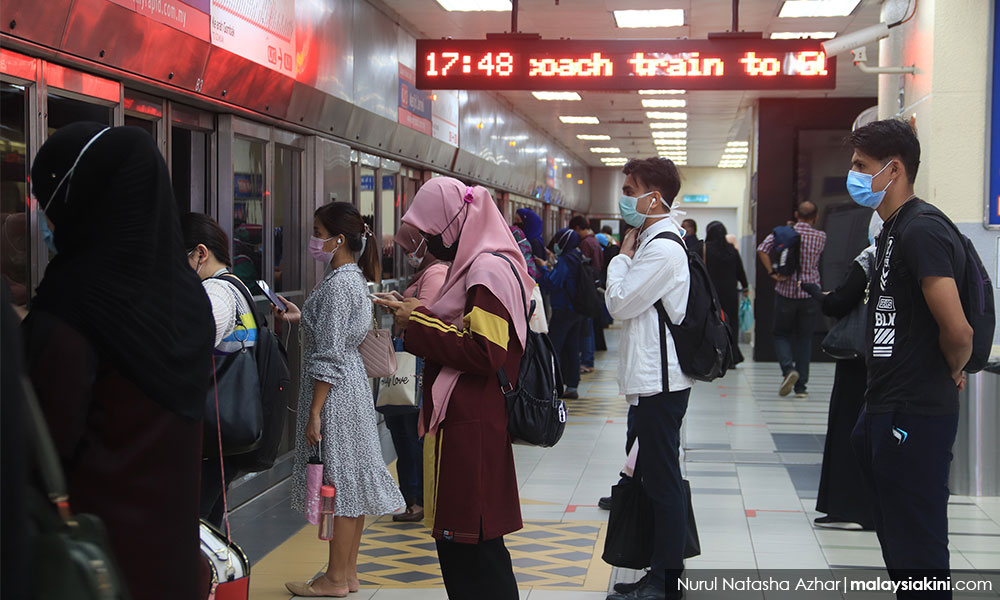
Malaysia’s problem is ultimately bigger than whether the minimum wage should be RM1,700, RM2,000 or RM3,100. Higher wages, stronger productivity, controlled living costs and cleaner government must move together. RM3,100 can be a target, but it does not have to become an immediate nationwide order.
The real goal is to build an economy that can pay RM3,100 without employers treating it as extraordinary and without workers seeing it as a luxury. Anwar has started part of that work, especially on governance and corruption.
But success will not be measured by how many investigations are opened or how many people are arrested. It will be measured by whether institutions become harder to abuse, public money becomes safer, and economic reform finally reaches the worker who still sees the same number on his payslip at the end of every month.
MAHATHIR MOHD RAIS is a former Federal Territories Bersatu and Perikatan Nasional secretary. He is now a PKR member.
The views expressed here are those of the author/contributor and do not necessarily represent the views of Malaysiakini.
/file/publisher-c1a3f893382d2b2f8a9aa22a654d9c97/2026/08/cdf592b134139206b5fe0543ca3c8748.jpg)
/file/publisher-c1a3f893382d2b2f8a9aa22a654d9c97/2025/06/065d24498a243245e33323a4c3d99b8a.jpg)
/file/publisher-c1a3f893382d2b2f8a9aa22a654d9c97/2020/09/c175e3b0fbeaa1b5c1ecdd14c7f454aa.jpg)
/file/publisher-c1a3f893382d2b2f8a9aa22a654d9c97/2022/11/39540335ad7aa0327194c9c4d3004288.jpg)
/file/publisher-c1a3f893382d2b2f8a9aa22a654d9c97/2026/04/cb746e3336bad47da9a741cf80897837.jpg)
/file/publisher-c1a3f893382d2b2f8a9aa22a654d9c97/2025/04/705f6f805bc9a968282938df507e57f6.jpg)


Report this comment
Are you sure you want to delete this comment?
This action cannot be undone.