




Public transportation - an evaluation (Pt 2)
Within the public transportation industry, the government (specifically, the Commercial Vehicles Licensing Board) has fixed fares at low rates for long periods of time, while allowing numerous providers to enter the industry. This has happened with urban transportation, taxicabs, school buses and express buses.
The results of these careless actions is that firms cannot meet their expenses with the existing fares and increasing competition, so they sacrifice safety and/or quality at the expense of the public. We have seen this again and again in the taxi industry, in the urban buses (Penang being a notorious example) as well as the intercity express bus industry.
Within the public transportation industry, the government (specifically, the Commercial Vehicles Licensing Board) has fixed fares at low rates for long periods of time, while allowing numerous providers to enter the industry. This has happened with urban transportation, taxicabs, school buses and express buses.
The results of these careless actions is that firms cannot meet their expenses with the existing fares and increasing competition, so they sacrifice safety and/or quality at the expense of the public. We have seen this again and again in the taxi industry, in the urban buses (Penang being a notorious example) as well as the intercity express bus industry.
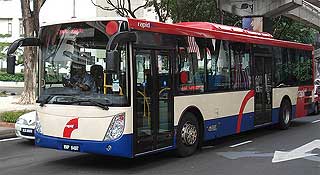 It is bad enough that the government is treating public transportation as a competitive business, rather than a service. What is worse is that they are interfering with this competition by allowing more licenses and constraining the industry as a whole with bureaucracy and prices that are fixed at low, unsustainable levels.
The CVLB has also been accused by public transport operators for allowing unfair competition in the Klang Valley and in Penang. Bus operator Metrobus Nationwide Sdn. Bhd. has even launched a lawsuit against the CVLB for allowing government sponsored operator Rapid KL to charge fares that are ‘lower than normal’.
Transportation, especially public transportation, is a capital intensive industry. It requires significant money to invest in the purchase, operations, and maintenance of a bus fleet. That is why quality public transportation services (especially urban transportation) are usually run by a limited number of providers.
Low fares and large numbers of independent operators and unfair competition will mean disaster for public transportation.
Future role of the CVLB
The Commercial Vehicles Licensing Board has not been able to properly assume its role in overseeing public transportation in Malaysia. CVLB enforcers have been powerless to enforce laws throughout the country. Taxi drivers continuously flout the use of the meter all over the country, and public transport operators in Kuala Lumpur and Penang and other major cities are still flouting regulations and violating laws.
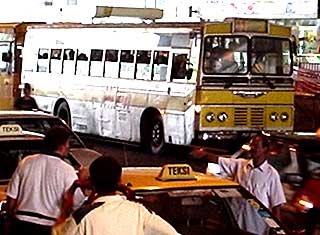 The CVLB has not been able to enforce its authority at the local level. Thus, it appears to be oblivious and operates with two goals in mind - to sell more permits and to resist all attempts to raise fares to a natural, sustainable level.
There is no reason for the Commercial Vehicles Licensing Board to have a role in the proper planning and regulation of public transportation, especially urban transportation. It is strongly recommended that the NPTA take over the planning and regulation of public transportation.
The CVLB should be limited to licensing commercial vehicles such as lorries and vans and school, factory, and excursion buses.
Financing and operations
Investment in quality public transportation services will initially require more funding from the government. This funding can be provided through indirect (usually capital funding) and direct (operational) subsidy.
Indirect subsidy can be provided through funding of capital purchases. Currently the Finance Ministry (through Prasrana) buys buses and owns these buses. Government operators Rapid (RapidKL) and RapidPenang operate these buses for the duration of their operations contract (which for Rapid is from 2003-2013).
RapidKL has a 100% capital subsidy, which reduces some of the capital expenditure for the bus operator. In addition, RapidKL receives a 50% operational subsidy from the Ministry of Finance. This level of subsidy is competitive with other municipal transport authorities throughout the world. Indeed, it is this level of subsidy that allowed RapidKL to switch to a ‘hub-and-spoke’ system in 2006 with the goal of improving public transportation services.
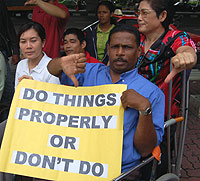 The very significant problem is that the service operated by Rapid (then and now) does not compare to the services operated by other bus operators across the world, even those receiving a much lower subsidy. This must be looked at very carefully, especially since RapidKL failed to meet their promises in 2006 and ultimately restructured their network in 2007.
The company made many excuses for not meeting their stated service goals, and claimed that one reason for changing their ‘Revamped (Hub-and-spoke) network’ to an ‘extended’ network was to improve cost recovery. This suggests that Rapid was not able to properly manage their financial resources.
Improved cost recovery should not be the goal of a government-funded operator with a 100% capital subsidy and 50% operations subsidy. They should be focusing on service rather than cost recovery and they should be capable of achieving quality service based on international standards, rather than national standards.
Step 3 – Regulation and oversight at the local level
Both the ‘hub-and-spoke’ network and the separate owner-operator system have been successful in other parts of the world. These improvements would work if implemented properly across the entire public transport network.
For this reason, it is recommended that this system of separate owner and operator be expanded to include other bus operators in Malaysia. Under this system Prasarana would continue to buy buses. These buses and bus routes would be under the control of the LPTAs which would sign contracts with bus operators in their local areas.
Having an open tender system would show maximum transparency and reduce the potential for unfair competition. In addition, an open tender system would allow better quality of operators, especially if the tender is opened up to include international transport operators such as First, Veolia, Laidlaw, and ComfortDelGro. Having a limited contract period would encourage better quality of service. It would also make the bus operators accountable to their customers, the passengers.
Currently, the Finance Ministry is implementing a version of this separate owner-operator system using Prasarana and Rapid (RapidKL) in the Klang Valley and Prasarana and RapidPenang in Penang. Unfortunately there is no accountability to the customers - the passengers - because the system does not include the other bus operators and there is no regulated competition (within the system) for the government operators.
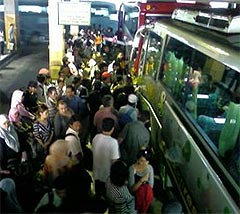 Once the role of the NPTA is clearly established as the national body for the planning and funding and regulation of public transportation, it would apply its efforts to make changes at the local and regional level. The NPTA would create a national standard for public transportation, and provide funding for major public transport projects.
The NPTA would then create Local Public Transportation Authorities (LPTAs) which would be responsible for planning and overseeing public transportation within the different regions of Malaysia, such as the Klang Valley and Selangor (KL-Sel), Kinta Valley (KV), Pulau Pinang and Northern Economic Corridor (NCER), the Iskandar Development Region and the southern region (IDR-S), East Coast Economic Region (ECER), and regions in Sabah and Sarawak.
The Local Public Transportation Authorities would be able to oversee public transportation much more carefully because they would be focused on their respective regions. The role of the National Public Transportation Authority would be to coordinate funding and planning on a national and inter-regional level, as well as providing additional funding for major public transport projects. The Local Public Transportation Authorities would coordinate funding and planning on a local and regional scale and oversee the public transport operators.
 To maintain the standards and quality, the LPTA would follow the system established by SPNB and RapidKL. Each LPTA would own the buses and routes within their jurisdictional areas and these buses and routes would be contracted out using open tenders to Malaysian and international urban transport operators. Each LPTA could employ different bus operators but they would each use a single fare and route designation system (chosen by the LPTA).
The LPTA would retain overall control over the routes and enforce service quality. Consumer satisfaction would be very important especially when it comes time to renew the contracts. Operators that could not maintain their service quality or meet the expectations of the LPTA (and the public) would lose their contract to another competitor. This mix of private operations and regulated competition would maintain higher standards in the industry.
Guidelines for effective public transportation/public transit planning
The value of a complete and effective road and expressway network is understood. Citizens regularly call on the government to complete missing links in the road and expressway network. Generally, projects to widen and upgrade roads and construct new roads and expressways get strong support.
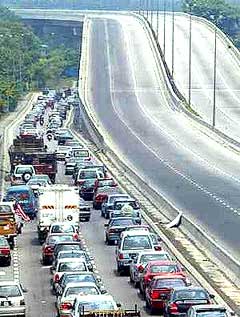
At the same time there is a failure to understand that a complete and integrated rapid transit network is just as important as a road network. Money spent on public transportation is often regarded as ‘wasteful’ spending. Bus companies are exhorted to introduce new bus routes and the government to build more rapid transit lines and integrate networks, while keeping fares ridiculously low.
The result is that public transit services are usually built in ‘high density’ areas to service the ‘lower and middle-income’ people. This also means that planning for public transit services is usually an afterthought to development. Public transit is forced to catch up to development, rather than being integrated into the development at an early stage.
This obviously must change.
MOAZ YUSUF AHMAD, a regular user of public transport, is deeply concerned that government plans to encourage the use of public transport will ultimately fail because of poor planning and lack of support from the public.


