


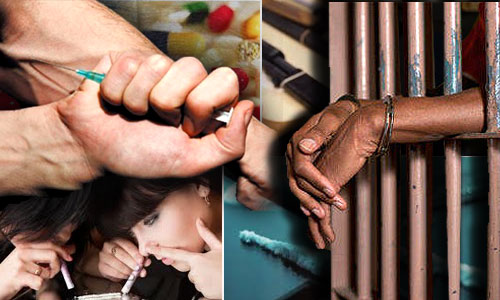

What is Malaysia’s commitment to fight the drug war?
Since the arrival of the Philippines’ new President, Rodrigo Duterte, the country’s hopes to stem the illicit drug menace are gaining tremendous support from that nation’s citizenry - except from within the power corridors of Duterte’s opponents in all likelihood.
And now we hear that Indonesia, too, is willing to learn a thing or two from Philippines to wage war on drug dealers who have for a very long time been destroying nations.
Since Duterte took office in June, 2,400 people have been killed in his ‘war on drugs’ which of course is not going down well with human rights activists and even the United Nations.
What the polished and polite entities refuse to take into account is why then is it that before Duterte started his war on drugs, the decades of UN or NGOs presence could not purge third world nations from this menace that truly destroys nations from within?
In any case, it is good to know that the Indonesian authorities have the humility to admit publicly the seriousness of the drug abuse problem in their country. That certainly is the first step to commit to good governance.
We read that “inspired by the Philippines ‘war on drugs’, Indonesia’s anti-narcotics chief plans to aggressively ramp up the country’s fight against drugs by bolstering its police force with more personnel and heavy weaponry”.
Budi Waseso, chief of Indonesia’s national anti-narcotics agency BNN, states that they were “in the process of adding weapons, investigators, technology, and sniffer dogs to its arsenal as it steps up law enforcement efforts in one of the region’s biggest narcotics markets”.
And to those who may raise eyebrows, Budi Waseso’s answer is straight to the point - “The life of a dealer is meaningless because (he) carries out mass murder. How can we respect that?”
That chilling answer perhaps will be edifying for quarters that have been going soft on the real problems behind the drug addiction in countries.
Meanwhile, what are the Malaysian authorities going to do to this drug problem that has been afflicting our small nation of 30 million people?
What is the over half century political party Umno under the stewardship of a ‘warrior’ making renewed urgings for protecting race and religion going to do other than announce billions of funds and allocations for urban and rural development through the provision of mega eco parks and amenities?
According to statistics available on the Internet, in 2011, 79 percent of drug addicts in Malaysia were Malays.
130,000 known drug addicts
And the New Straits Times online report (April 19, 2016) stated that there were 130,000 known drug addicts (registered) in Malaysia.
Further examination of the report indicates that the able, employable segment of the working population is victim to this menace.
It is no secret that the drug problem in Malaysia is bigger than the statistics on which we can lay our hands. For one, what the reports say is only those who are arrested and or undergoing rehabilitation. What we do know is that there are far more addicts roaming alleys, back-lanes, nooks and corners hooked on illicit drugs and not arrested.
Citizens will recall of newspaper reports on how it took the Malaysian authorities quite a while to stumble onto a whole factory manufacturing illicit drugs in Semenyih (south of the federal capital) - only after China exposed the link.
Truly, we need to first come out into the open and admit how seriously we are lagging in this drug war. Mere tabloid reporting occasionally of police and customs seizures of drugs like heroin, morphine, cannabis, etc made is not the benchmark of a winning war on drugs.
The leadership of the nation must wage the war. So does Malaysia too have what it takes to wage war on the drug dealers and pushers?
Over to you, honourable prime minister, home minister and the inspector-general of police.


