




LETTER | Stricter enforcement needed to prevent misuse of migrant worker approvals
LETTER | The Malaysian Employers Federation (MEF) calls on the government to strengthen enforcement of migrant worker employment policies to ensure that foreign workers are recruited only for approved sectors and occupations where genuine labour shortages exist, particularly in dirty, dangerous and difficult (3D) jobs and other positions that remain unattractive to local workers.
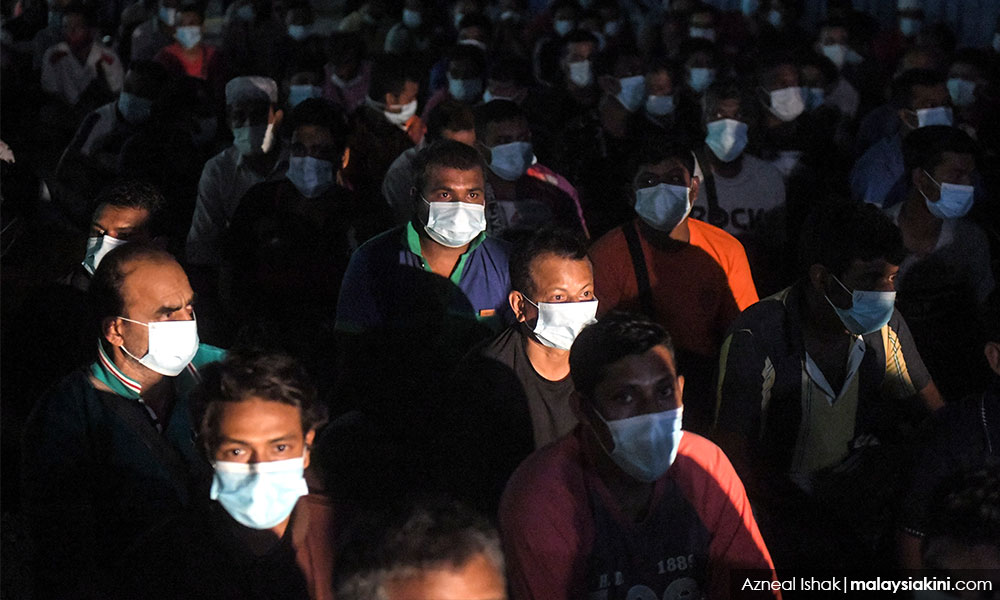
Reports of migrant workers being employed in mainstream, customer-contact occupations, including as cashiers, retail assistants, service attendants and food service personnel, raise important questions about whether existing foreign worker recruitment policies are being properly implemented and enforced.
MEF believes that migrant worker recruitment must be guided by genuine labour market needs, supported by effective monitoring and strict compliance with the conditions attached to recruitment approvals. Any abuse of the system must be addressed firmly, fairly and consistently.
Syed Hussain Syed Husman, MEF senior adviser for government, media and international engagement, said: “Migrant workers are an important part of Malaysia’s workforce in sectors where employers face genuine and persistent labour shortages. However, migrant worker recruitment must not become a substitute for developing local workforce or an alternative to providing Malaysians with fair opportunities to participate in the economy.
“The government must take firm action against employers, recruitment agents or other parties that misuse migrant worker approvals, circumvent sectoral restrictions or deploy foreign workers outside the occupations for which they have been authorised and approved. Approval to recruit migrant workers must come with clear obligations, and non-compliance must carry appropriate consequences.”
MEF emphasises that Malaysians must be given the first opportunity to fill available positions, particularly in occupations that the local workforce can reasonably perform.
Employers should make genuine efforts to recruit, train and retain Malaysian workers before seeking to hire foreign workers. These efforts should include offering competitive and sustainable wages, improving working conditions, providing career progression and investing in skills development.
Recruitment, retention challenges
At the same time, the government and industry must recognise that some occupations continue to face persistent recruitment and retention challenges. Migrant workers may therefore remain necessary in certain 3D jobs and other positions that are difficult to attract and retain local employees, even after reasonable efforts have been made to attract Malaysians.
"Malaysia must build its own local talent, strengthen local workforce participation and develop a more productive and skilled workforce. We cannot allow long-term dependence on foreign labour to weaken our commitment to develop Malaysian capabilities.
“A country that relies excessively on imported labour without sufficiently investing in its own people risks becoming vulnerable to labour supply disruptions, rising recruitment costs and structural weaknesses in productivity. Migrant workers should complement the local workforce where necessary, not displace Malaysians from jobs they can and are willing to undertake," Syed Hussain added.
MEF believes that reducing dependency on migrant labour must be a gradual, structured and practical process. Employers need sufficient time and support to redesign jobs, improve productivity, adopt appropriate technologies and develop local talent without compromising business continuity or Malaysia’s competitiveness as an investment destination.
MEF calls on the government to strengthen monitoring and enforcement to ensure that migrant worker recruitment approvals are used strictly for their intended purposes. Among the measures that should be considered are:
i) Tighter compliance checks. Conduct targeted and risk-based inspections to verify that migrant workers are employed in the approved sectors, occupations and workplaces.
ii) Firm action against abuse. Investigate and impose proportionate but meaningful penalties on employers, recruitment agents and other parties found to have deliberately breached approval conditions or circumvented applicable restrictions, with due process and accountability.
iii) Stronger recruitment controls. Require employers to demonstrate genuine recruitment difficulties and reasonable efforts to hire Malaysians before migrant worker applications are approved, where applicable.
iv) Better coordination and data sharing. Strengthen coordination among relevant ministries and enforcement agencies to identify discrepancies between recruitment approvals, actual employment, payroll records and workplace deployment.
v) Periodic sectoral reviews. Regularly assess labour shortages by sector, occupation and locality so that foreign worker approvals reflect actual demand rather than becoming a permanent response to workforce planning weaknesses.
MEF encourages the government to review the feasibility of progressively expanding restrictions on migrant worker employment in selected occupations where local recruitment is demonstrably viable. Any such measures should be supported by labour market evidence, meaningful consultation with employers and a realistic transition period.
A blanket restriction without adequate assessment will create unintended labour shortages, increase operating costs and affect the continuity of essential services. The objective should be to reduce unnecessary dependence on foreign labour while preserving the ability of businesses to meet legitimate workforce needs.
Employers must meet standards
MEF further stresses that employers must comply with all applicable employment, immigration and worker accommodation requirements when recruiting and employing foreign workers. In particular, employers must fulfil their obligations under the Workers’ Minimum Standards of Housing and Amenities Act 1990 (Act 446), where applicable, including the relevant requirements governing workers’ accommodation.
Proper accommodation is an important aspect of responsible employment. It safeguards workers’ health, safety and dignity while helping to maintain public health, community well-being and harmonious relations between migrant workers and local residents.
However, compliance should be assessed against the applicable legal requirements rather than by assuming that every migrant worker must reside in a Centralised Labour Quarter (CLQ). Employers must ensure that the accommodation arrangements used meet the relevant statutory standards and that the responsible parties fulfil their legal obligations.
MEF supports stronger inspections and enforcement against substandard accommodation, overcrowding and other violations. Employers should also conduct appropriate due diligence on accommodation providers and ensure that workers are housed in safe, lawful and suitable premises.
MEF reiterates that a sustainable migrant worker policy requires shared responsibility between the government and employers. The government must provide clear and consistent policies, transparent approval processes, effective enforcement and stronger investment in technical and vocational education and training, skills development and workforce participation.
Employers, in turn, must exercise responsible recruitment practices, prioritise Malaysians where feasible, improve job quality and invest in productivity-enhancing technologies and workforce development.
“The ultimate objective should not simply be to limit the number of migrant workers entering Malaysia. It must be to build a stronger Malaysian workforce that can support the country’s long-term economic sustainability.
“We need to develop our own talent, equip Malaysians with relevant skills and create better employment opportunities that attract and retain local workers. Migrant labour should serve as a targeted and necessary complement to our workforce, rather than a permanent substitute for developing local talent.
“MEF stands ready to work with the government to strengthen enforcement, address genuine labour shortages and develop a more sustainable workforce policy that protects Malaysian employment opportunities while enabling responsible employers to remain competitive," Syed Hussain concluded.
MEF remains committed to constructive engagement with the government, employers and other stakeholders to promote a balanced, transparent and sustainable labour market that advances Malaysian workforce development, responsible employment practices and national economic competitiveness.
The views expressed here are those of the author/contributor and do not necessarily represent the views of Malaysiakini.






Report this comment
Are you sure you want to delete this comment?
This action cannot be undone.