




BN may be down, but it's not out
Two numbers stand out in the recently concluded Penanti by-election. The first is 87%, the percentage of the valid vote won by PKR candidate Mansor Othman. The second is 46%, the estimated voter turnout.
Two numbers stand out in the recently concluded Penanti by-election. The first is 87%, the percentage of the valid vote won by PKR candidate Mansor Othman. The second is 46%, the estimated voter turnout.
The first number is significant because it creates an impression of seeming electoral dominance on the part of Pakatan Rakyat. This is the fifth by-election won by Pakatan in Peninsular Malaysia after the March 2008 general election (Permatang Pauh, Kuala Terengganu, Bukit Gantang, Bukit Selambau and now Penanti) and the first in which Barisan Nasional choose not to contest in.
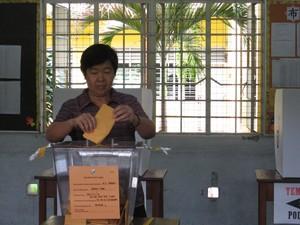 The 87% of valid votes won by Pakatan is comparable to the 89% achieved by the BN in the 2007 Bukit Talam by-election in Pahang, which was boycotted by PAS and PKR.
All three independent candidates lost their deposits including former Penang PKR Wanita chief Aminah Abdullah. In fact, the headlines she created by accusing two PKR leaders of ‘bribing’ her seemed to have backfired, resulting in her failing to win the most number of votes among the independent candidates.
The 87% vote garnered by the PKR candidate translated into a majority of 5,558, more than doubling the majority of 2,219 achieved in the 2008 general election.
Pakatan machinery not up to the mark
That said, is Pakatan emerging as the dominant coalition at least in Peninsular Malaysia? Can their momentum be stopped at the next by-election in Manek Urai, where PAS is the likely favourite?
It would be premature to write off BN this early in the game. Pakatan has not yet shown that it has the same kind of organisation muscle and resources as BN as evidenced by the less than 50% turnout.
The turnout in the Batu Talam by-election, where a nominal DAP candidate was fielded, was 67%. Pakatan needed a turnout of at least 60% to demonstrate its ability to turn out its core supporters as well as some much needed fence-sitters.
Pakatan supporters would say that the start of the school holidays as well as the non-contestation of BN account for the surprisingly low turnout.
 They would also point to the 81% turnout achieved in the Permatang Pauh by-election, which was won by a comfortable margin by Anwar Ibrahim, as a sign that if the contest was important enough, their supporters would turn out in sufficient numbers.
But one cannot discount the fact that in two of the polling streams or ‘salurans’ in Penanti – Mengkuang and Kuala Mengkuan – where the average age of the voters was below 30, the turnout barely reached 30%.
Given the importance of younger voters and their higher than average support for Pakatan, especially looking ahead to the next general election, one has to ask if Pakatan has the ability to register, and subsequently turn out, enough younger voters for it to make further electoral gains.
Pakatan not really tested in by-elections
More importantly, one has to be reminded that Pakatan has been fortunate in that all but one of the five by-elections held thus far in Peninsular Malaysia have been in areas where Pakatan was the incumbent.
In the case of the Kuala Terenggau by-election where the BN was the incumbent, one could make the argument that PAS held the electoral advantage, given that it controlled three out of four state seats and would have won the parliamentary seat in 2008 if not for split voting that went against the then PAS candidate, Mohamed Sabu.
 Even if PAS manages to win Manek Urai, it would be merely retaining a seat that it previously held.
One can make a stronger argument that Pakatan is on the ascendancy only if it manages to make electoral inroads into BN strongholds in Pahang, Malacca and Johor. Thus far, there has not been any opportunity for Pakatan to be tested in any of these states.
Penanti was a good result for Pakatan but the fact that the BN made the strategically advantageous move not to contest this seat made this by-election seem almost irrelevant.
The by-elections after March 2008 have favoured Pakatan thus far. But to say that the electoral ascendancy of Pakatan cannot be stopped would require a stretch of the imagination. BN may be down for now, but it is definitely not out.
The worse thing Pakatan can do now would be to take the BN for granted.
ONG KIAN MING is a PhD candidate in Political Science at Duke University. He can be reached at im.ok.man@gmail.com.


Are you sure you want to delete this comment?
This action cannot be undone.