




What makes a neighbourhood successful
Life in any big city of the world can be intimidating, alienating, and terrifying. Life in Kuala Lumpur and the Klang Valley is particularly daunting.
Life in any big city of the world can be intimidating, alienating, and terrifying. Life in Kuala Lumpur and the Klang Valley is particularly daunting.
The city grows like an amoeba - seemingly without order in all directions. Every empty piece of land in the Klang Valley has been developed into contiguous housing estates that climb like vicious vines up almost every hill top.
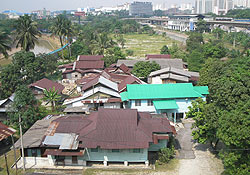 Personal space means merely a 20 by 70 foot link house in one of these sprawling Tamans.
Since most families own more than one car, the roads along these housing estates are choked by cars parked on both sides of the road, right up to the gates of individual houses.
Outside the gate, the common space for the dwellers of this largest city in Malaysia is choked with traffic, roads, flyovers, selfish drivers, shopping malls, shops, unruly bus stops, and marauding pedestrians.
Everybody is in a great hurry to go somewhere, and nobody is prepared to give way.
The sound and the fury of city living is enough to drive you to wear your public visage, fierce, unfriendly, defensive, impatient, and always ready to take offence.
Squeezed into a crowded valley, the 7 million residents living in the hinterland of the nation's capital share very little good will for one another.
Here, a resident can only find comfort and warmth within the confines of his house, his fortress against a hostile world outside the gate.
He must fortify his castle with numerous iron bars and thick pad locks on every door and window because the fear of thieves has overtaken him.
His castle is now also his prison.
In his isolation, he leaves everybody else alone, and he wants to be left alone.
People here live for years without saying hello to their next door neighbours.
If neighbours are in trouble in one way or another, well it is every man for himself!
It is well nigh impossible to nurture any community spirit among the members of any neighbourhood.
Not quite mission impossible
Amassing social capital on such arid sterile alienated human habitation seems like mission impossible.
But there are success stories.
I moved into my neighbourhood in Cheras on top of the hills on the border between the Federal Territory and the state of Selangor five years ago.
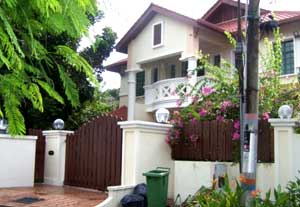 Since then, the area has grown beyond recognition, with numerous new shops, a daily morning wet market, and a Pasar Malam.
There is a petrol station, a post office, and an Econsave supermarket.
What is lacking is a bank.
The security problems are not as bad as Chow Kit Road in downtown KL of course, but I had my worries.
The owner of an Indian restaurant was killed violently right at the cashier's counter in his shop, where I ate frequently.
Indian gang members from a poor neighbourhood in a housing estate roamed my area on their noisy motorbikes and sometimes asked the shopkeepers for protection money.
Groups of funny looking characters would walk by in the back lane behind my house every day.
Strange cars drove slowly by. I was getting really uncomfortable and nervous.
Twice, security companies offered their services to set up guardhouses.
They hired foreigners as guards. The residents probably felt like I did.
Fearing that the guards might turn out to be wolves in sheep clothing, we did not support these companies. They pulled out in the end.
Then the spate of break-ins started. Some houses were robbed twice.
The house behind my own was broken into, and valuables were carted off without anybody knowing it.
I grew more and more fearful, and wished I had a license for firearms.
I thought of soliciting help from the local branches of the political parties.
The local MP is a useless PAS fellow. The state assemblyman is an Umno guy who is never seen in his constituency.
There is a PKR office nearby, but it is never open.
Coming together at last
Then, in October last year, I received a notice in my mailbox announcing an inaugural meeting for a residents' association with the objective of bolstering up security in my neighbourhood.
I did not attend but a group of people appeared at my gate and recruited me as a member of the new association.
All I had to do was to pay RM50 a month.
Within days, the guard houses were up in the two major entrances, and other roads leading into the Taman were blocked off.
Eleven guards were hired, to man the gates round the clock.
They had smart uniforms and were friendly to residents who had all been issued with an official sticker to be posted on the windscreen of their cars.
They would smile and wave their hand as you drive by the gate.
For visitors without the sticker issued by the residents' association, they would examine the driving license of the driver and take down the details.
If the driver is too impatient to wait for the process, as most drivers are, they would have to leave their driving license at the guard house and collect it on their way out.
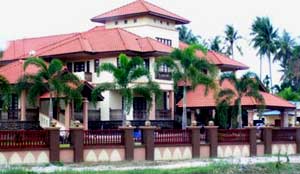 One guard will also patrol all the lanes in the neighbourhood on a motorbike every hour or so, looking left and right as he goes by, to make sure everything was kosher.
These guards were all Malaysians, and there were more than a few of them from Sabah.
The odd ones who failed in their duty were promptly fired and replaced.
Immediately, the house breaking stopped, and my neighbourhood became crime free completely.
Suddenly, there were no longer strange looking pedestrians and cars.
I heaved a huge sigh of relieve.
Then, one night, I was invited to attend a buffet dinner and a meeting of the residents' association at the chairman's house.
There I met many committee members for the first time.
I also met many neighbours whom I had not greeted before.
All good men and women
They all turned out to be decent courteous and respectful people.
I was told they had the support of the Kajang town council in all that they do, and their registration with the Registrar of Society was pending.
A club house at the neighbourhood playground was even planned.
I was then told that about 95 percent of the residents in our neighbourhood had signed up as members, a participation rate that is unheard of throughout Selangor!
So far, there were very few complaints.
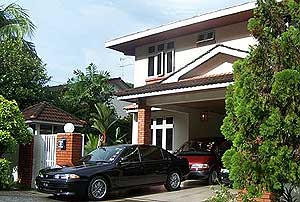 The meeting that night was whether the residents' association should be involved in the management of the pasar malam, which had been plagued by a string of problems and had proven to be a huge headache for the local council.
I advised them against it on grounds of legal jurisdiction.
Later, I met with a committee member of our residents' association Eddie Ng, who was also a DAP member with the Cheras party division who was under the tutelage of the famous MP Tan Kok Wai.
We agreed to help set up an association for the pasar malam hawkers.
Within weeks, an inaugural meeting of the pasar malam hawkers' association was held, and the protem committee was duly elected.
After that, the committee leaders had met the top officials in their local council to thrash out all outstanding problems on the issuance of licenses.
They got down to work among themselves and laid down rules for the proper running of their night market.
The last time I looked at the pasar malam, they were very orderly and well-behaved.
Business was booming, and everyone seemed happy, though you could not avoid altogether the spates of minor conflicts here and there.
Yesterday morning, I bumped into the leading members of both the residents' and the hawkers' association at the neighbourhood coffee shop during breakfast.
Somebody bought a newspaper and pointed out to us all that Eddie Ng - one of our own - has been appointed the new councillor by the Pakatan Rakyat government for our area.
The satisfaction at this was expressed by all.
Then someone showed me a letter issued from Karpal Singh's office.
Apparently, the lady owner of a kindergarten was unhappy with the residents' association for demanding the driving licenses of visitors to her school.
She hired Karpal's office to demand what were the legal grounds for acquiring such powers that the residents' association had heaped upon themselves.
We discussed how to give the appropriate response and our position briefly and coolly.
I left the matter in their capable hands to deal with this kind of routine problems that could be expected by any residents' association.
That is what a civil society is all about - releasing the powerful collective social capital of a group of individual citizens for their common betterment.
This success story should be told.
SIM KWANG YANG can be reached at kenyalang578@hotmail.com


Are you sure you want to delete this comment?
This action cannot be undone.