




Down memory lane
I look back 20, and even 30 years ago, and I suddenly realise with a start that indeed Malaysia has changed beyond recognition. If you are caught in the swirling currents in the river of history, you would not be conscious of the currents of change.
Like a fish swimming in water, the fish would not really know what it feels like to be swimming in water. In modern parlance, the poor fish has no frame of reference, with which it can compare and evaluate its experience.
I look back 20, and even 30 years ago, and I suddenly realise with a start that indeed Malaysia has changed beyond recognition. If you are caught in the swirling currents in the river of history, you would not be conscious of the currents of change.
Like a fish swimming in water, the fish would not really know what it feels like to be swimming in water. In modern parlance, the poor fish has no frame of reference, with which it can compare and evaluate its experience.
Fortunately, we human beings have our sense of self-consciousness and our memory. They are the anchors upon which we can assess the intractable change in our body politics.
Thirty years ago, nobody I knew was very rich. I was working in a construction company as a manager for a grand monthly salary of RM500 a month. The standard salary for a clerk (now given the euphemism of an "administrative assistant") was about RM200.
 A new car was a real status symbol then. I bought my first car, a Toyota Corolla 1.3 for RM18,000 when I became elected as MP for the first time in 1982, long before the expensive and rickety national Proton cars came into existence.
My grand total repayment for my car loan came up to RM200 a month. But then, kembong fish cost RM2 per kilo in the wet market.
In 1982, the DAP suffered its worst defeat in history, winning only six seats in Peninsular Malaysia. The party chairman and DAP strongman Dr Chen Man Hin lost his Seremban seat to the MCA president then, Lee San Choon.
The poll in Sarawak and Sabah was staggered to be held three days after the general election in Peninsular Malaysia in 1982. The DAP made history in Sarawak by winning two seats, including my Bandar Kuching constituency, and Fung Ket Wing won the Sandakan seat in Sabah, making up nine DAP seats in parliament.
There were no other significant opposition parties in Malaysia at that time. That was a time when Tun M had just taken over the helm of leadership in the country.
I remember Anwar Ibrahim then, elected to the parliament for the first time, serving as the parliamentary secretary of a minor ministry. He looked worn out in his first day in Parliament.
Those were bad times for opposition politics, and I was painted as a communist sympathiser, definitely anti-government, and whatever press statement I issued would be thrown into the wastepaper basket beside the news desk in Sarawak and in KL. The newspaper editors told me gingerly. The PC had just surfaced, and the World Wide Web had not been invented yet.
Myth of the kedai kopi
Those were the bad old days when relatives and old classmates would avoid being seen with me in public. They made me feel like a plague, like HINI of the present days.
The bright young professional men I tried to recruit always had a family to feed and a job to hold down. That was when I discovered the solid virtues of the working class people, the hawkers, the fishermen, the construction contractors and labourers.
Nobody talked about politics in public, and the myth of the kedai kopi as the primal forum for shaping public opinion is overblown. Democracy, justice for all, and Ketuanan Rakyat were a dream that Malaysians could never summon the courage to dream about in those bad old days. Politics was all about race and religion, and about cari makan .
I have seen many of my personal friends and relatives "migrate" overseas to greener pasture. I have always thought that only birds and animals migrate with the change of seasons, and human beings emigrate or immigrate. But one has to make concessions to the polluting effect of Malenglish. So, "migrate" it has to be!
I still remember Steven Gan, attending an environmental NGO conference (Earth Summit in Rio de Janeiro) as a young idealistic journalist in the 1990s. I am glad he has gone on to found Malaysiakini , and changed Malaysian politics forever.
I remember Suhaimi Azam fondly, as the demure petite Malay journalist and her friends who were all casualties of the evil Operation Lalang. The wound to our national soul inflicted by that hideous mass arrest was indeed deep and painful.
In the 1980s, I could still bring my car from Kuching to Kuantan and then Kuala Lumpur by the ill-fated Ferry Malaysia so as to attend Parliament meeting. I could find my way all over the Klang valley without much difficulty. Today, I will get lost even trying to find my destination in Bukit Kiara or Bukit Damansara. They are just names to me.
I have to admit that our country has gone through a dramatic socio-economic transformation, and people's lives are generally much better than 20 or 30 years ago. There would be those who think that we should therefore be grateful toour Barisan government for having steered our ship of state through some very stormy economic waters in those decades past.
Naturally, there would be the rejoinder that without the corruption, mismanagement, and abuse and wastage of public funds, we would have become much richer. They would point to Singapore then.
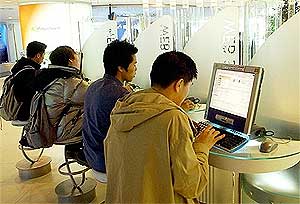 Politically, the clout enjoyed by the opposition today would have been unthinkable two or three decades ago. Now, our old vision of a two-coalition system hatched in the late 1980s is within sight, if the Pakatan Rakyat people get their act together. The Internet has changed the colours of Malaysian sky altogether. People do think differently nowadays, by and large, more or less.
As a senior citizen, I have to share my memory of the past with the new generations of Malaysians, to bear testimony to the imperceptible change in our national life. But many things that should have changed for the better remain the same, if not worse.
Corruption still ravages our public life
Malaysians still litter and live wasteful lives. They continue to pollute the environment. They still eat too much and become overweight, suffering from lifestyle diseases like diabetes and high-blood pressure.
They still double park and display all kinds of selfish and dangerous driving behaviours on the road. Seldom have young people given their seat to me on buses and monorail.
Corruption still ravages our public life, and despite the noises made by government leaders about striking fear in the hearts of the corrupt, I do not see much improvement in this department over the past three decades.
 Politics is still very much sectarian, obsessed with issues of religion and race, even among the opposition parties. The recent most controversy surrounding the controversial figures of Hassan Ali of PAS and Zulkifli Noordin (
right
) of PKR are the typical examples. I cannot tell much difference between them and Umno stalwarts.
Politics is still very much sectarian, obsessed with issues of religion and race, even among the opposition parties. The recent most controversy surrounding the controversial figures of Hassan Ali of PAS and Zulkifli Noordin (
right
) of PKR are the typical examples. I cannot tell much difference between them and Umno stalwarts.
The people will always remain the people, apathetic and mercenary. The other day, Wong Boon Keong came to meet me to discuss problems of recruiting volunteers for his election watch in Sarawak.
So many people want to get paid for a job that is their social responsibility to begin with, he lamented. Do they not realise that it is to their own interest to have an effective election watch dog? We discussed the role of Numfrel - the tens of thousands of election watchdog volunteer workers in the Philippines - who helped to topple the dictator Ferdinand Marcos in 1986. I was in Manila then as an observer.
Indeed, the spirit of volunteerism in Malaysia is pale and anaemic. The number of activist non-partisan NGOs is miniscule, compared to Indonesia and Malaysia. I see many of my old friends slogging at their old post of two or three decades without any new blood in sight.
Will we be able to achieve the objectives of Vision 2020, by becoming a developed nation?
I lived and worked in Canada for eight years in my twenties. I have since travelled through North America and Europe a few times. I have a rough idea of what a developed nation should look and smell like.
Malaysia will not be a developed nation by 2020, or 2050. Even if all the hardware is there, the software in the people's head is still absent.
First, we have to overhaul our education first!
SIM KWANG YANG can be reached at kenyalang578@hotmail.com.


Are you sure you want to delete this comment?
This action cannot be undone.