




M'sian view on Obama's Indonesia visit
US President Barack Hussein Obama is going to visit Indonesia on March 20-22. The presidential visit is certainly a major event as the United States is still the most powerful nation on earth while Indonesia is the largest and most populous country in Southeast Asia.
US President Barack Hussein Obama ( below ) is going to visit Indonesia on March 20-22.
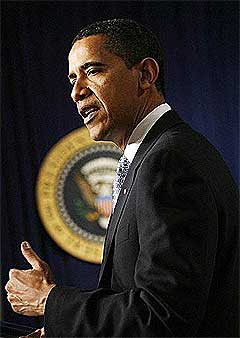 The presidential visit is certainly a major event as the United States is still the most powerful nation on earth while Indonesia is the largest and most populous country in Southeast Asia.
Its significance is also enhanced by the fact that the US has vowed to 'return' to Southeast Asia with the signing of Asean's Treaty of Amity & Cooperation (TAC) in Bangkok, July last year.
In a recent email correspondence, professor Dr Lee Poh Peng, a veteran scholar of international relations and long-time observer of American foreign policy, shares his observations and assessment of the presidential tour.
Lee, formerly with UKM's Institute of Malaysian & International Studies (Ikmas), is now a senior research fellow of UM's Institute of China Studies.
Malaysiakini: What do you see as the main objective or goal to be achieved by Obama's forthcoming visit to Indonesia?
There are two main objectives. First, Obama hopes to demonstrate American interest in Southeast Asia by his visit to the largest country in the region. This is an attempt to ease the concern expressed by many Southeast Asians and also Americans that the previous administration has largely neglected Southeast Asia, allowing China to gain ground there.
Another not unimportant objective is to show American goodwill (perceived to be in short supply in the previous Bush administration) towards the Muslim world. What better way to do so than to spend some precious presidential time in the most populous Muslim nation in the world and one increasingly perceived as having chosen a moderate Muslim path?
What are the other objectives? Are regional or even international security issues on the agenda of Obama's visit to the most-populous Muslim-majority nation in the world?
Another objective is to encourage Indonesia in its democratisation process. Indonesia, rather against expectations, managed to embrace democracy in the aftermath of the Asian financial crisis. It will do this process no harm for the leader of the world’s most powerful democracy to pay the country a visit.
I suppose Obama will also look forward to visiting a country where he spent some years of his boyhood and probably looks forward to see how the place and people have changed. I doubt there will be any serious American attempt to persuade the Indonesians to go along with any military pact directed against China.
Indeed if any such request is made, it will be rejected by the Indonesians. There might be moves, though, to ease the tension with the Indonesian military over the American sanctions against certain Indonesian military officers involved in human rights abuses, especially in East Timor.
In your observations, has anti-American sentiment in Indonesia subsided since the launch of the US-led Afghan War in 2001 and Iraq War in 2003? How has Indonesia-US bilateral relations changed since 1998?
I think anti-American sentiment has subsided somewhat, especially after the American offer of help during the tsunami crisis of 2004. It has, however, not gone away. So long as the US keeps going to war with Muslim nations- Afghanistan/Pakistan, Iraq and possibly Yemen and Iran - many Indonesians will feel that America is 'threatening' Islam.
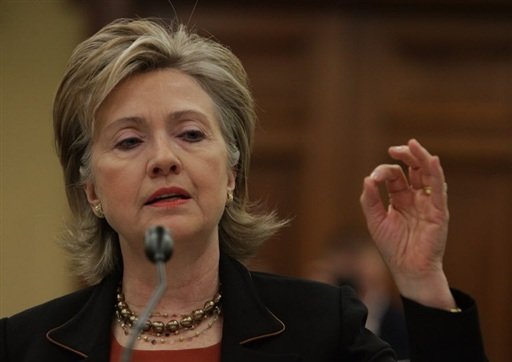
How would the presidential visit fit in the larger strategy of America's ‘back to Southeast Asia’ as announced by State Secretary Hillary Clinton ( below ) in Bangkok in July last year?
 As I said earlier, it is to demonstrate US interest in Southeast Asia. This is a continuation of an earlier meeting in Singapore between Obama and the Asean heads of state.
Do you foresee Obama visiting Malaysia in the near future? What is the prevailing state of the Malaysia-US bilateral relations?
You never know though I doubt there will be any visit in the immediate future. I would say that Malaysia-US bilateral relations are quite good. The atmospherics under Prime Minister Najib Abdul Razak is better than under Mahathir.
Mahathir had been quite critical of the US and the West in general even if he encouraged American investment and trade in Malaysia and military cooperation, sotto voce. Najib has so far not been seen by the Americans as indulging in anti-American rhetoric.


Report this comment
Are you sure you want to delete this comment?
This action cannot be undone.