




In defence of Idris Jala
There is perhaps no cabinet minister who is as energetic and inspiring as Idris Jala, a non-political cabinet appointee who is now the CEO of Pemandu, the government transformation unit that sits under the Prime Minister’s Department.
His honest reputation, his rags to high-level Shell executive story, his guitar playing prowess, his steadfast faith and his down-to-earth demeanour have all won him public admiration. Those who have heard him speak in public, as I have, would no doubt have found him to be an engaging speaker, in charge of his facts and figures and more than capable of selling the ideas which he feels so passionately for...
There is perhaps no cabinet minister who is as energetic and inspiring as Idris Jala, a non-political cabinet appointee who is now the CEO of Pemandu, the government transformation unit that sits under the Prime Minister’s Department.
His honest reputation, his rags to high-level Shell executive story, his guitar playing prowess, his steadfast faith and his down-to-earth demeanour have all won him public admiration. Those who have heard him speak in public, as I have, would no doubt have found him to be an engaging speaker, in charge of his facts and figures and more than capable of selling the ideas which he feels so passionately for.
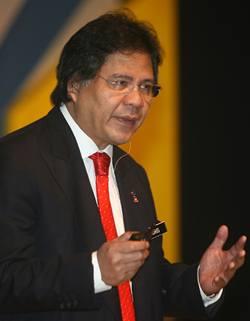 I have no doubt that those who have had, and are having the privilege of working with him (not for him), would have even more inspirational stories to tell in regard to his leadership skills both in terms of substance as well as in how he relates to the people around him.
But his very strengths can often be his liabilities as well especially in the dog-eat-dog world of realpolitik. The very fact that he is different and does not come from a political background (and hence devoid of political baggage), while seen as something positive in the public’s eye, is seen as something negative from the perspective of some of his cabinet colleagues for precisely the same reason.
Their political instincts, honed from many years of self-preservation, would obviously be sounding massive alarm bells when someone of Idris’ background and character wanders into their midst.
Idris, with his noble intentions and purposeful political naiveté, allowed himself to be made an easy target for the civil servants and their political masters to take down, most notably when none of the cabinet ministers came out to publicly support Idris after his subsidy reduction open house lab presentation. In fact, some ministries and ministers actually came out with statements to undermine Idris’ position as a cabinet minister and CEO of Pemandu.
Recommendation letters
It is in this context that I want to briefly discuss the latest round of ‘attacks’ against Idris, this time with regard to his earlier remarks on the necessity for limiting the significance and influence of recommendation issued by ministers and members of parliament.
It was recently reported that the BN’s Backbencher’s Club (BNBBC) may submit an official protest against Idris over his remarks last week on this particular matter.
On the face of it, the BNBBC’s arguments seem to be valid. Isn’t it reasonable, for example, to expect MPs or ministers to write recommendation letters for the children of their constituents who are hoping to enter university? Isn’t it reasonable for these same MPs or ministers to write a recommendation letter for a contract or company that is in their constituency?
While these arguments may seem reasonable at first glance, they fall apart once they are dissected and examined properly. Let us take, seemingly, the most reasonable of requests – asking an MP to write a letter of recommendation for the son or daughter of a constituent who wants to apply to a university which requires such a letter of recommendation.
The first question I would ask is if the MP or minister in question actually knows the son or daughter of that constituent well enough to write a personal letter of recommendation vouching for the character and academic standing of that individual. My sense is that unless this is a close and personal friend, it is not likely that the minister or MP would know enough about that individual to write such a letter.
Even if this was a daughter or son of a close personal friend, I would find it doubtful that the minister or MP in question would be able to write about, for example, the academic prowess of that individual with the same kind of first-hand knowledge and experience that a teacher or lecturer who has taught this individual would.
Even if let’s say, the minister or MP in question was able to craft a letter of recommendation based on his personal observation of certain character traits of this individual, demonstrated in a non-academic context, there still remains the question of how this recommendation may be interpreted on the part of the letter readers.
Any institution of higher learning (or a corporate entity, for that matter) may think that the minister or MP is exerting some sort of undue pressure on that institution (or certain individuals in that institution) to accept this individual as a student (or employee), even if this was not the intention of the minister or MP.
Furthermore, some university administrators (or employers) may feel that they want to exploit this situation by approving the student (or potential employee) as a way to curry favour with the minister or MP in question. (Here I’m referring to Malaysian-based universities and employers rather than those outside Malaysia).
If let’s say, a seemingly harmless act of writing a recommendation letter to a university, can run afoul of the good intentions of the letter writer – in this case, it would be the minister or MP – what more if the letters of recommendation were written for far larger and potentially much more significant dealings, especially in the area of government contracts.
Attempt to undermine Idris
It was in reference to such gross abuses of power that Idris was speaking out against and not the much smaller acts of writing letters in support of those who are in real need for legitimate government help.
It is sad to see the BNBBC allow itself to be used as a tool to attack Idris especially when the stark example of former transport minister Chan Kong Choy, writing a support letter for Kuala Dimensi Sdn Bhd (KDSB) resulted in the fiasco that was and still is the Port Klang Free Zone (PKFZ) scandal that the taxpayer has been, and will continue to be, burdened with.
Most importantly, Idris was merely repeating the guidelines that had been set by the Prime Minister’s Office, dated March 8, 2010 and signed by the chief secretary to the government, Mohd Sidek Hassan.
If the BNBBC wants to lodge a protest against Idris, they should also lodge a protest against the chief secretary to the government and perhaps against the prime minister himself, since the KSN (chief secretary) ultimately reports to and gets his mandate from the prime minister. But I somehow suspect that this won’t happen.
Idris has a lot on his plate precisely because he is the only person with the kind of ability, drive and know-how to be able to make things happen and bring about substantive change in the way the government works. But because the other ministers and BN MPs feel threatened by him, they will go all out to undermine him whenever they can.
The end result is that the substantive changes which Idris wants to bring about is undermined from within, sometimes from the very start, to the detriment of the morale of Idris’ hardworking staff, himself and perhaps his family, and most importantly, the people who would have been the ultimate beneficiaries from the policy changes which Pemandu is trying to achieve under Idris’ leadership.
I sincerely hope and pray that Idris’ spirit will not flag and that he will go on fighting the good fight. For the sake of the country and of the state, which he so clearly and so dearly loves.
ONG KIAN MING holds a PhD in political science from Duke University. He is in the process of setting up a Masters in Public Policy (MPP) course at UCSI University, formerly known as Sedaya. The views expressed here are his own.


Report this comment
Are you sure you want to delete this comment?
This action cannot be undone.