




Political Islam: Chua uses the wrong equation
COMMENT ‘Where do I begin? To tell the story of how misguided a person can be?’
My paraphrase of the opening lines of the famous song from the late Erich Segal’s ‘Love Story’ is written in jest but it belies the jaw-dropping nature of most, if not all, of the talking points of MCA president Dr Chua Soi Lek in regard to the Muslim world and the role of Umno and PAS in pushing for so-called ‘non-progressive policies’ in Malaysia.
COMMENT ‘Where do I begin? To tell the story of how misguided a person can be?’
My paraphrase of the opening lines of the famous song from the late Erich Segal’s ‘Love Story’ is written in jest but it belies the jaw-dropping nature of most, if not all, of the talking points of MCA president Dr Chua Soi Lek in regard to the Muslim world and the role of Umno and PAS in pushing for so-called ‘non-progressive policies’ in Malaysia.
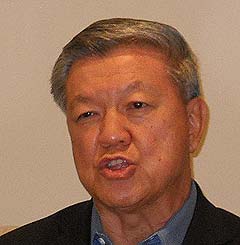 Chua’s
(right)
talking points is a classic demonstration of how ‘a little knowledge is a dangerous thing’. And by a little, I mean, a tiny smidgeon. A drop, really. In fact, a bright Form Three student with access to the Internet and some basic research skills would not have made the frightening jumps to conclusion that Chua did in his talking points.
Chua’s
(right)
talking points is a classic demonstration of how ‘a little knowledge is a dangerous thing’. And by a little, I mean, a tiny smidgeon. A drop, really. In fact, a bright Form Three student with access to the Internet and some basic research skills would not have made the frightening jumps to conclusion that Chua did in his talking points.
In writing those talking points, Chua has made a fundamental(ist?) mistake of confusing dependent and independent variables, something that they teach in any introductory statistics, economics and political science course in any decent university in the world. And by doing so, he allows himself to be drawn into making the conclusions that he wants to make by selecting the evidence that he wants to select. In other words, selecting the dependent and sometimes the independent variables.
Let me elaborate on this in more concrete terms by drawing on Chua’s own talking points. Chua clearly wants to show that somehow being a Muslim-majority country or having lots of Muslims in a country can lead to bad outcomes. In his mind, ‘Muslim-majority country’ is an independent or explanatory variable.
If you think about this using an equation (y = ax +b), ‘y’ is the dependent variable, or outcomes that you want to explain i.e. corruption, economic growth, etc… and ‘x’ is a list of independent or explanatory factors, of which a Muslim majority can be one.
Blunt instrument
The first objection I have with regard to this approach is that the dummy variable he uses i.e. ‘Muslim majority’ is a really, really blunt instrument. (A 'dummy variable' is a technical term used in statistics; I’m not trying to make fun of anyone here, really).
 It assumes that countries with Muslim-majority populations ranging from Indonesia to Pakistan and Saudi Arabia to Turkey to Libya all share the same characteristics of being Muslim majority, that leads to the set of less than ideal outcomes to which Chua points to, i.e. less than ideal rates of economic growth.
But the fact is that all these countries have very diverse traditions and practices in terms of interpreting and living out Islam. Of course, even economists and political scientists have difficulty capturing these differences in an equation (which is why one must not rely only on statistical methods to tests hypotheses) but at least they throw in other ‘control’ factors such as literacy rates, mortality rates, geography, etc... to see if other independent variables can explain the outcome of interest.
Chua does not event attempt to do this. Perhaps, being Muslim-majority can account for some variance in some negative outcomes of interest, for example the treatment of women, but surely other factors matter as well, such as good public policies, the level of democracy and transparency and so on and so forth.
Other than less-than-ideal economic outcomes, the other dependent variable that Chua highlights has to do with these Muslim-majority countries being ‘less democratic because they emphasise more on religion’. I find this point to be objectionable for two reasons.
Here, less democratic (or some measure of democracy such as Freedom House rankings) is the dependent variable of interest and ‘emphasis on religion’ is the independent or explanatory variable. If one were to change the time period from post World War II countries to the different warring kingdoms and emerging warring states in the era of the Crusades, one would probably find that an ‘emphasis on Christianity’ led to a ‘country’ being less democratic because subjects of the Crusaders were taxed more heavily to finance this misguided campaign of slaughter and mayhem.
If this is the case, then Chua should have said that ‘relying too much on certain aspects of religious fundamentalism, like thinking that God has called you to go out to invade another country’ will probably lead to less democratic outcomes and not conclude that ‘emphasising on religion’ alone is responsible for countries being less democratic.
The other reason I find this point objectionable is that many countries are less democratic because they are ruled by less-than-democratic leaders embedded with less-than-fully-democratic institutions and structures. If Chua were to do a quick read through the post-colonial political histories of countries in Africa, he would - following his current logic - probably come to the conclusion that these countries were ‘less democratic because they were in Africa’ (or that they were French colonies).
Less-than-democratic outcomes can emerge from any context whether it is Idi Amin, Mobutu Tsetse, Robert Mugabe, and the list goes on. Lest one thinks that I am unfairly pointing fingers at our friends in Africa, I will also throw out the names Pol Pot, Marcos, Mao Zedong, Stalin and Hitler.
Muslim-majority countries do not hold a patent on having bad leaders and bad institutional structures that lead to less than democratic outcomes. History and contemporary examples provide us with ample evidence. Just take a look at modern-day Russia under former president and now prime minister Vladimir Putin.
Resource curse
Someone should really sit Chua down and explain to him what the ‘resource curse’ is. I’ll briefly summarise the argument here. The ‘resource curse’ says that having access to easily obtainable mineral resources e.g. oil and gas, diamonds, etc, is actually bad for democracy because of two reasons.
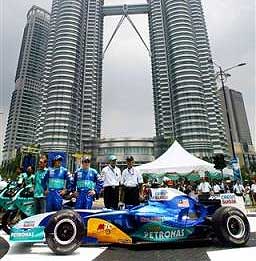 Firstly and more commonly found, easy access to oil and gas resources means easily obtained revenue or ‘rent’, as it where. Since many countries in which such resources are found are not very democratic to begin with, those in charge of the government of the day would find it easy to use these rents to either pay off their citizens so that these citizens demand less accountability from the government and/or they use these revenues towards increasing the repressive capacity of the government (buying tanks, hiring more police, soldiers, etc).
Secondly, conflicts over access to these resources are more likely because the amount of money and wealth at stake is so much higher. Hence, these countries are more likely to experience coups as well as ethnic and civil conflict. Think ‘conflict diamonds’ and the problems that the Nigerian government and Shell are having in the Delta region and you will know what I’m referring to. Hence the ‘curse’, that is, having easy access to a valuable resource or mineral can actually be detrimental to the well being of a country’s citizens.
Since many Muslim-majority countries also have easy access to oil revenues, they are also susceptible to this ‘resource curse’. Hence, it is not being Muslim-majority that leads to some of the bad outcomes commonly known and seen in the Muslim world, it is having easy access to oil that is the more important explanatory factor or variable.
 Finally, I want to draw our attention back to Malaysia, which was the original intention of Chua as well. He wanted to paint a dire picture of the Muslim world and use that as a stick to beat up on Umno and PAS for competing on the religious dimension of political competition to ‘out-Islamise’ each other. Here, I think Chua has a point.
But again, the grounds of his argument become weak after some gentle prodding. PAS competes on the religious ground with Umno because of two reasons. Firstly, PAS leaders and members are genuinely more committed to practicing Islam compared to Umno leaders and members, at least from a purely moral perspective. PAS members do not join PAS to obtain favourable contracts from the government. Ditto for the PAS leaders. They join the party because they genuinely believe in the guidance that Islam offers. And they are disgusted with the kind of corrupt and immoral behaviour that they see being exhibited by many Umno (and BN) leaders.
Secondly, PAS competes on the Islamic ground because Umno (and the BN) does not allow an even playing field in the electorate battleground. If Malaysia moved towards being a more full-fledged democracy, it would be natural to see PAS battling and campaigning on other issues besides Islam. One can already see that happening in the state of Selangor as well as in the state of Perak where Mohd Nizar Jamaluddin, a PAS leader, was the menteri besar.
In addition, I do not see anything wrong with wanting to use religious or Islamic or moral principles in structuring some of our public institutions as long as the rights of other religions (and non-religionists) are also respected. I, for one, would like to see the Malaysian Anti-Corruption Commission guided more by their moral or spiritual convictions as opposed to being guided by other motivating factors.
MCA’s rent-seeking
The problem with Malaysia is not that the current BN government is coming up with bad policies because it is trying to out-Islamise PAS. The problem with Malaysia is that the bad practices within the BN that has been encouraged over the years have left us with party and political and government structures that are geared towards rent-seeking, of which MCA is complicit.
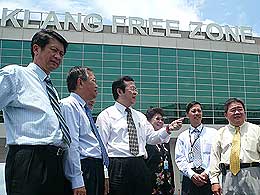 While MCA happily criticises the opposition, namely the DAP, for getting in bed with PAS, they have no problems in engaging themselves in the same kind of patronage and rent-seeking activities together with their brethren in Umno (Much of this is documented in a real academic book ‘Malaysia’s Political Economy’ by Terence Gomez and KS Jomo, and not an ‘academic’ book of a much more dubious standing from which Chua gets most of his facts).
Think PKFZ, for example. And think of what the current transport minister (an MCA leader, I might add), is doing or not doing to clean up that mess and to minimise the impact on the taxpayer.
Here, I stop to speculate. I speculate that someone close to Chua probably picked up this book (Syed Akbar Ali’s ‘Malaysia and the Club of Doom’) and had this bright idea: ‘Hey, let’s point out the weaknesses and shortcomings of Muslim-majority countries and use this to attack both Umno and PAS. This way, we can surely regain our respect among the Chinese community and be rightly seen as heroes for taking on both these parties, unlike DAP, that is firmly ensconced in bed with PAS.’
Problem is, this smart aleck didn’t do his homework. He did not take an Economics 101, Political Science 101 or Statistics 101 course (or if he did, he must have forgotten it long ago). Problem is, Chua’s research assistants (if he has any) didn’t do their homework for him (if not, inaccuracies such as saying that most Muslim countries have a “council of Muslim elders, that enjoys absolute power to override the decisions or policies made by the government” would not have occurred. This point is only true for Iran and even then, the council’s power is not absolute, at least not in practice).
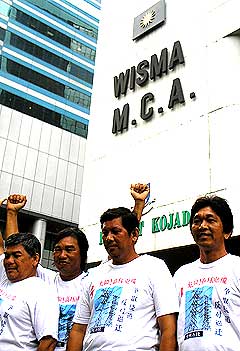 I think what saddens me most about Chua’s talking points is that he seemed like a reasonably intelligent and savvy politician who was making the right noises and did some right things after defeating Ong Tee Keat in the MCA presidential election. Apart from nominating his son to a committee (together with Fong Chan Onn) to oversee the assets of MCA (that some estimate to be as high as RM2 billion) and to the position of a deputy minister, he has not had any major
faux pas
as MCA president. Until now, that is.
I think what saddens me most about Chua’s talking points is that he seemed like a reasonably intelligent and savvy politician who was making the right noises and did some right things after defeating Ong Tee Keat in the MCA presidential election. Apart from nominating his son to a committee (together with Fong Chan Onn) to oversee the assets of MCA (that some estimate to be as high as RM2 billion) and to the position of a deputy minister, he has not had any major
faux pas
as MCA president. Until now, that is.
It is sad that despite the enormous amounts of resources at MCA’s disposal - its one million members, the numerous PhDs that it has access to courtesy of Utar as well as through the ministries that MCA has some influence over – its leaders could not get decent advice on how to ‘pitch’ an important speech or ‘talking points’, touching on such a sensitive and important subject in the Malaysian political context.
I would have given him a briefing on all the things I’ve written here in this column for a cup of teh tarik . (The offer is still open but I fear that I won’t be invited). Perhaps, it is a sad reflection on the state of politics within the BN and a sad reflection of the state of human resource capacity in our country.
ONG KIAN MING holds a PhD in political science from Duke University. The views expressed here are entirely his own. He is organising a joint forum with the Perdana Leadership Foundation (PLF) this Thursday, Aug 12, at 5pm at UCSI University’s North Wing in Taman Taynton View in Cheras entitled “Nurturing the Minds of Future Leaders: Malaysians in a Globalised World” with the hope that those who come and listen to this forum won’t repeat the mistakes made by Chua in his talking points. For more details, please email him at im.ok.man@gmail.com.


Are you sure you want to delete this comment?
This action cannot be undone.