




A mighty revolt in Egypt
In recent days, we have witnessed a historical change of government in Egypt as crowds of up to one million people marched on the streets of Cairo to force the resignation of president Hosni Mubarak.
In recent days, we have witnessed a historical change of government in Egypt as crowds of up to one million people marched on the streets of Cairo to force the resignation of president Hosni Mubarak.
The spontaneous revolution of the people of Egypt has left the dictator no choice but to retire from office. This is a rare occasion in the world stage where justice is delivered through the spontaneous demonstration of the people. It is another victory for democracy in the developing world.
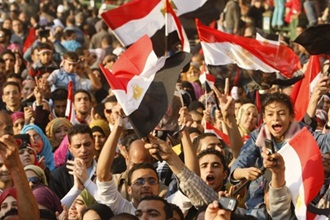 Now the stage is set for a major reform in the state of Egypt. The way is paved for a temporary military government to take over the reign of power and begin a process of constitutional reform that will restore democracy to this torn nation of 80 million souls.
The Egyptian revolutionaries have paid a high price for their peaceful demonstration. Some 300 people have died in clashes with the secret police and security forces, and more than 5,000 people have been arrested. But the casualties did not deter the people from launching their demonstrations in defiance of their long-standing repression.
The Tunisian and Egyptian revolts have created a ripple effect throughout the surrounding Arab region. Tunisia’s was the first Arab government to fall victim to this historic rise of democracy: they are still struggling with the process of replacing the corrupt leaders after the old, tired regime was overthrown.
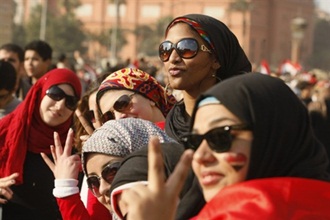 Other countries like Jordan and Syria are still wobbling with the aftershock of the democratic earthquake that has shaken this region, which has long been governed by conservative and repressive regimes.
That democracy has finally arrived in the Middle East is an entirely new phenomenon for the whole world. For large parts of the western world that have suffered from Islamophobia, as well as Israel’s leaders, their first reaction is to watch the unfolding events with xenophobic suspicion.
But viewed objectively, this is a rare opportunity for countries in the Middle East to catch up with the rest of the world in the modernisation of their political order. They will now have a fresh start in developing a vibrant, modern and open political system of their own.
Can it happen in Malaysia?
Many Malaysians, who have watched the tumult in Egypt, have asked whether such revolutionary change can happen here too.
The events that have overcome Egyptian society strike at the most fundamental questions of nationhood in any polity. In Malaysia, we have yet to come to this critical stage because most of our institutions are still functioning to certain extent and the legitimacy of the government is not generally in question.
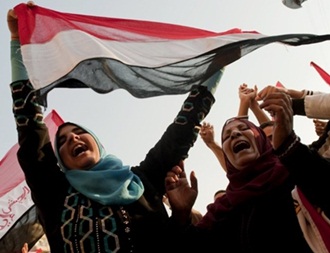 It would wishful thinking for us to wish for the same kind of revolutionary change in Malaysia. Aftar all, Egypt is a case of extreme repression, not widely seen in the history of modern nations engaged in the global economy.
I pray for the people of Egypt for their national deliverance from the evils of poverty, repression and socioeconomic backwardness, where 40 percent of the population are surviving on less than a US$2 a day.
I support the revolution in Tahrir Square based on our universal expression for justice so that no people on earth will be subject to the evil forces of dictatorship. In contrast, the state of politics in Malaysia is not nearly as bad.
But Malaysians need to work together to keep it that way.
SIM KWANG YANG can be reached at sky8hornbill@gmail.com. All comments are welcomed.


Are you sure you want to delete this comment?
This action cannot be undone.