




Lessons from the Japanese triple disaster
COMMENT The Japanese triple tragedy continues to focus world attention, even as we are pulled in different directions by world events that fill the mainstream global media.
The Japanese situation helps us to focus on some critical concerns and offers lessons about and for us.
COMMENT The Japanese triple tragedy continues to focus world attention even, as we are pulled in different directions by world events that fill the mainstream global media.
The Japanese situation helps us focus on some critical concerns and offers lessons about and for us.
1. People
Globally there has been a huge emotional outpouring at the Japanese triple tragedy. The sheer number of lives lost and still more missing can make anyone feel a certain uneasy numbness as well as exasperation and sadness.
Unpleasant thoughts and images cross our mind... untimely, violent and painful death, drowning, asphyxiation.
But to imagine those missing but still alive somewhere is still more
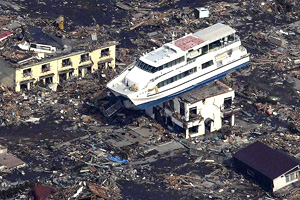 exasperating... so much helplessness! It is difficult not to respond in personal prayers or professional deliberation and action, or both.
But the ordinary Japanese has been facing the tragedy with calmness.
Perhaps the Japanese character forged over the ages in the crucible of such situations has developed those qualities that help them face the uncertainty of life in disasters or the pain such situations can put them through. They face it with stoic strength, admirably.
The situation addresses the reality of the relationship between "national" character and people's response to disasters. We need only to be sensitive to the response of the ordinary Japanese... it teaches us what we really need to do if we face such disasters.
2. Disaster preparedness and emergency response
Even as we think about the people, our minds raise queries and concerns about disasters in general. More such disasters will be part of our future and they may involve our loved ones.
Critical among the concerns is about how alert we are to an impending disaster and how quickly we can respond to it, in terms of tough decision-making, effective institutional and people mobilisation and quick technological deployment.
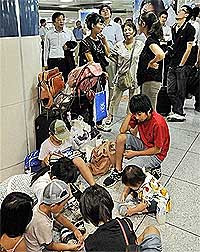 Even in spite of the unprecedented development of information, communication, space and digital technologies and their use in various technological options to address disasters, including early warning systems, disaster management softwares and risk management approaches among others, the sheer number of deaths in the Sendai disaster demand review and attention of what we have accumulated.
Our only genuine aim should be, "How can we stop so many direct and indirect deaths and suffering?"
There is now evidence mounting that both Tepco (Tokyo Electric Power Company) and the Japanese government may have wasted crucial time and delayed decisions based on commercial considerations that could have helped address the challenges at hand in a speedy manner and save more lives.
In emergency situations, on every second hangs life and death. There needs to be effective consequences for such behaviour, whether it is on the part of corporations or governments.
And now, as we face the danger of radiation effects in neighbouring countries, what is going to be our local and global responses? How do we assign responsibility and accountability?
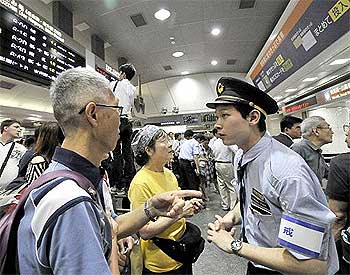 Also, are the interventions of organisations like Red Cross, Global Disaster Response Network, Disaster Preparedness and Emergency Response (DERA), International Medical Corps, Doctors Without Borders and many other "humanitarian" online and onsite organisations coordinated with local agencies (military, fire department, etc) to ensure that there is reduction in the number of deaths and the extent of suffering, either from the disaster or from the contextual consequences that follow such disasters, sufficient?
In this, how do we examine and/or ensure inter-governmental political commitment to face calamities that do not recognise national boundaries?
3. Nuclear energy propaganda
The present situation in Japan is that the earthquake and tsunami-related disaster have morphed, in a manner of speaking, into a serious nuclear accident that is now seen as only one notch below the Chernobyl accident in Ukraine ( on the nuclear event scale). The Japanese triple tragedy has now a real potential of moving beyond the Japanese borders.
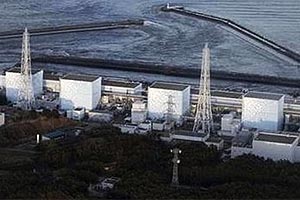 The nuclear energy debate is again actively back on the world agenda.
Extreme positions are being played out - on one side using "Fukushima example" as a case for supporting nuclear energy production and on the other - "a growing army for General Ludd" that wants to do away with such technologies altogether. Disasters invariably raise critical debates about our common future.
There are about 442 sites worldwide producing power from nuclear power plants. The largest number is in the US, followed by France and Japan.
Currently Japan has 55 commercial nuclear power plants generating about 35 percent of its power needs. This means across the world a huge number of people are serving the industry right from R & D to its deployment for "peaceful" use.
As some people like to argue, there cannot be a blanket ban on nuclear energy as it directly affects high-energy consuming national development, a huge number of people who are working for the industry and their careers, the secondary industries dependent on it, families of people working for the nuclear industry, and among us all who are totally, perhaps unconsciously, dependent on very high-energy consumption lifestyle and comfort.
As the weaker position here goes, even if we want to close the existing nuclear industry, it is going to take a lot of transition time and social innovation.
But the stronger position here is: deal with it by improving and innovating safer nuclear power plant technology, stronger global monitoring of nuclear plants and stringent punishment for not meeting globally approved standards. The position eventually is: It is "path dependency" - nuclear power is here to stay and we have to deal with it!
Did Tepco, which ran the nuclear facility in Fukushima, take all precautions to ensure that it ran a safe operation? Increasingly, evidence is mounting against the company.
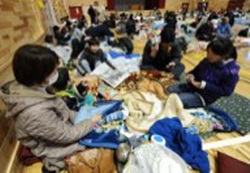 How do we deal with and take an effective and implementable global stand on businesses that are careless with technology or processes that put a lot people, flora, fauna, ecology and neighbouring countries in great danger, all to meet, directly or indirectly, profit bottom lines?
The problem with the use of nuclear energy is not just the largely unmanageable risks it poses but also the extent of human greed in trying to protect profit from a dangerous technology. Is there really a way to deal with this effectively, nationally and globally?
It affects all of us and national boundaries are useless in such dangers and discussions. Nuclear energy debates and decisions require planetary consciousness and action.
A huge section of people across the globe just want all nuclear plants to close down and a stop the building of any new ones. We know the risks are very serious. We know that the management of those risks have been poor, including inadequate disaster preparedness and emergency response abilities.
On top of it, when greed governs business strategy and the pressure to report positive every quarter, investment in safety standards and procedures will be comprised, exposing every living being and ecology to short- and very long-term problems.
And governments that need to protect their citizens have been known to take decisions to remain in power by subordinating citizens' concerns to corporate needs. We know that we have many alternatives to producing and supplying the energy we require in a sustainable way.
But are we politically committed to breaking away from nuclear energy, reframing national development strategy and ethos and give up our dependence on high-energy consumption lifestyles?
4. Problem of global response
Ordinary people, academicians, intellectuals and professionals see disasters through the media - local and global, mainstream and alternative, traditional and digital. It seems most people are glued to the media, usually the global mainstream ones that offer minute-to-minute coverage of a disaster event.
Our intellectual and emotional responses are governed by carefully articulated media narratives. Increasingly, we experience and emote a media-ted social world, and in the process, consume the motivated narratives of the global and national media.
As we participate in the "now-visible, now-not-visible" movement of global events turned into "media events", we consciously or unconsciously consume particular slants of the events as they are narrativised.
Also as we consume, we may be implicated in "cover ups", "alarmist propaganda" or an unstated "agenda" set by the global media. How do we deal with such mediated responses?
Many people have of course matured or become sophisticated in their use of media to make sense of events around the world, including local ones.
They have developed their own strategies of finding out what is going on by looking up not just one source or one expert. They are watching and reading global media, alternative media, blogs and social network sites.
In an information-overloaded world, increasingly more complex strategies are being developed by ordinary people. More ordinary people are also producing information, news and knowledge about local events by being bloggers and/or citizen journalists.
Professional bodies are also developing guidelines to sensitively and responsibly engage with disaster situations so that acting on such a situation is as "balanced" as it can be: not being alarmist, promoting panic, as well as not being casual, treating such events without the seriousness they need; taking note of insiders (victims of disaster situations) and outsiders (professionals, academicians, activists, etc) point of views; producing information and knowledge on the unfolding event as well as using historically accumulated knowledge about such or similar events; and refraining from a blame game but yet taking authorities, corporations and institutions to task for putting people and ecology in danger.
We definitely need a world better equipped in all senses to deal with disasters.
DR M NADARAJAH is a sociologist by training. He belongs to the Asian Public Intellectuals (API) Community, comprising filmmakers, social researchers, theatre people, songwriters, poets, activists and academicians working for a sustainable global society and Asia. His work focuses on cultural and sustainability issues. The article reflects his personal observations and views.


Are you sure you want to delete this comment?
This action cannot be undone.