




Pakistan must come clean on Osama
COMMENT The US is rejoicing in the killing of the world's number one Islamic terrorist and kingpin Osama bin Laden in Pakistan just hours ago.
COMMENT The US is rejoicing in the killing of the world's number one Islamic terrorist and kingpin Osama bin Laden in Pakistan just hours ago.
Even as the US economy is a long way from being on a firm growth trajectory, and tornadoes blast through the southern states of America, killing hundreds - reminders of America's vulnerability as much as it is to Islamic terrorism - there's no holding back what's to come next; the old thumping of US chests.
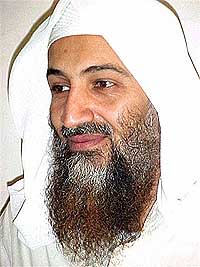 My question, though, is just how long Osama (
right
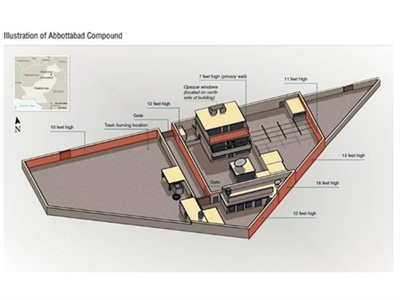
) had been living in a large mansion in Abbottabad, an hour's drive to Islamabad, Pakistan's capital city, and how was it that he had not been detected - until now?
My question, though, is just how long Osama (
right
) had been living in a large mansion in Abbottabad, an hour's drive to Islamabad, Pakistan's capital city, and how was it that he had not been detected - until now?
Abbottabad is home to a military academy and huge Pakistani air force base from where four US helicopters carrying crack teams of US Special Forces and CIA personnel launched the operation.
It also has a large hospital and other key infrastructure that for Pakistan's defence forces operations and training.
Yet, despite the boast about Pakistan's Inter-Services Intelligence's competency, how did the ISI fail to know of Osama's close proximity?
It would be surprising if Pakistan now claims it had given Osama's whereabouts to US intelligence. For much of the last ten years Pakistan claimed Osama and his minders were holed out in the rugged mountains on the tribal borders of Afghanistan and Pakistan.
Was it a lie? Was Pakistan, especially the ISI and rogue elements within the Pakistan armed forces and government, harboring Osama all along?
Lucky break
A more plausible explanation is that US intelligence got a lucky break last August when its intelligence agents stumbled upon a Pakistani postal worker escorting an Arab terrorist suspect in Abbottabad.
 Tahir Shezad was placed under immediate surveillance for months. He was nabbed on Jan 23 this year as he met two French terror suspects at Abbottabad's Allama Iqbal International.
Meanwhile, Indonesian Jemaah Islamiah terrorist Umar Patek was also caught in Abbottabad in January this year after a firefight with Pakistani authorties. Pakistan did not reveal his capture until late March.
Pakistan then refused to hand Patek over to the Americans for interrogation, while Indonesia refused to take Patek on the grounds that they would not be able to successfully prosecute him for the Bali bombings in 2002.
The US had posted a $US1 million bounty on Patek's head for killing seven Americans in Bali.
Like Shehzad and the two French terror suspects - as was also the case with Indonesian terrorist Hambali, who was captured in Thailand in 2003 - Patek would have been handed over to the US on the insistence of Indonesia's National Intelligence Agency.
 Shehzad and Patek would have been broken by US intelligence for information leading to Osama's hideout in Abbottabad.
This leaves questions begging on the role of Pakistan and ISI in Osama's hideout in Abbottabad after he had escaped the Americans in Tora Bora in 2001-02.
No doubt India, which has always suspected Pakistan of harboring Islamic terrorists, would be pressing Islamabad for credible explanations.
Pakistan must come clean.
And Americans must continue their resolve to destroy Islamic terrorists wherever they are found if national governments do not do their bit in ridding the world of this barbaric scourge.
MANJIT BHATIA is an Australian academic, writer and journalist. He is also research director of AsiaRisk, a risk analysis consultancy. He now divides his life and work between Australia, Britain and the US.


Are you sure you want to delete this comment?
This action cannot be undone.