




Mercy M'sia prefers 'small team' in Somalia
Humanitarian aid organisation Mercy Malaysia is set to send a team to Somalia for relief work, stressing that small teams are normally deployed when dealing with conflict regions.
Humanitarian aid organisation Mercy Malaysia is set to send a team to Somalia for relief work, stressing that small teams are normally deployed when dealing with conflict regions.
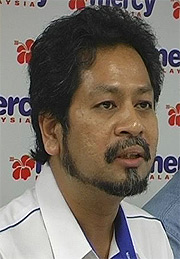 "As reference, especially in conflict areas, we rarely send more than five to seven people," said Mercy Malaysia president Dr Ahmad Faizal Mohd Perdaus.
"We will ensure the number is optimum enough for them to perform their duties but also optimum enough to ensure that they are mobile," he told a press conference in Kuala Lumpur today.
Ahmad Faizal was responding to a question on the composition of his organisation's team to Somalia.
He said the number has been determined, but may be reduced for security reasons - the final number will only be disclosed after the review.
The comments were in direct contrast to Kelab Putera 1Malaysia's decision to send a 55-member humanitarian aid mission to Somalia late last month, supported by 18 media personnel to provide coverage.
 However,
Bernama
cameraman Noramfaizul Md Nor
(left)
was
fatally shot
, reportedly by a member of the African Union peacekeeping forces. A TV3 cameraman Aziz Reza Mazlan, was injured in the attack.
However,
Bernama
cameraman Noramfaizul Md Nor
(left)
was
fatally shot
, reportedly by a member of the African Union peacekeeping forces. A TV3 cameraman Aziz Reza Mazlan, was injured in the attack.
Ahmad Faizal refused to comment on that mission, but said Mercy Malaysia will consider the risk in deciding whether or not to include media personnel in its team.
"We have had media personnel on our missions before... especially on natural disaster missions so it is not something we've not done. But we'll consider it accordingly.
“Somalia is different...(it) is considered one of the most difficult countries for humanitarian workers."
Minimising exposure to risk
Ahmad Faizal was accompanied by vice-president Dr Mohamed Ikram Mohamed Salleh, who had led a three-member assessment team to Somalia on Aug 25 and who had returned to provide a briefing on the situation.
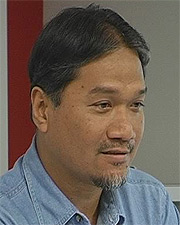 Mohamed Ikram
(left)
said he had been advised to hire armed guards to protect the members of the mission. The team is expected to be deployed later this month, although this will depend on the situation in Somalia.
Mohamed Ikram
(left)
said he had been advised to hire armed guards to protect the members of the mission. The team is expected to be deployed later this month, although this will depend on the situation in Somalia.
Asked if its members will be issued bulletproof vests, he said: "In general, Mercy Malaysia does not send volunteers to conflict areas (where fighting is going on).
“If there is a need for bulletproof vests, then we probably would not send anyone. At the moment the security situation in (the capital) Mogadaishu has improved to Level 4 - which is restricted.”
Ahmad Faizal said team-members would comprise experienced volunteers who have been exposed to previous missions, including in conflict areas.
“We will ensure that, if there are new volunteers, they are given sufficient training and exposure before deployment.
"...We will do our best to minimise the use of Malaysian volunteers to manage the risk appropriately... We will work with our partners and train Somali staff and doctors to carry out the operation for us.”
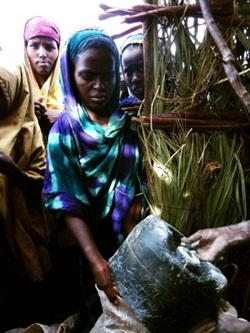 Mercy Malaysia will cooperate with its partners including the UK-based Muslim Aid to reach areas more dangerous areas outside the capital city.
Aside from food distribution, it plans to set up mobile clinics, hygiene programmes and therapeutic feeding programmes for starving children.
The programmes are expected to cost at least RM2 million over the next year, leading Mercy Malaysia to call for public contributions .
"A donation of RM50 can help feed a Somali child under the age of five for a month and RM300 can feed a whole family for a month," said Mohamed Ikram.
On Monday, the UN had said 12 million people are in need of humanitarian relief and warned that as many as 750,000 could die as Somalia faces food shortages due to drought.
Mercy Malaysia was set up in 1999 with its first mission to Kosovo. Its more recent missions were to Afganistan, Sudan, Indonesia and Pakistan.


Are you sure you want to delete this comment?
This action cannot be undone.