




Punishment for pioneering?
COMMENT Personally the year ended, as usual, on a mixed note.
Friends lost to death or to the dizzying world of work routine, with hardly any work-life balance. The incident involving the controversy surrounding the arrest and detention of Indian consular employee Devyani Khobragade in New York City in early December 2013 captured my attention. As a sociologist, the implications and ramifications of this arrest were most interesting.
COMMENT Personally the year ended, as usual, on a mixed note.
Friends lost to death or to the dizzying world of work routine, with hardly any work-life balance. The incident involving the controversy surrounding the arrest and detention of Indian consular employee Devyani Khobragade in New York City in early December 2013 captured my attention. As a sociologist, the implications and ramifications of this arrest were most interesting.
The burst of narratives around the incident is growing in all directions like a dynamic, multi-tentacled mindmap, offering many insights and lessons on how we, as individuals and as states, should or should not conduct overselves. In the end, such wide, rich and critical narratives have the potential to contribute to positive changes in public policy, re-define public relationships and check personal behaviour.
While this episode generated such a wide and rich array of issues for us to be sensitive to and deliberate on, it is common knowledge that this not the fate or career of many good and bad things that unfold in the world around us. Take the case of Cahayasuara Communication Centre (CCC), based in Kuala Lumpur.
 I witnessed sadly the closure of this important Malaysian cultural institution. Established after the Vatican II in 1967 by the Catholic Church in Malaysia, Cahayasuara Communication Centre was the social communications office of the Archdiocese of Kuala Lumpur. At the same time, CCC served as the national office for social communications.
It also actively contributed to global values-based communication needs by serving Signis, the World Catholic Association for Communication, based in Brussels.
In pursuing its work, CCC endeared itself not only to many members of the clergy but also many others, in and out of the Catholic Church - Catholic and non-Catholic national and global professionals and public intellectuals in and outside the secular media (including this writer), and citizens who were broadly interested in media and communication issues, particularly concerned on how these issues had an impact on their faith or affected their children.
It is sad that CCC was closed without any public discussions. I always viewed it beyond the Catholic Church, on the broader canvas of Malaysian cultural heritage.
To remove it from our social memory as an institution internal to the Catholic or Christian community would be another injustice done to this dynamic hive of creative and programmed activities on media and communications. (Anyway, Malaysia is no stranger to such cultural short-sightedness of what it means to be “Malaysian”.)
While the specific circumstances of its formation may take us to socially concerned Catholic Malaysian citizens and their aspirations in communication work, the social and cultural role CCC played directly served Malaysia and Malaysians at a time when the globalising mainstream media was beginning to determine what we knew about the world, the choices we made and the lifestyles we lived.
It is at this juncture in the late 60s, even as Malaysia was aspiring to become a ‘developed nation’, that CCC came into being.
Countervailing force
It was taking small but significant steps at the grassroots level to be a sustained countervailing force to the mainstream media and communication agenda that aggressively promoted a consumerist utopia, complete with unsustainable products, services, culture and politics in the name of economic development. It sought to engage the media and communication with universal values of the many faith communities that co-exist in Malaysia.
Inspired by Vatican II democratic and dialogical orientation and values, the social communication agenda of the Catholic Church as served by CCC was a pioneering effort in Malaysia. It involved the close examination of the power and role of the mainstream global and national media in the lives of Malaysian citizens. It involved a slow but systematic effort to democratize the power of the media and to make it available for the benefit of all in Malaysia.
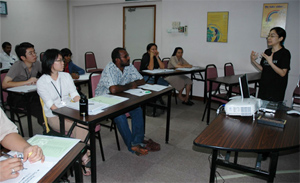 CCC offered many creative sessions and events on the media – not only on how to “read” it critically and neutralise its seduction but also how to actively engage with it or use it for the democratic betterment of society or articulation of faith. In almost of all these rich and creative efforts of critical media education, it aimed at young Malaysians. [See here for their contributions:
Formation and Training
;
Productions
.]
CCC offered many creative sessions and events on the media – not only on how to “read” it critically and neutralise its seduction but also how to actively engage with it or use it for the democratic betterment of society or articulation of faith. In almost of all these rich and creative efforts of critical media education, it aimed at young Malaysians. [See here for their contributions:
Formation and Training
;
Productions
.]
At the time in Malaysia (late 60s and 70s), the only other institutions that took up such issues were the consumer organisations. But because of institutional stability, orientation and continuity, none were as systematic or focused as CCC.
Today, there are many private colleges/universities running courses on media but they are mainly focused on the job market to supply the mainstream media industry. Very few courses in our educational institutions of higher learning have done, or are doing, what CCC had accomplished in its brief existence of about 40 odd years.
Closing it down is certainly not a mindful act. It is, to say the least, a careless decision and a great loss to all Malaysians. It is closed at a time when Malaysia and the region need many more such political, cultural and spiritual initiatives to creatively reach out to a larger section of the younger generation.
Cahayasuara Communication Centre is closed at a time when its institutional strength should have been consolidated and its contribution vastly expanded with an additional injection of human, material and financial resources.
Building bridges across faiths
As part of the Vatican II orientation and effort, it would have contributed a great deal more to building a dialogical Church and bridges across the various faith communities, through addressing common issues encountered in dealing with politically or economically-motivated mainstream media and communication, which are increasingly challenging the common and universal values of faith communities.
There are other important issues to take note of.
Cahayasuara Communication Centre remained the last “bastion” of a Catholic Church institution in Malaysia, managed by the “lay”, i.e. the ordinary Catholic person(s), not members of the clergy. Again following the tradition of Vatican II, the people who ran it, except for the spiritual guide, were lay people, trained experts and experienced individuals in the field of people-oriented social communication.
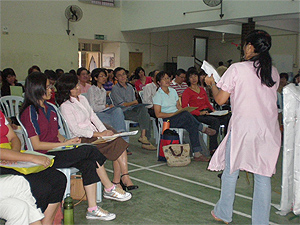 Personally, I think the closing down of CCC amounts to an immense loss of the combined rich experience and contributions of four passionate persons stretching about 100 years, working without attention to the time or hardships they faced, for the cause of social communication in the Catholic Church and Malaysia. The ethical and practical issues are immense.
They framed their work as “service”, without much regard to pay or time in a strict labour market sense of an employer-employee contractual relationship, so that all Malaysians may benefit from the labour they selflessly shared. The Church was not their employer in a moral-emotional sense, it was their life.
I feel saddened by their termination: Is this the reward for running a pioneering institution with “learningful” programmes in the service to all Malaysians, to humanity? Is it too much for us to expect high labour standards and compassionate leadership from organisations that should be models in the area of labour relations and rights for other organisations to emulate?
Also, is closing down of CCC a clear message from the Catholic Church in Malaysia to Catholics and to all of us: it does not want socially-concerned and active members of the lay community (i) to be in the forefront of developing and managing people and service-oriented, democratic and dialogical frontline Church institutions and (ii) to take up social, cultural, economic and political issues for the benefit of not only the Catholic/Christian community in Malaysia but also all Malaysians i.e. really living a genuine public life as the true and active unfolding of private prayers?
In a broader sense, CCC had a promising future. It was an important and integral component of our fragile but evolving Malaysian cultural heritage. Imagine 50 or 100 years from now... Imagine its distinct position in offering socially-engaged, creatively innovative, critically relevant and spiritually-oriented public spaces to our young across faith communities in the area of critical media education and communication... It is indeed an unfortunate loss.
DR M NADARAJAH is a sociologist by training. He belongs to the Asian Public Intellectuals (API) Community, comprising filmmakers, social researchers, theatre people, songwriters, poets, activists and academics working for a sustainable Asia and global society. His work focuses on cultural and sustainability issues. He presently works with Pesticide Action Network Asia and the Pacific, which is based in Penang, on a project involving setting up of a multiversity on agro-ecology. This article reflects his personal views. Nadarajah has been associated with Cahayasuara Communication Centre (CCC) for the last over 25 years.


Are you sure you want to delete this comment?
This action cannot be undone.