




Rafizi doesn't seem to get it at all!
COMMENT Has the newfangled Pakatan Harapan excluded anybody with a willingness to subscribe to the Common Policy Framework (CPF), the still-unrepudiated manifesto upon which its predecessor coalition gained a 52 percent share of the vote at the last general election (GE13)?
There appears to be some confusion in Pakatan Harapan component, PKR, about who to include in the fledgling Pakatan Harapan and who to exclude.
Mainly, this confusion stems from the desire of some factions in PKR to keep theocratic PAS within whatever coalition that emerges among the opposition.
This bend-over-backward to accommodate anyone who is opposed to BN stance pushes the salutary aim of inclusiveness to the extent that an emergent coalition is indiscriminate about the company it keeps.
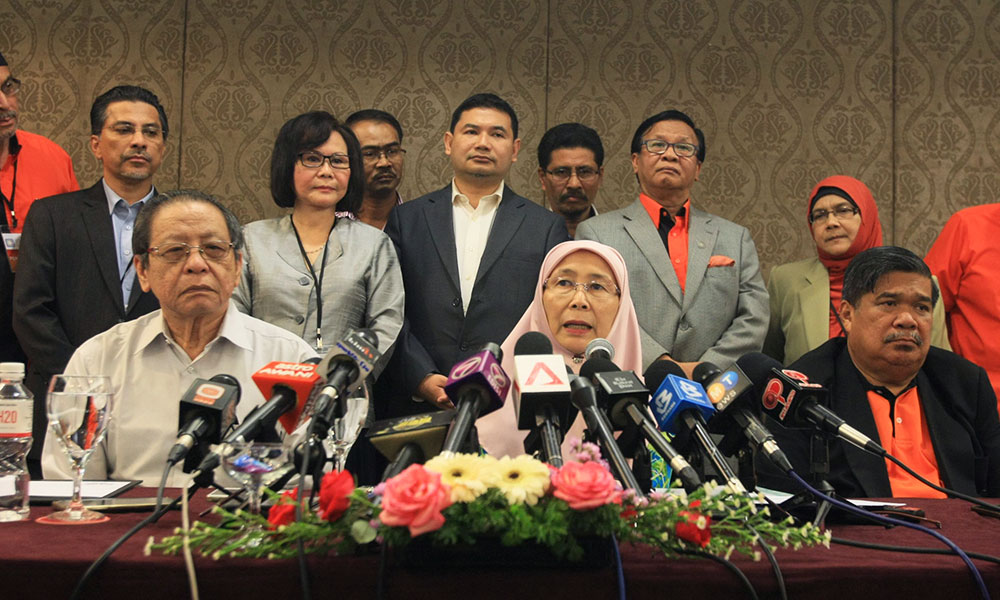 But surely this is not the intent of a keen proponent in Pakatan Harapan of opposition inclusiveness, but Rafizi Ramli, the PKR secretary-general, just might be espousing the view that the way to get along, among those opposed to BN, is to go along.
Political rhetoric is slippery turf, more so when you are the secretary-general of an evolving party for which theideological parameters have yet to be set. In wanting your party to be both principled and popular, you find yourself spraying so many ideas they soon bend each other's fenders.
Rafizi told a huge fund-raising dinner for Pakatan Harapan that the coalition should be able to include any party, provided the draftee subscribes to the agreed-upon manifesto.
‘Even MCA can be eligible for Harapan…’
He was jeered when he said that even the MCA would be eligible for inclusion in Harapan, if it was willing to subscribe to Harapan's goals and methods of attaining them.
It was an unfortunate example to cite because none of the BN component parties, except possibly Adenan Satem's PBB, can be said to subscribe to what is contained in the CPF of the now-defunct Pakatan Rakyat, which is still relevant and serviceable for newfound Harapan.
The MCA would have to dissolve itself before becoming eligible to join Pakatan Harapan.
 Perhaps it was from a sense of levity that prompted Rafizi to use MCA as an example, if only to demonstrate what he felt was the extent of the inclusiveness that Pakatan Harapan should adopt.
After all, it is the keys to Putrajaya that the opposition must obtain, so there shouldn't be too much discrimination in the exercise of finding and enlisting allies for the cause.
But after the results of the last two general elections (GE12 and GE13) and some sorry sequels that followed on each, many opposition supporters are inclined to be pretty dicriminating about the coalition that they would support at GE14.
Definitely, they would not want to support an un-reconstituted MCA; neither, one might say, a theocratic PAS.
That was probably why Rafizi was jeered because his penchant for inclusiveness was seen to slide him over to being negligently indiscriminate.
Pakatan Harapan has to be inclusive, but not at the cost of its core value, which is a liberal-democratic and more egalitarian polity, respectful of Islamic norms but not for legislating its penal code system of hudud.
That should exclude PAS, a stance that some factions in PKR are loath to endorse, even though the Islamist party has said that it will not cooperate with DAP and with the PAS splinter, Parti Amanah Negara (Amanah).
With a position as clearcut as that, how is PKR to square the circle of being in cahoots with Harapan while wanting to collaborate with PAS?
Politics may be the art of the possible, but getting square pegs into round holes is not within its compass.
And though there may be BN components who could come to realise that theirs is a losing cause, that perception is some way from acquiescence to Pakatan Harapan's agenda for national rejuvenation through wide-ranging political and economic reforms.
Pakatan Harapan needs all the allies it can enlist to gain Putrajaya, but wariness is needed with respect to some erstwhile people who may share the same goal, but have radically different approaches to attaining it.
TERENCE NETTO has been a journalist for more than four decades. A sobering discovery has been that those who protest the loudest tend to replicate the faults they revile in others.


Are you sure you want to delete this comment?
This action cannot be undone.