



Time for for Muslims to wake up to Tajuddin’s urging
COMMENT I concur with Tajuddin Rosli’s article , and I wish to delve on it further.
The political analyst is absolutely right about how a petty issue, such as the question whether to wear a uniform with long or short sleeves, can spark an unnecessary controversy, especially when it involves the Malays and the Muslim community in this country.
Meanwhile, the sensitivities of the non-Muslim community are being trampled upon, knowingly or unknowingly, by the same people who feel that they have been offended.
COMMENT I concur with Tajuddin Rosli’s article , and I wish to delve on it further.
The political analyst is absolutely right about how a petty issue, such as the question whether to wear a uniform with long or short sleeves, can spark an unnecessary controversy, especially when it involves the Malays and the Muslim community in this country.
Meanwhile, the sensitivities of the non-Muslim community are being trampled upon, knowingly or unknowingly, by the same people who feel that they have been offended.
In some cases, it has gone to the point that even violence is used in a manner that the ends justify the means. The authorities appear not to take any stern actions against these ‘thugs’. The only apparent thing is that these ‘protected species’ support the ruling party, Umno and its leaders and this is where people get the idea that Umno uses thugs to threaten the people.
On the contrary, should a member of the opposition, for example, make fun of a public figure, the long arm of the law would be used against them; this creates an impression that the government exercises selective prosecution.
Product of abandoning secularisation
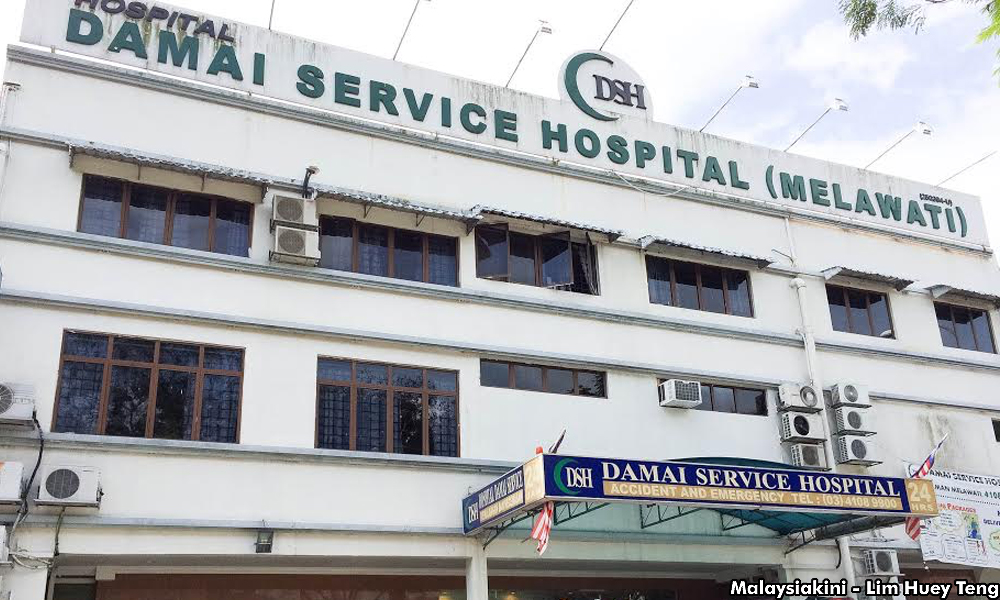
The arguments brought forward by politicians and non-governmental organisations’ leaders have always centred around race and religion. In the case of the alleged theft at Low Yat Plaza, race was being used as the excuse; but in the case of the sacked nurse from Damai Service Hospital (Melawati), it was religion.
Instead of looking at the issues squarely to see if it could be an attitude problem, a lack of discipline or even theft, groups that are supposed to champion consumers’ rights or army veterans’ welfare are jumping on the bandwagon and start talking about what is right or wrong about how uniforms should be designed based on imposed standards, or urging an entire community to take vengeance against another community.
Previously, even a cabinet minister allegedly used the words “boycott the Chinese traders” when prices of goods were escalating. Religiosity is being given the hype by the least-anointed of individuals, leaving most of us wondering whether it makes sense to bring in religion and race into the discussion in the first place.
In some cases, the religious authorities also step in and things become more complicated when the controversy becomes a state matter. The case of Jill Ireland’s seven compact discs which were confiscated from her took us through several High Court sessions before they were returned to her, while the prosecution of the Borders’ manager over the sale of a book which she was not responsible for, also ended up with disgrace on the part of the authorities.
I am glad that, at least in the case of Damai Service Hospital (Melawati), the authorities have chosen to stay clear; or else it will become even more complicated.
Having said that another hospital is now allegedly trying to impose their standards on the Damai Service Hospital (Melawati). Talk is cheap. The hospital should take in the employee sacked by Damai Service Hospital (Melawati), and move on with life rather than having one person trying to defy orders within her organisation.
Give it some thought. If left to individuals to decide what they can or cannot wear, we might as well do away with the uniforms. Uniforms will have to be redesigned for the entire workforce in the hospital; each nurse or staff will have his or her own preference. Before long, someone else will impose another standard. There is no end to it!
Besides, there is also the question of how much one should cover oneself in a uniform, especially with our hot tropical climate. Does one need to also wear a black veil? Only male nurses should wash private parts of a male patient. We are simply getting ourselves bogged down with too many petty subjects.
This is what Tajuddin has rightly pointed out that a beautiful country like Malaysia is should be “plagued with so many problems in recent times, with problems ranging from alleged corruption involving enormous amounts of money, to dress code at the workplace”.
This is the result of our country moving away from secularisation, upon which the country was first founded by our founding fathers. Secularisation is also the basis most governments in the west operate.
In short, religion is a private matter, rather than a state agenda. In a secular state like the US, for example, the authorities are not going to arrest someone who is found taking his lunch during the Ramadan month; neither will the state haul up someone who fails to attend church on Sundays. This is between the individual and his God.
When religion is used as a state tool, it becomes a dangerous thing. We learnt that during the medieval age, religion was also used to witch-hunt those who did not agree with the state religious authorities. My question is, are we heading in that direction?
Time to get to the basics
Back to the basics - all religions are supposed to be private - a personal encounter with God - where one’s conduct is subject to higher laws from above. This is where religion should play an important part of every man's life, including the people in the corridors of power.
Most religions teach that corruption and covetousness are considered a big sin. At the end of one’s life, everyone is supposed to stand before the Judge. The fear of God, therefore, the fear of punishment, is internalised, not imposed upon by some fellow human beings.
However, in Malaysia, we are seeing that as a country, we are moving towards a more state-controlled religion where religion is no longer considered a personal matter. Comedian Harith Iskandar once said that when he was young, he had piggy banks, but these days, anything piggy is considered a taboo! This is the reason why the G25 Group of eminent Malays want a review of the Syariah enactment, as wrong implementation of the law has brought much derision to the name of the religion.
But would the politicians care, or would they prefer to allow the trend to continue so long as they can remain in power?
True renaissance must happen from within the heart
In Malaysia, the Muslims have to wake up to the call for their own renaissance, instead of allowing a small group of elites working hand-in-glove with the politicians, to control their personal lives. Ironically, it is ‘okay’ to talk about having sex even on the camel’s back (presumably in the open), but it is wrong to wear short sleeves.
Power, including that endowed on the clergy when placed, in the hands of a corrupt politician will corrupt absolutely. This is what we must avoid if we want to preserve the sanctity of our religions. Religion and politics cannot mix.
This is the reason why we emphasise on the doctrine of separation between the church and the state. There is so much that one can learn from the mistakes in the past of making Christianity or any other religion as the state religion.
The Muslim community in Malaysia should join their brethren worldwide who are more progressive and adopt a broader worldview if they want to be on par with the rest of the non-Muslim community, especially in the area of education and business.
It is time to throw away those crutches and walk upright to be respected by all. It was only after Europe came out of the medieval feudalistic system, and entered into the Renaissance, that we saw the proliferation of knowledge, science and technology.
As Tajuddin pointed out, the Malays should no longer feel insecure and extra-sensitive, or condemn others as infidels without properly understanding in what context people like Tajuddin or the G25 spoke up.
STEPHEN NG is an ordinary citizen with an avid interest in following political developments in the country since 2008.


Are you sure you want to delete this comment?
This action cannot be undone.