



Ten things you need to know about Malaysian highways
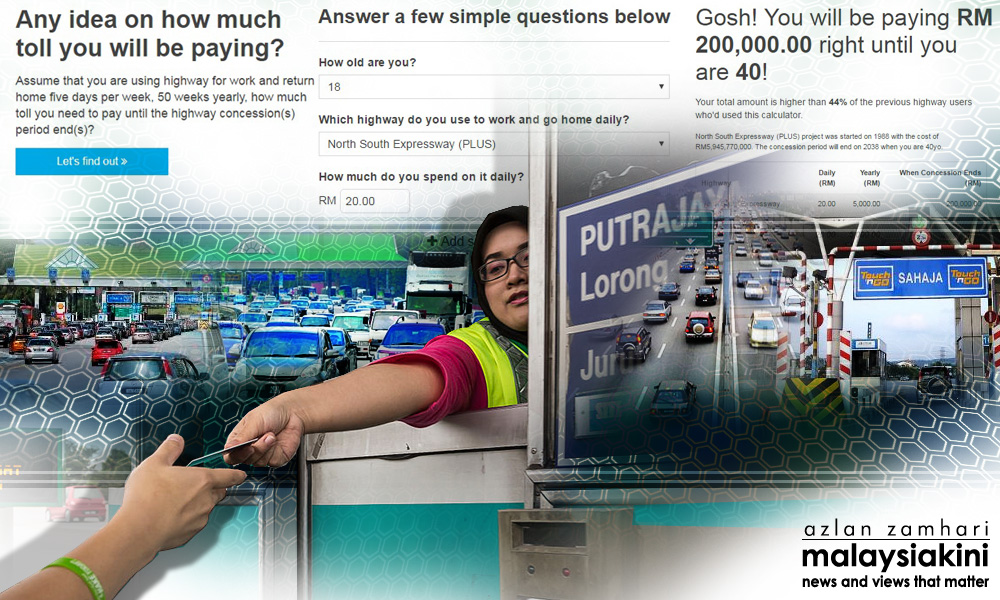
SPECIAL REPORT 1. If you use the highway to travel to work daily, how much do you need to pay, and for how many years?
SPECIAL REPORT 1. If you use the highway to travel to work daily, how much do you need to pay, and for how many years?
2. Which toll rates of which highways have the highest hike in percentage terms (for Class 1 vehicles)?
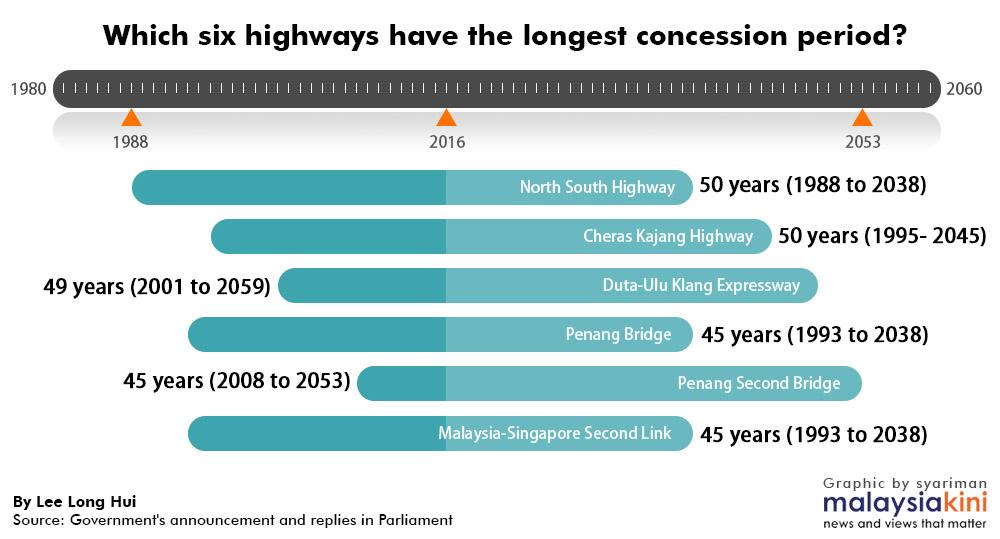
3. Which six highways have the longest concession period?
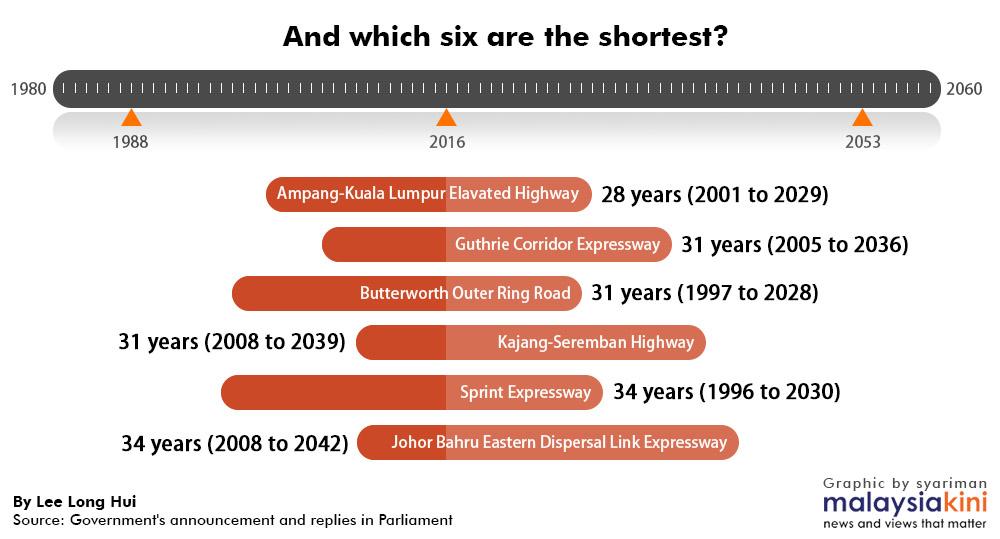
4. And which six have the shortest?
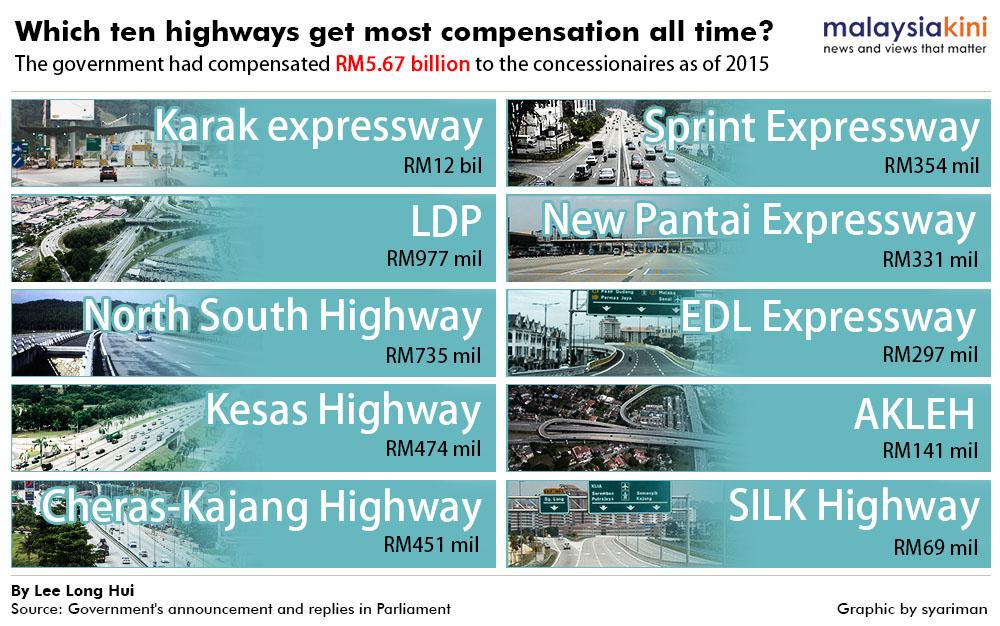
5. Which 10 highways received the most government compensation?
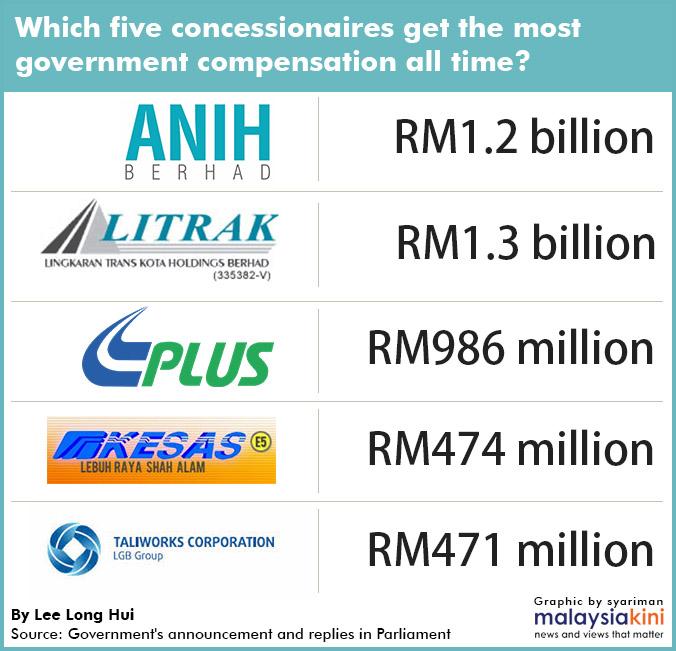
6. Which five concessionaires received the most government compensation?
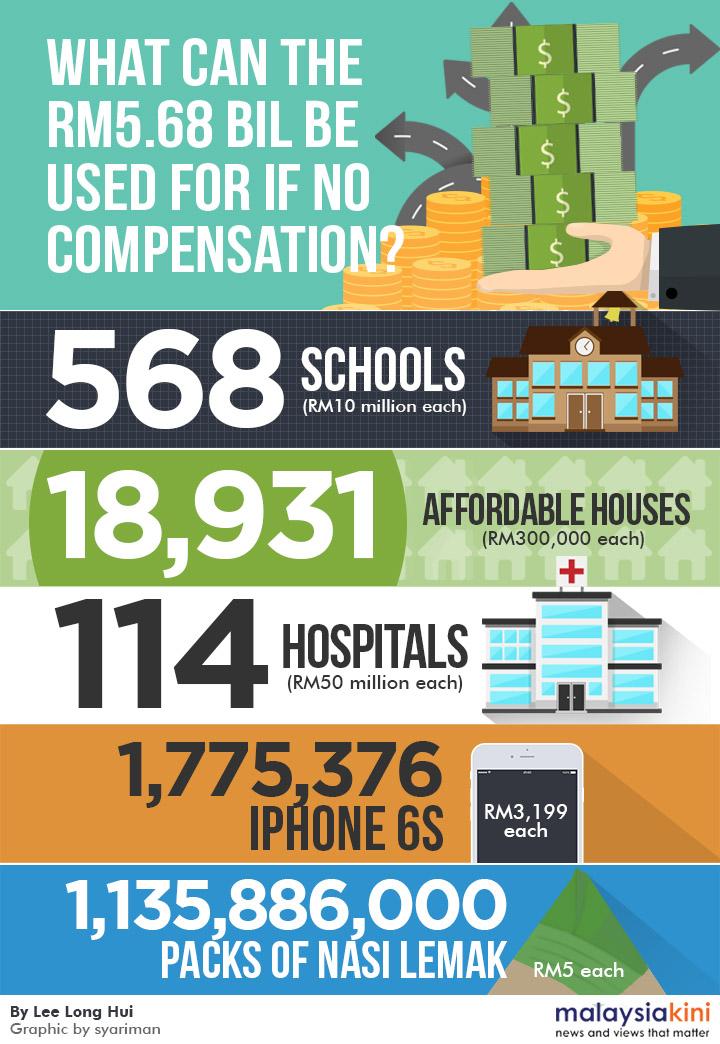
7. What can the RM5.68 billion be used for, if not for compensation?
8. Why are highway concessionaires entitled to raise toll charges?
Toll hikes are guaranteed in the concession contracts signed by the government and if the government fails to live up to this promise, it has to compensate.
Toll rate adjustment is based on inflation, and is meant to protect the companies from the impact of any volatility in goods prices and currencies.
The concession contracts state the toll adjustment rate and period, and government approval is required for them to raise the toll rate.
The Association of Highway Concessionaires Malaysia (PSKLM) stresses that toll rate adjustment is not solely for profit purpose but to provide service to the road users.
According to the association, 50 percent of the revenue collected is to repay loans, operations and maintenance (20 percent), upgrading and repairing (15 to 20 percent), and pay returns to shareholders and others (10 percent).
9. Some say these concession contracts are lopsided. Are there any examples?
The highways are managed by private companies and government-linked companies. It is not unexpected for them to make money along the way.
However, declassified concession contracts reveal that some of the provisions are unreasonable, raising questions as to whether the rakyat’s interests were protected.
For example, the Damansara-Puchong Expressway (LDP) can raise its toll rate regardless of traffic flow, according to its contract revealed by the Opposition in 2007.
So even if traffic flow of the highway is high enough for the concessionaire to break even or earn a profit, toll rates will continue to rise and the government cannot do anything.
The LDP is one of the highways that raised its toll rate last year.
The Malaysian Highway Authority (MHA) 2014 annual report states that 171.4 million vehicles used LDP that year, 1.55 million or 0.91 percent higher than the previous year.
The construction cost of LDP was RM180 million and the government has compensated RM977.18 million to the concessionaires.
The same goes for the Malaysia–Singapore Second Link, which the Opposition said was projected to have a five percent traffic flow increase from 2008 to 2012. Yet, link’s toll rate hikes for the same period came to 27.6 percent.
If the projected traffic flow of the same period increases by eight percent annually, the concessionaire is entitled to a 46.9 percent toll hike adjustment.
There is also a minimum profit guaranteed provision under the North-South Expressway (Plus) concession contract.
Should the traffic flow of the highway fall below the projected target, the government should compensate Plus Malaysia Bhd to meet the minimum profit or the company is entitled to extend the concession period.
This is revealed in the Plus concession agreement which was declassified in early 2009.The government has also extended the concession period of Plus from 2018 to 2038 as a form of compensation for not raising the toll rate for a long period.
Deputy Works Minister Rosnah Abdul Rashid Shirlin told Parliament last year that Plus had made RM8.4 million as profit after tax from RM2.61 billion it collected as toll revenue last year.
The government said eight highways, including the Plus, are entitled to raise their toll rates this year.
Works Minister Fadillah Yusof said if the government blocks the toll hike, it would need to pay RM593.32 million as compensation. This amount is also stated in Budget 2016.
As at 2010, 27 highway concessionaires have collected RM13 billion in toll collection, and this is one of the reasons why the Opposition is asking them to cease toll collection.
10. Is managing highways a profit-guaranteed business?
Maybank Investment Bank in a report last August said concessionaires have a very solid debt service coverage ratio, which means they have a sound financial status to service their debts.
Konsortium Expressway Timur-Utara Kuala Lumpur (Kesturi), the concessionaire which owns Duta-Ulu Klang Expressway (Duke), has an average ratio of 7.65x. This is followed by Plus Malaysia Bhd (7.21x), and Cerah Sama Sdn Bhd (4.59x), which runs the Cheras-Kajang Highway.
The higher the ratio number, the better the concessionaire’s ability to service its debt.
However, not all highway concessionaires are making sound profits.
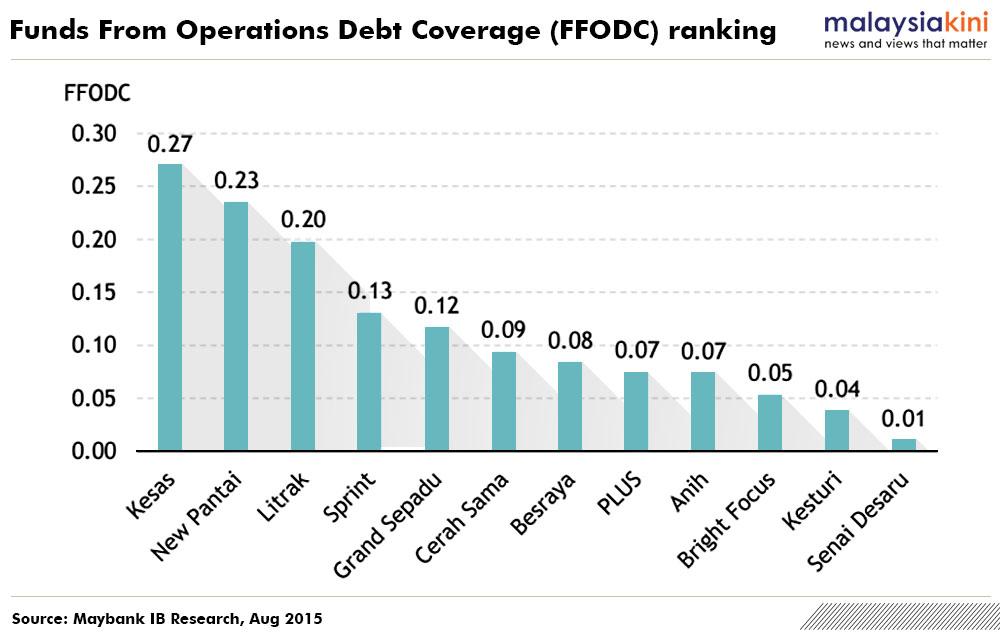
The same report shows that Senai-Desaru Expressway Bhd, which manages the Senai-Desaru Expressway, only has 0.01x of funds from operation debt coverage (FFODC), indicating weak debt servicing capability.
FFODC is the ratio of funds from operation to total debt. The higher the ratio, the more cashflow the firm has to pay off its debts.
Tomorrow: The crossroad of highway policy - which way should we go?


Report this comment
Are you sure you want to delete this comment?
This action cannot be undone.