




Five days on, Rohingya refugees remain in detention
The 24 Burmese Rohingyas, including women and children, who were detained for staging a protest on Monday in a desperate bid to secure resettlement in a third country, continue to remain incarcerated at the Semenyih detention camp.
The 24 Burmese Rohingyas, including women and children, who were detained for staging a protest on Monday in a desperate bid to secure resettlement in a third country, continue to remain incarcerated at the Semenyih detention camp.
They were detained after an eight-hour long protest, in which the adults were also on a hunger strike, outside the United Nations High Commissioner for Refugees (UNHCR) office in Kuala Lumpur.
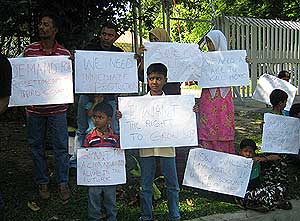 The Rohingyas, who are Muslims from Burma's Arakan state, resorted to the protest after waiting for years, with one over more than a decade, to be resettled in a third country to start life anew.
Despite being encouraged to abandon their strike by UNHCR officials and human rights activists, they remained adamant on highlighting their plight and ended up being arrested.
In Malaysia, they are unable to secure work or send their children to school. They also live under the constant fear of being arrested and deported back to their homeland, where they claim persecution awaits.
Lack of info
Contacted today, UNHCR confirmed that the 24, of whom two are pregnant, still remain behind the camp's barbed-wires for verification of their status.
It also confirmed that the protestors possessed protection letters issued by the agency which accorded them refugee status.
However, UNHCR was unable to furnish further details of the case as they have had limited contact with the detainees and "investigations have been taken over by the Kuala Lumpur immigration office" resulting in lack of information.
The immigration officer who ordered the detention, Ishak Mohamed, has been unavailable for comment since the incident. Other officers have also been preoccupied with meetings and cannot be reached.
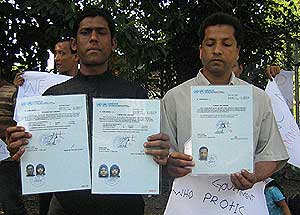 United Nations declarations and conventions stipulate that persons possessing protection letters be free of persecution from authorities and human rights abuses such as the restriction of their liberties.
Malaysia is not a signatory to some conventions, one namely - and arguably said to be the most important for refugees and asylum seekers - the 1951 Refugee Convention.
It is however a signatory to the 1989 Convention on the Rights of the Child and the 1979 Convention on the Elimination of All Forms of Discrimination against Women which have stipulations that protect refugee children and women's rights.
'Extremely serious'
Zafar Ahmead Mohd Abdul Ghani, president of the Ethnic Rohingya Human Rights Organisation Malaysia, expressed grave concern with the prolonged detention of the 24 protestors and deemed the "situation extremely serious".
"I received information from within the detention camp yesterday. The protest organiser Hafiz Mohd Motul called me from inside and said that all of them were forced to sign (using thumb-prints) documents admitting that they committed wrongs.
"They could not be sure what they were signing exactly and what wrongs they were forced to admit to. I am very worried for them," alleged Zakar when contacted.
He also took the UNHCR to task for its 'inability or hesitation' to protect the protestors on the day they were detained as well as their lacklustre efforts to secure the release of the 24 and other detained Rohingyas.
"They have legitimate, valid protection letters. Why have they been arrested by the immigration, Why is there nothing being done by UNHCR? Why have these letters not been respected?," he asked.
He accused the UNHCR of not wanting to help the Rohingyas as the public have recently been made to believe that the Malaysian government will issue temporary residency documents to the ethnic Muslims.
The government has yet to implement the announcement first made in October last year.


Report this comment
Are you sure you want to delete this comment?
This action cannot be undone.