


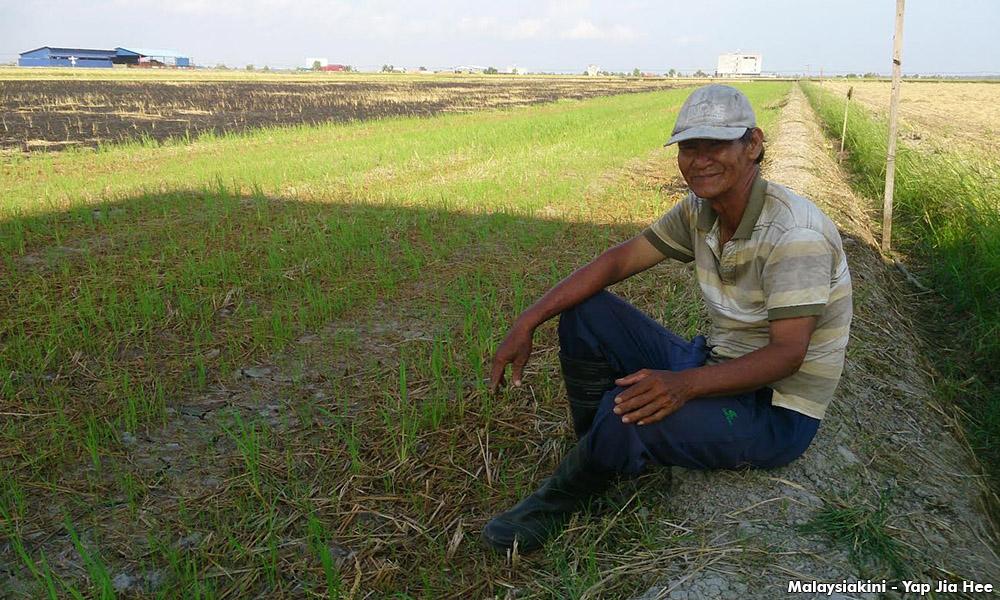

Sekinchan town a model of success to be emulated
COMMENT I have been to Sekinchan only three times in my whole lifetime.
Where I am concerned, the reputation of the small town was once brought down by Umno Sungai Besar chief Jamal Md Yunos, with his franchise Sekinchan Ikan Bakar that appeared with a bang, but closed down within less than two years.
Some franchisees only lasted one year. And, at least one franchisee in Kepong whom I spoke to said he lost his savings as well as the money that his father had given him to start the business. This was Sekinchan to me before 2015.
COMMENT I have been to Sekinchan only three times in my whole lifetime.
Where I am concerned, the reputation of the small town was once brought down by Umno Sungai Besar chief Jamal Md Yunos, with his franchise Sekinchan Ikan Bakar that appeared with a bang, but closed down within less than two years.
Some franchisees only lasted one year. And, at least one franchisee in Kepong whom I spoke to said he lost his savings as well as the money that his father had given him to start the business. This was Sekinchan to me before 2015.
From the news, we learnt that Jamal received a grant from Agriculture and Agro-based Industries Ministry when Noh Omar was its minister.
While the franchisees ended up losing money, this Umno man was propelled into notoriety with his threats, first against former Bersih co-chairperson Ambiga Sreenevasan at her private residence and later, when he tried to create a big stir with his red shirt rally at Petaling Street.
Until today, he has remained scot-free despite all his antics. He has not even been disciplined by his party for creating a stir that caused Umno to become a four-letter word to many urban households. That was Sekinchan to me.
More positive impressions after first visit
Therefore, for me and my family to visit Sekinchan was something unthinkable, but I have at least visited the buzzing town three times since 2015. The first time was at the invitation of friends.
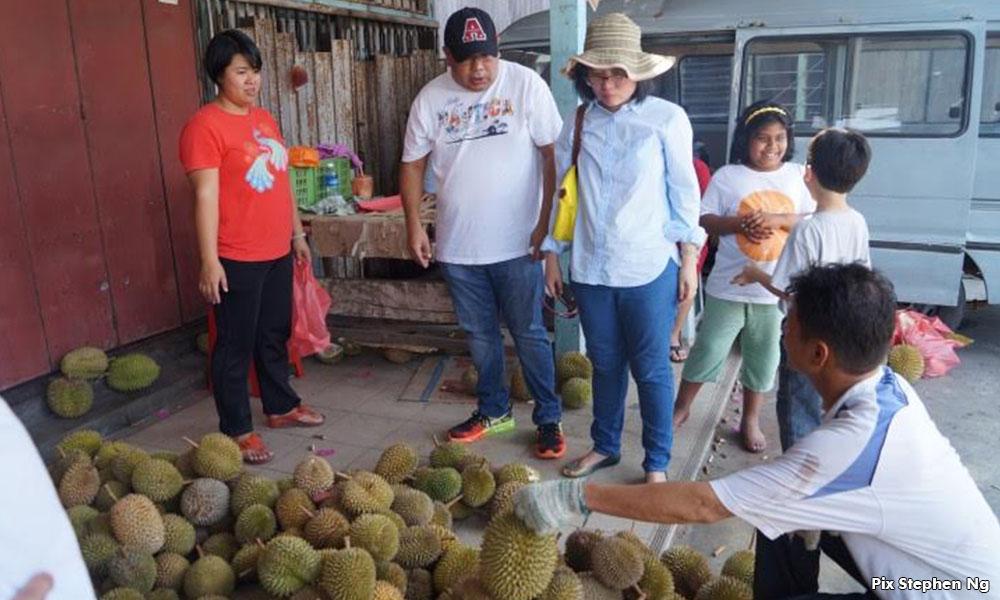 What attracted me the most during the trip was the food, which was delicious and priced reasonably. I have visited the restaurant along the main road at least twice with my other guests.
To be able to show my children the padi fields at Sekinchan was something that I had always wanted to do, but driving all the way to Kedah would not be the exact reason for spending our holidays up north; therefore, Sekinchan was just the perfect place to show them what a padi field looks like.
The moment I arrived at the town, I saw a billboard with a picture of Sekinchan state assemblyperson Ng Suee Lim welcoming guests to Sekinchan.
This was how I connected Sekinchan and its success to this one man, known as the local boy of Sekinchan who would walk about in his sandals.
Ng is described by state exco member for tourism Elizabeth Wong as “someone with all the right connections and was able to galvanise all the businesses to form an association to promote tourism with different players - with the restaurateurs, the rice millers, farmers and the entrepreneurs.”
That is the key to their success and the businessmen needed very little government help to thrive. In my opinion, Sekinchan is a model of success to be emulated by other rural towns.
On the second occasion, I was the one who suggested to an Iranian family visiting Malaysia from the United States that they should visit Sekinchan, because we wanted to show them one of our rural towns and how padi is planted.
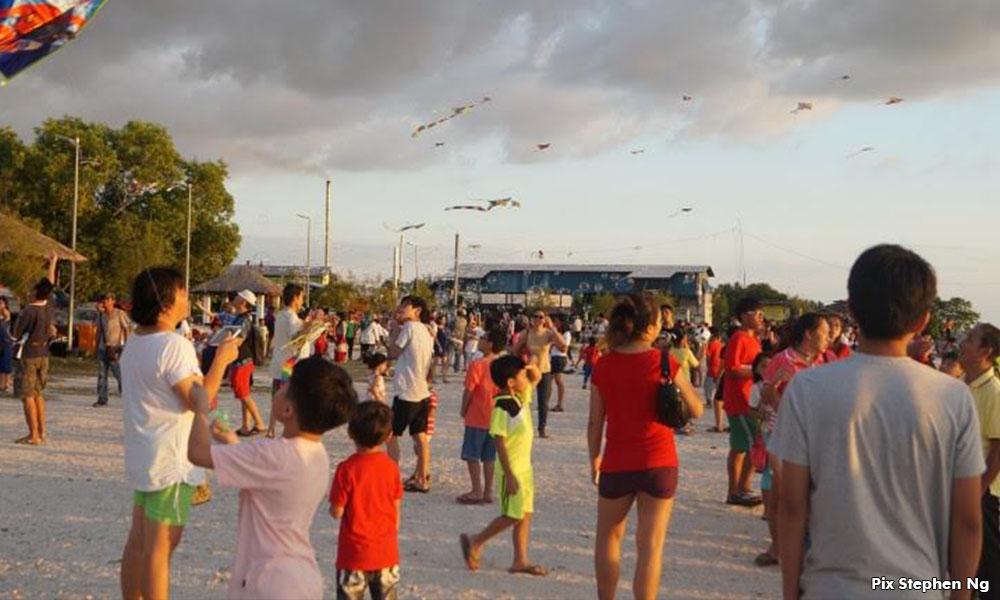 This is where we visited the beach. Frankly, the beach is small and rather dirty, but packed with people. It is a place more for activities than a beach to relax and enjoy the scenery.
Therefore, the sudden appearance of a ‘minion’ was a much-welcomed sight, especially for the children. People were dancing along with the mascot - and that was enough to compensate for the dirty beach, because people had fun, indeed!
 It is also time for the participation of multi-cultural Malaysians in entertaining the tourists but please do it with good taste. It was only during my third visit during the recent by-election that I realised that Sungai Besar was just a few kilometres away.
Need to improve further
Like Tanjung Sepat, further improvement is needed in turning these rural towns into tourist attractions.
First, more research needs to be done to trace the history of these towns. A long time ago, I remember the late Radio Four personality, Alan Zechariah, suggesting to me to me the idea of writing about rural towns such as Batu Arang.
 Each township has its unique history and the local cuisines that can be promoted. Sekinchan and Tanjung Sepat, for example, are famous for the fresh seafood and local fruits. Sekinchan is famous for its different types of rice; however, the prices must be attractive enough to encourage domestic tourists to come all the way to Sekinchan to buy the rice. I also see the potential of Sekinchan producing good mangoes that can be sold to the tourists.
For one thing, I have to say that there are not enough carparks in the township. Therefore, it would be great for the local councils to provide shuttle bus services. If not, the locals should be encouraged to provide motorised tricycles to the tourists at reasonable prices. Tourists hate it when they have to pay cut-throat prices for simple services.
Cleanliness is next to godliness. It is embarrassing when we bring our guests to a tourist destination and find that Malaysians have a bad habit of littering the area. Public drains which are clogged can sometimes give a strong stench, which does not help with the appetite of guests.
This is why I would urge the state government to spend money to upgrade the facilities in these rural towns which will benefit the people in years to come.
Tanjung Sepat is one thriving place
Tomorrow: Why the Selangor MB should use the state reserves on upgrading public amenities
STEPHEN NG is an ordinary citizen with an avid interest in following political developments in the country since 2008.


Are you sure you want to delete this comment?
This action cannot be undone.