



Curbing extremism in any religion
COMMENT Extremism is a fallen human trait and tendency that is considered unacceptable by society’s standards today.
Therefore, the title of this article is in fact flawed, because, with or without religion, humans will continue to be extremists. I kept it as that, in order for me to point out the mistake a lot of us make when talking about extremism.
Even Martin Luther King Jr, in his letter from a Birmingham jail, wrote: “So the question is not whether we will be extremists, but what kind of extremists we will be. Will we be extremists for hate or for love? Will we be extremists for the preservation of injustice or for the extension of justice?”
And we all know that under Nazi Germany, Adolf Hitler too was considered an extremist, when he singlehandedly annihilated a few million Jews from the face of Europe. Both political and economic crisis had led him such extremism, in order to survive in his political career. In the end, he himself died a tragic death...
COMMENT Extremism is a fallen human trait and tendency that is considered unacceptable by society’s standards today.
Therefore, the title of this article is in fact flawed, because, with or without religion, humans will continue to be extremists. I kept it as that, in order for me to point out the mistake a lot of us make when talking about extremism.
Even Martin Luther King Jr, in his letter from a Birmingham jail, wrote: “So the question is not whether we will be extremists, but what kind of extremists we will be. Will we be extremists for hate or for love? Will we be extremists for the preservation of injustice or for the extension of justice?”
And we all know that under Nazi Germany, Adolf Hitler too was considered an extremist, when he singlehandedly annihilated a few million Jews from the face of Europe. Both political and economic crisis had led him such extremism, in order to survive in his political career. In the end, he himself died a tragic death.
Look beyond religions, please!
Yesterday I attended a seminar on responding to extremism in the Muslim world, where one of the speakers spoke about extremism in all religions. In the first place, the title should not link extremism to any religion. No religion teaches extremism, or its followers to be terrorists to attack fellow human beings.
What jarred me, and is indeed laughable, was that this came from someone who is supposed to be an intellectual. This was when one of the panel speakers stated that there are some ‘evangelist’ Christians who also extremists. It appears to me that this panel speaker has never done enough homework to even understand the meaning of the word ‘evangelist.’
If it had been Zakir Naik’s brand of preaching, I can well and fully understand because Zakir is known for quoting from a number of sources totally out context (in fact, someone has exposed 25 mistakes Zakir made in just five minutes).
Put simply, an evangelist is a communicator of the Gospel. It is a gift that some people have. One such person in modern times is Billy Graham. The evangelist is not a denomination or a brand of Christianity.
At least, his fellow panel speaker, having been brought up in the United States, was a little more accurate when he started to use the word ‘evangelical Christianity’. At least, he was referring to a correct term used in the context of describing a brand of Christianity that goes back to the basics as taught in the Bible.
Even that, his understanding of what evangelicalism is is still flawed. Therefore, to use the label and to refer it to something that he himself failed to understand can be more dangerous than the acts of extremism itself.
I do not disagree that there are certain sects within the diversity of Christianity, which is common in all human societies; but to generalise the entire Christian community with calling them ‘evangelist’, ‘evangelical Christianity’ or ‘born again Christians’ is simply an uneducated, misleading label, and will create an environment that will further justify the acts of extremism.
By revealing his ignorance of case studies that he quoted, my take is that panel speaker failed to grapple with the background of the cases. I even questioned his credibility as a scholar, because he did not appear to differentiate between an extremist’s interpretation of a certain text (which we call a heresy) and the extremist’s act of terrorism, which is now everyone’s concerns since 9/11.
His prejudice against the Western media is also clearly part of a bigger propaganda that is used to run down on the Western, especially the American, media. He has failed to see that the media, whether it is based in America or in Malaysia, depends on the editor’s own judgment on what is newsworthy.
I would tend to agree if the panellist had said that the American media looks at the world from their world perspectives. They are, after all, reporting the news the way they look at it, from their own perspectives.
I do not believe that there is a concerted effort to demonise the religion of Islam; therefore, to demonise the Western media by saying that they have their political agenda is simply naïve. Likewise, if a media agency from Iran were to report on 9/11, it would have been reported from a different angle all together.
 What he considers as newsworthy may not be even worth getting the main highlight in the media, if it is not on the news agency’s radar. Fifty years ago (and I am only assuming), Malaysia was seldom on the radar of international news agency.
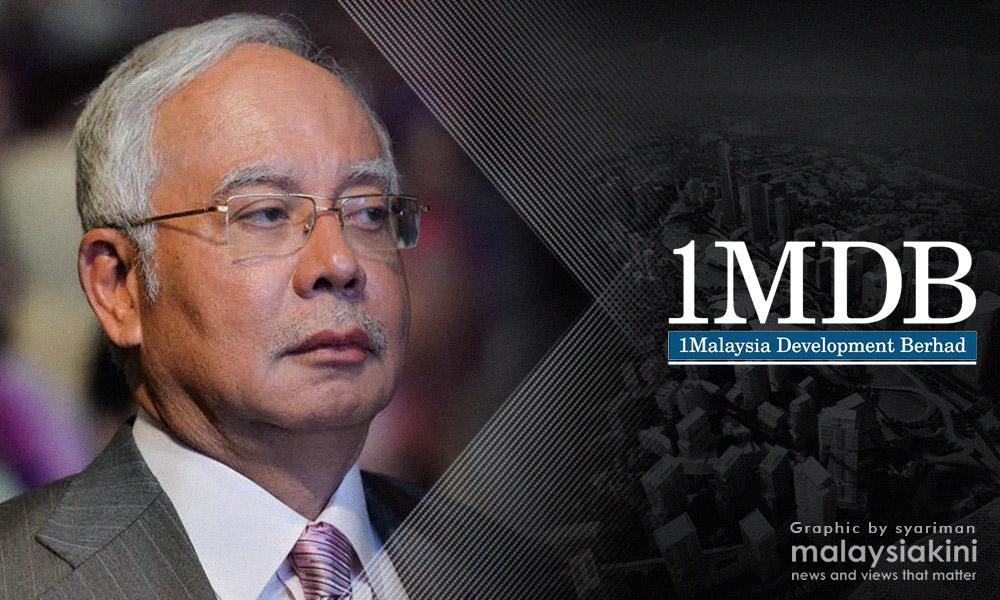
However, today, no thanks to Prime Minister Najib Abdul Razak and the 1Malaysia Development Bhd (1MDB) scandal, and the way we manhandled international journalists, local human rights activists and opposition leaders, we are on their radar!
How then should we respond?
This question was only answered briefly by the panel. I wish that this issue could have been the focus, than to allow one panel speaker to dominate the time.
And, I want to reiterate here that it is always the fault of the majority of our population that we are allowing extremism to rear its ugly head in our society. As I have always quoted Edmund Burke, “The only thing necessary for the triumph of evil is for good men to do nothing."
Extremists are good at playing on the emotions. They use both race and religion to cover up their acts of extremism. When you look at the fruits, you know whether the tree is a good durian tree or one that yields poor grade.
American president-elect Donald Trump is hardly a Christian by any measure, but we can be sure that he is going to be labelled ‘Christian’ for his anti-Islamic stance. Therefore, any actions taken by him will end up with a backlash on thousands of innocent people who may not even agree with his extremism. Is this the way we handle extremism?
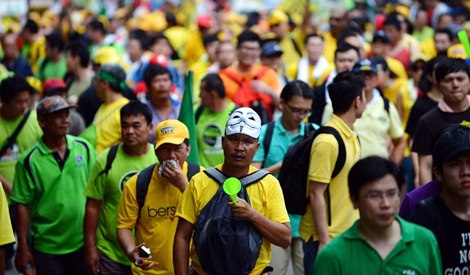
Another good example are some of the local extremists who are hogging the media. They claim to represent the majority but in actual fact, they are just a small group of people.
In the court case between Maria Chin Abdullah (Yellow) and Jamal Md Yunos (Red): if Jamal loses the court case, would his supporters chant Yellow as anti-Islam, and pro-DAP? Such labelling is again very dangerous.
The majority of the people in this country do not agree with the red-shirts, but what do we do about it? We are so intimidated that we do not do anything against them. By right, those who know the ‘actors’ in the red-shirts should haul them up and, like a big brother, give them a strong reprimand.
I have quoted the example of the ilmu kebal in an article yesterday. Two of my Muslim friends concurred that this is not allowed by the teaching of the Quran. Quoting them, it is what they call ‘syirik’. I will not attempt to explain what ‘syirik’ is, but my question is why the Muslim majority is doing nothing about it, what more to urge the muftis to issue a fatwa against ilmu kebal and consulting the bomoh?
Why are we allowing the extremists to even steal the limelight, with their ugly forms of extremism? How many of us stand up to condemn them? Why do our politicians, including Najib as prime minister, appear to be silent while we see the country being destroyed by a small group of extremists?
STEPHEN NG is an ordinary citizen, with an avid interest in following political developments in the country since 2008.


Are you sure you want to delete this comment?
This action cannot be undone.