


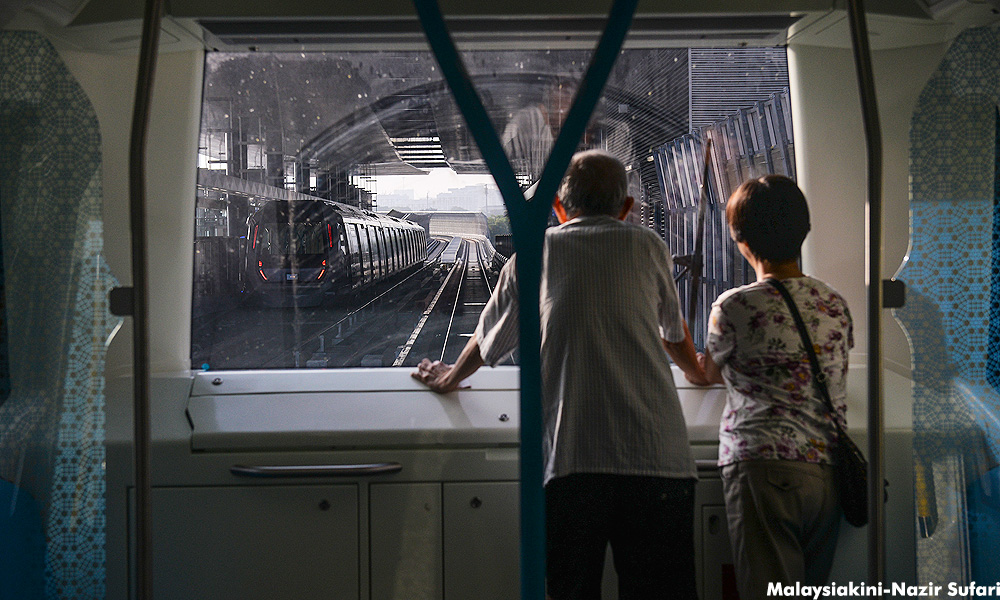

MRT is meant to reduce congestion, not for speeding
The newly-operational Mass Rapid Transit (MRT) system is not meant to be compared with the speeds of private vehicles but should be seen as an effort to reduce traffic congestion, Prasarana group managing director Azmi Abdul Aziz said today.
This comes after some complaints that the MRT trains were running too slow, that it takes 40 minutes to travel the 21 km stretch from the Semantan station to the Sungai Buloh station.
Asked about this complaint, Azmi defended the speed of the MRT, saying that the purpose of building the MRT is to offload traffic from the roads.
The newly-operational Mass Rapid Transit (MRT) system is not meant to be compared with the speeds of private vehicles but should be seen as an effort to reduce traffic congestion, Prasarana group managing director Azmi Abdul Aziz said today.
This comes after some complaints that the MRT trains were running too slow, that it takes 40 minutes to travel the 21 km stretch from the Semantan station to the Sungai Buloh station.
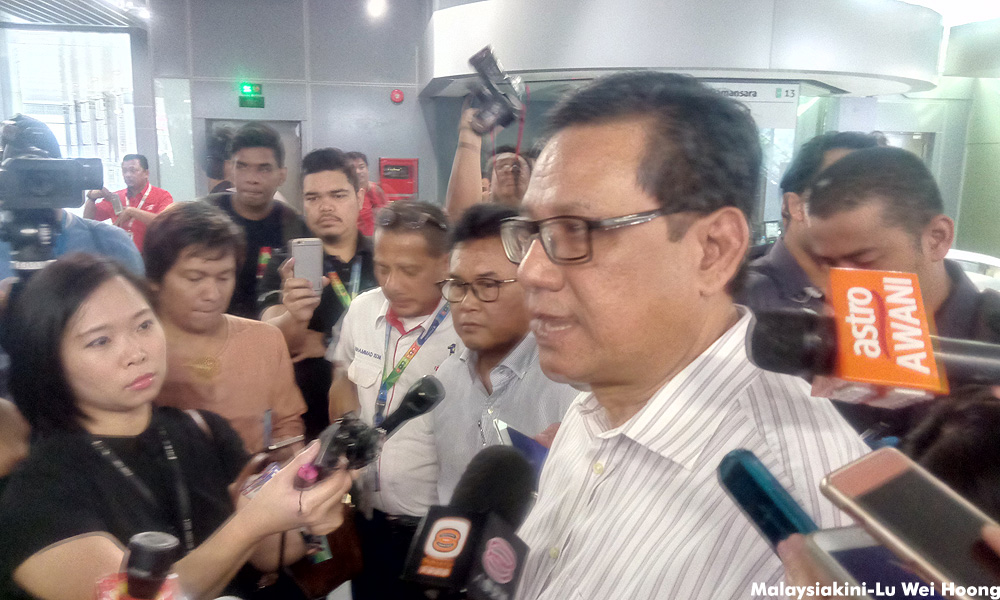 Asked about this complaint, Azmi (photo) defended the speed of the MRT, saying that the purpose of building the MRT is to offload traffic from the roads.
“You have to be fair. You should not compare with driving at night. Much of the traffic congestion is in the morning and afternoon. The reason we provide this is to offload the stress from the road and reduce the congestion…
“It's an effort to to take away the congestions on the roads and for the people not to succumb to being struck in traffic jams. That should be the comparison,” Azmi said.
He had earlier led a media tour on the MRT, from Pusat Bandar Damansara to Sungai Buloh, covering 11 of the 12 stations on the completed Phase 1 route.
The numbers of commuters increases during the peak hours in the morning and afternoon.
The government's RM21 billion investment on the MRT aims to encourage more people to use this form of public transportation instead of driving.
"When you are stuck in a congestion, you are being unproductive. You are not contributing to the economy, you waste time and reduce the GDP," Azmi said.
Currently only the Sungai Buloh station connects to the KTM, and the Muzium Negara stop, when it becomes operational, will be 1.8km away from KL Sentral.
Accessibility to the MRT stations would improve once the second phase of the MRT system becomes operational in July 2017, Azmi said.
Passengers would need to pay RM1 to take a Rapid KL feeder bus from MRT stops to nearby destinations such as shopping malls and office buildings.
A feeder bus will also be provided to take passengers to KL Sentral from Pusat Bandar Damansara every 10-15 minutes.
Travel on the MRT will be free until Jan 16 next year.
The MRT will operate from 6am till midnight on weekdays and from 6am to 11pm on weekends, while the feeder buses will be operational from 5.30am to 11.30pm everyday.


