


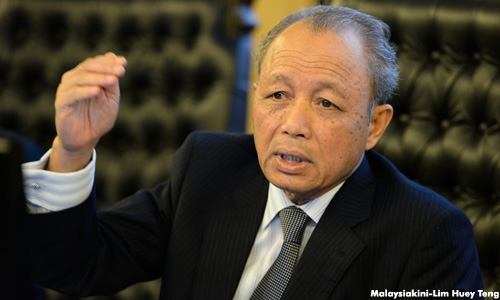

We’re not pro- or anti-government, says CJ
Chief Justice Arifin Zakaria does not think that today’s judicial colloquium on the sharing of good practices on international human rights law, organised by the Asean Intergovernmental Commission on Human Rights (AICHR), is part of an effort against the government.
Justice Arifin said the event - which began today and ends on Wednesday - is to provide a platform for dialogues among the judiciary, AICHR and the civil society.
Stressing that it is for the good of the people of Asean, he said the commission would like to develop jurisprudence, so that a common jurisprudence on what is meant by rights can be determined...
Chief Justice Arifin Zakaria does not think that today’s judicial colloquium on the sharing of good practices on international human rights law, organised by the Asean Intergovernmental Commission on Human Rights (AICHR), is part of an effort against the government.
Justice Arifin said the event - which began today and ends on Wednesday - is to provide a platform for dialogues among the judiciary, AICHR and the civil society.
Stressing that it is for the good of the people of Asean, he said the commission would like to develop jurisprudence, so that a common jurisprudence on what is meant by rights can be determined.
“This is indeed the first time we are having this kind of dialogue.
“It doesn’t mean we are against the government or are pro-government. The judiciary, as I always mention, will always remain independent, not only of government, but also of other bodies, civil societies too.
“We have to be independent. Integrity has to be maintained at all time,” Justice Arifin said at a press conference during the event today.
However, he explained, this did not mean that the judiciary was in favour of human rights to the extent that everything in relation to human rights would be upheld.
“We have to go and consider the law and the principle of human rights.
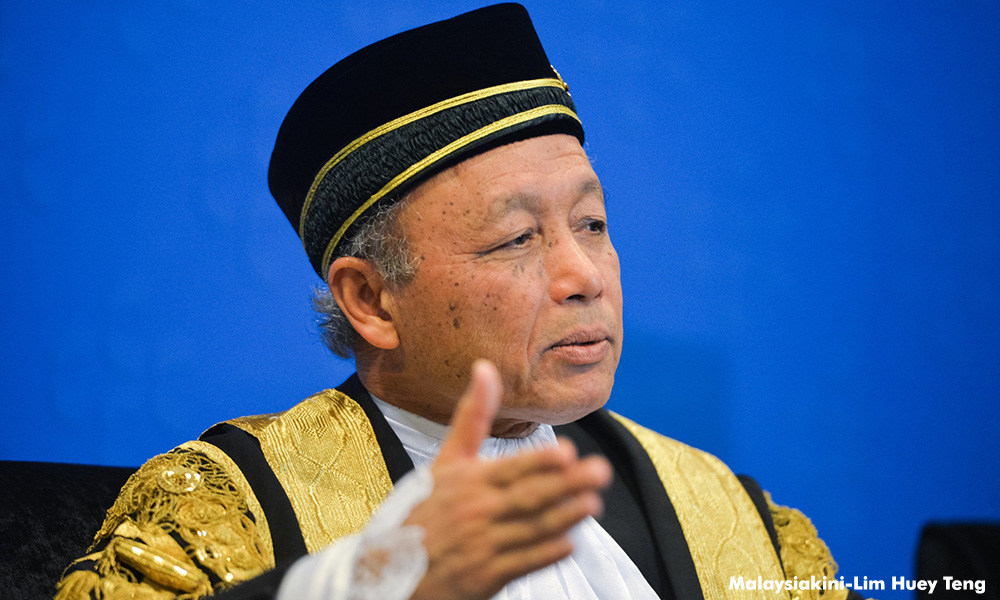 “Most importantly, it’s our own law. Whatever is ratified by the government, if it is not implemented in Malaysia, through our own Act in Parliament, (then) of course we can use this convention and declarations on human rights as an aid to the interpretation of our laws,” Justice Arifin (photo) added.
Meanwhile, Malaysia’s representative to AICHR, human rights lawyer Edmund Bon said the event was an effort to link human rights protection with the judiciary, pointing out how Asean’s work had always been with the executive sector.
“A lot of the senior Asean officials have meetings with the governments. They come from the governments, but we have not had sufficient links with the judiciary.
“Malaysia, together with Laos and Thailand, have conceptualised this colloquium, so that all Asean judges can come together and try to explore certain commonalities in the region,” Bon said, citing that all the countries have signed the relevant human rights declarations and conventions.
The three-day programme will involve panel discussions as well as working group sessions on the role of the judiciary in the promotion and protection of human rights, among others.
The Foreign Ministry, which is part of the organising team for the programme, said in a statement today the colloquium involves more than 100 participants, including 20 senior judges from the highest judicial branches of Asean member states, representatives of the council of Asean chief justices, international judges and AICHR representatives.


Report this comment
Are you sure you want to delete this comment?
This action cannot be undone.