



Princess of refugees off to meet the Queen
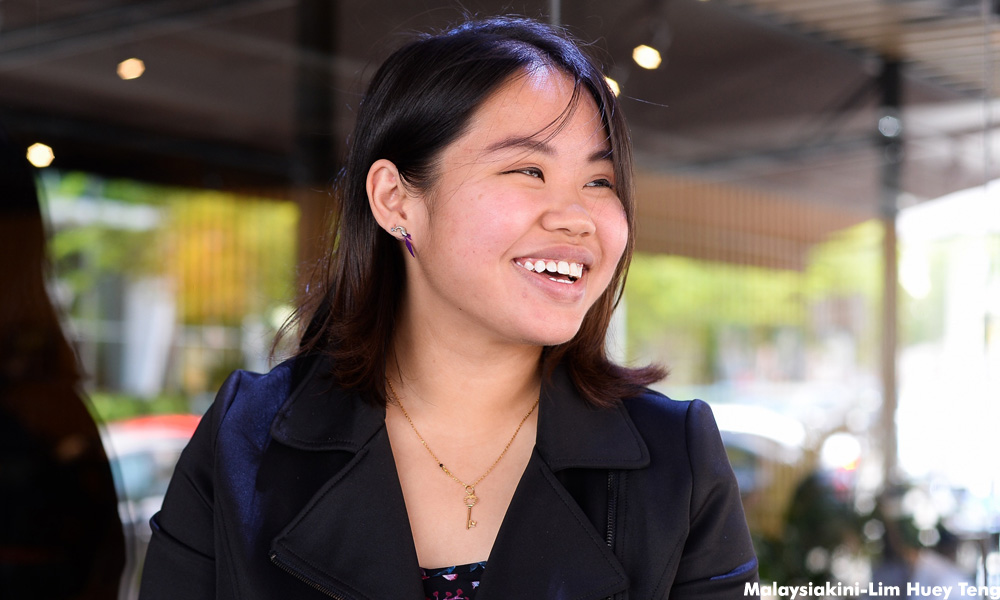
MALAYSIANSKINI | Heidy Quah, who started an NGO for refugees at the age of 18, was recently named recipient of Queen Elizabeth II’s Young Leaders Award in recognition of her contribution to Malaysian society.
Hours before Quah flew off to London to collect her award, Malaysiakini caught up with her at a café in Subang Jaya.
“Apparently it’s going to be a very intense trip, we have a very packed schedule.
“The organisers have told us to take a day and a half off before our flight - advice which I have not been following at all,” says the 23-year-old.
Her phone rings and whistles non-stop throughout the interview. Amongst the calls is one from the Prime Minister’s Office, asking if Quah is available to meet the prime minister before she leaves for the UK. She politely declines, citing a clash of schedule.
Meanwhile, two interns are drafting proposals for her organisation on the next table.
Quah is in the midst of completing her final assignment for her bachelor’s degree in accounting and finance, and has yet to pack for her two-week trip.
“But I’m really, really looking forward to it,” she adds.
The Queen’s Young Leaders Award celebrates young people in Commonwealth countries who are taking the lead in communities and using their skills to transform lives.
Quah, the only Malaysian chosen this year, is receiving the award for her work with Refuge for The Refugees (RFTR), an NGO she started with her best friend Andrea Prisha five years ago when they were barely old enough to drive a car.
Between finishing Form Five and starting tertiary education, the duo decided to volunteer at a Myanmar refugee school that was in need of English teachers.
However, shortly after they started, the school ran out of funds and was on the verge of shutting its doors. Quah recalls how unsettling this was....
MALAYSIANSKINI | Heidy Quah, who started an NGO for refugees at the age of 18, was recently named recipient of Queen Elizabeth II’s Young Leaders Award in recognition of her contribution to Malaysian society.
Hours before Quah flew off to London to collect her award, Malaysiakini caught up with her at a café in Subang Jaya.
“Apparently it’s going to be a very intense trip, we have a very packed schedule.
“The organisers have told us to take a day and a half off before our flight - advice which I have not been following at all,” says the 23-year-old.
Her phone rings and whistles non-stop throughout the interview. Amongst the calls is one from the Prime Minister’s Office, asking if Quah is available to meet the prime minister before she leaves for the UK. She politely declines, citing a clash of schedule.
Meanwhile, two interns are drafting proposals for her organisation on the next table.
Quah is in the midst of completing her final assignment for her bachelor’s degree in accounting and finance, and has yet to pack for her two-week trip.
“But I’m really, really looking forward to it,” she adds.
The Queen’s Young Leaders Award celebrates young people in Commonwealth countries who are taking the lead in communities and using their skills to transform lives.
Quah, the only Malaysian chosen this year, is receiving the award for her work with Refuge for The Refugees (RFTR), an NGO she started with her best friend Andrea Prisha five years ago when they were barely old enough to drive a car.
Between finishing Form Five and starting tertiary education, the duo decided to volunteer at a Myanmar refugee school that was in need of English teachers.
However, shortly after they started, the school ran out of funds and was on the verge of shutting its doors. Quah recalls how unsettling this was.
“There I was, a person about to go for higher education while these kids, who can’t receive formal education in Malaysia, were being robbed of the only access to education they had,” she says.
Quah adds that this “school” - converted from two low-cost flats with only curtains as partitions - saw some 80 students cramped into it. The rooms were only illuminated by sunlight.
In a bid to save the school, Quah asked the headmaster for a week's time to raise funds. However, a lacklustre bake sale failed to raise enough money.
Finally, they resorted to Facebook, sharing stories of the children they had taught.
“We shared our stories, and people just gave,” she says.
Within a week, Quah and Prisha had managed to raise enough money to keep the school open for several months.
During this process, they also learned there were more than 186 refugee schools in Malaysia, many of which were lacking adequate funding and support.
The teenagers decided to wait a few weeks until they both turned 18, the minimum age for registering an organisation, before registering RFTR with the Registrar of Societies (ROS).
“At the time it didn’t feel like a big deal, there was a need and this was our way of meeting that need,” she says.
Creating awareness and providing support
While still raising funds for the school, they also embarked on a roadshow to create awareness about refugees in the country.
With help from their parents, they set up booths at shopping centres and universities across the city, telling passers by about the plight of refugees in the country.
“The biggest reaction we got from people was, ‘Wow, there are refugees in Malaysia?’,” she recalls.
One by one, refugee schools started approaching RFTR for help.
Five years on, RFTR now supports 35 schools, caring for over 2,000 refugee children.
Most of the students are Myanmar, as are 90 percent of refugees in Malaysia.
RFTR gives various forms of support to these schools, ranging from funding to supplying an American home-school syllabus, recruiting teachers, and sometimes providing furniture for the students.
Quah believes in working with the communities she's supporting, rather than dictating how things should be run.
All the teachers are from the refugee communities, and the furniture is often built by parents of the students.
“The community has so much within them - skills, resources and experience. We always ask what they already have that we can work with.
“It is so important for these schools to be spearheaded and run by the refugee communities themselves. They know the needs of their communities best,” she says.
From support to empowerment
Moving forward, Quah says she has no plans to increase the number of schools supported by RFTR.
“Rather, we want to increase the depth of our support to be able to meet more needs besides education,” she says.
RFTR has started supporting individual refugee children, taking on medical bills and referring cases of abuse to the UN High Commissioner for Refugees (UNHCR).
They have also organised funerals.
“We actually organise a lot of funerals for the children’s parents, who have died after suffering abuse or accidents at work. Some die after getting beaten to death in prison,” she says.
One RFTR project that Quah is particularly proud of is its micro-financing scheme to provide seed funding to refugee students to pursue small-scale businesses, while still remaining in school.
The programme was initiated in response to many 14 to 15-year-old refugees dropping out of school to work, only to be exploited and abused by their employers.
Students under the micro-financing scheme have since produced handmade cards, crocheted keychains, and even “Burmese sambal” to be sold at markets and bazaars. The sambal was an unexpected bestseller.
“When I first saw it, I was like - who would eat this? It is very different from normal (local) sambal. But it was a hit!
“I learned to stop being a control freak and just allow the kids to explore what would sell, and what wouldn’t sell,” she laughs.
In the pipeline is a baking school for refugee women - an oft-neglected part of the community. Women, especially mothers, tend to be confined to the home whereas men and children are out most of the day at work and school.
“Some talented home bakers have agreed to come on board to teach the refugee women how to bake. The goal is for the women to be able to sell quality, industry-standard baked goods to cafés.
"We want to engage the mothers where they are and empower them,” she says.
Despite repeated calls from civil society, Putrajaya has refused to ratify the 1951 Geneva Convention on Refugees.
In the eyes of the government, the 150,000 or more refugees in Malaysia are no different from undocumented immigrants.
This lack of recognition has barred refugees from gaining access to public schools, free public healthcare, the legal right to work, and fundamental human rights.
Quah is clear about her long-term goal for RFTR.
“Eventually we hope to go into policymaking.
“We won’t stop fighting until something shifts within the government,” she vows.
Refuge for The Refugees is on Facebook. In September they will be celebrating their fifth anniversary with a campaign called “Behind My Smile”.
MALAYSIANS KINI is a series on Malaysians you should know.
Previously featured:
War has no victors, says last surviving WWII vet
The one-man Malay literature archive
The last of generations of storytellers


Report this comment
Are you sure you want to delete this comment?
This action cannot be undone.