


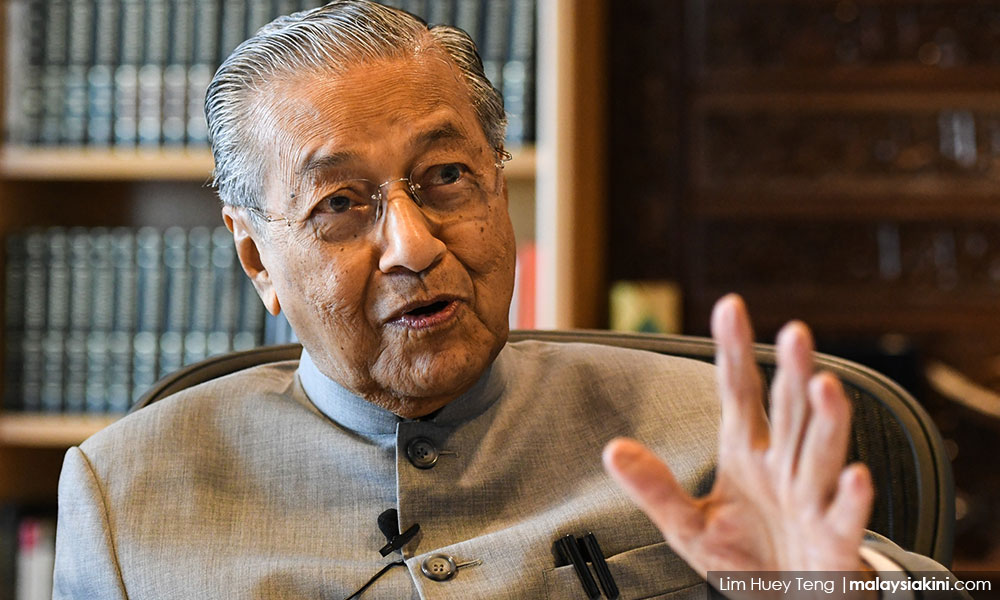

For Dr M, an apology needs to go both ways
INTERVIEW | In his 22 years as prime minister, Dr Mahathir Mohamad had led Malaysia towards modernisation and industrialisation at a rapid pace, but he is also remembered for his chequered record in terms of upholding democracy and human rights.
His government jailed dissidents by the hundreds, judicial independence came under attack, press freedom was curtailed and allegations of crony capitalism were rife.
These are among the reasons cited by some Pakatan Harapan supporters and civil society leaders for their apprehension over having Mahathir as the opposition coalition's "top dog."
Although many opposition leaders, including victims of detention without trial, have embraced Mahathir as their leader, there are still doubts on Mahathir's commitment to reforms, and apologising for his past indiscretions may help to bring things moving forward.
During an interview with Malaysiakini last week, Mahathir said that if there has to be an apology, then it would have to work both ways.
"If we talk about regrets or apologies, then both sides have to apologise.
"I have been called firaun (a pharaoh), maha-zalim (a very cruel person). All that is not fair, not right," Mahathir said.
'I am not a dictator'
Critics, said Mahathir, forget that during his tenure, the economy was doing generally well and his political opponents even managed to win in some states.
"During my time, a lot of people in this country enjoyed a good life. Maybe sometimes I am very strict but I am not a dictator. If I am a dictator, then I will win 99 percent of the seats.
"Every time there is an election, a lot of opposition parties can even control states during my time. And during my time in Umno, I even allowed people to challenge me for the presidency.
"(Current Umno president) Najib (Abdul Razak) doesn't allow (this). Anyone who challenges him gets kicked out of the party. So who is the dictator?" asked Mahathir.
During Mahathir's tenure as prime minister, Parti Bersatu Sabah (PBS) won the Sabah election in 1990 and 1994, prior to Umno's entry into the state. However, PBS was unable to form the state government in 1994 due to defections.
PAS has held on to Kelantan since 1990 and managed to form the Terengganu government for one term after the 1999 general election. It was the Mahathir-administration that ceased oil royalty payments to these states...
INTERVIEW | In his 22 years as prime minister, Dr Mahathir Mohamad had led Malaysia towards modernisation and industrialisation at a rapid pace, but he is also remembered for his chequered record in terms of upholding democracy and human rights.
His government jailed dissidents by the hundreds, judicial independence came under attack, press freedom was curtailed and allegations of crony capitalism were rife.
These are among the reasons cited by some Pakatan Harapan supporters and civil society leaders for their apprehension over having Mahathir as the opposition coalition's "top dog."
Although many opposition leaders, including victims of detention without trial, have embraced Mahathir as their leader, there are still doubts on Mahathir's commitment to reforms, and apologising for his past indiscretions may help to bring things moving forward.
During an interview with Malaysiakini last week, Mahathir said that if there has to be an apology, then it would have to work both ways.
"If we talk about regrets or apologies, then both sides have to apologise.
"I have been called firaun (a pharaoh), maha-zalim (a very cruel person). All that is not fair, not right," Mahathir said.
'I am not a dictator'
Critics, said Mahathir, forget that during his tenure, the economy was doing generally well and his political opponents even managed to win in some states.
"During my time, a lot of people in this country enjoyed a good life. Maybe sometimes I am very strict but I am not a dictator. If I am a dictator, then I will win 99 percent of the seats.
"Every time there is an election, a lot of opposition parties can even control states during my time. And during my time in Umno, I even allowed people to challenge me for the presidency.
"(Current Umno president) Najib (Abdul Razak) doesn't allow (this). Anyone who challenges him gets kicked out of the party. So who is the dictator?" asked Mahathir.
During Mahathir's tenure as prime minister, Parti Bersatu Sabah (PBS) won the Sabah election in 1990 and 1994, prior to Umno's entry into the state. However, PBS was unable to form the state government in 1994 due to defections.
PAS has held on to Kelantan since 1990 and managed to form the Terengganu government for one term after the 1999 general election. It was the Mahathir-administration that ceased oil royalty payments to these states.
Kit Siang affected, too
For Mahathir, there is no point dwelling on the past, because he now represents Malaysians who want to see an end to Najib's rule.
 "This is our common objective. There are some who still dig up 18-year-old issues. But their numbers are much less. Nowadays, everywhere I go people are coming up to me and expressing support.
"(But there will) always be some who are against me, against anybody. I accept that some people will find it difficult to accept me," he said.
This polarising effect, argued Mahathir, was not unique to him alone.
“On the other hand, I know many people who want to join me find it difficult to because I am now associated with DAP. So it cuts both ways,” he said.
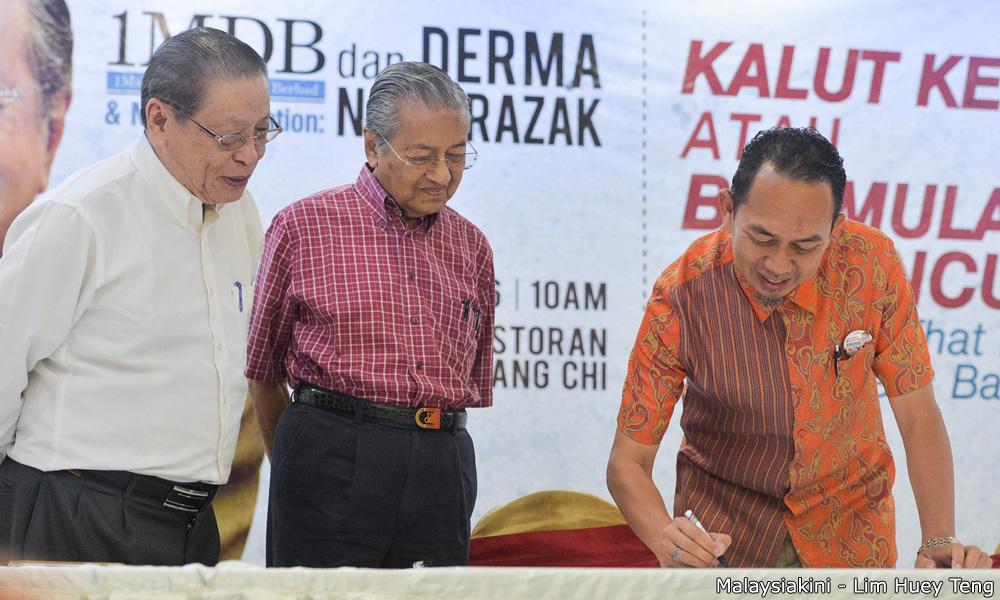
He discovered this firsthand, after the signing of the Citizen’s Declaration last year, where he sat down with opposition veteran Lim Kit Siang for the first time.
According to Mahathir, both his and Lim’s approval ratings plummeted, albeit only temporarily.
“The first time I sat next to Kit Siang was for the Citizen’s Declaration. We haven’t formed our party yet…I sat next to him and we took pictures. My rating went down, but it’s gone up again.
“And for that matter, DAP also suffered the same thing. Kit Siang lost a lot of support by being with me. But now he is recovering,” Mahathir added.
This interview was conducted by Al-Abror Mohd Yusuf, Andrew Ong, Annabelle Lee and Zikri Kamarulzaman.
Read our other articles on our interview with Mahathir here:
Dr M: Felda folk won't be fooled by Najib-Trump meeting
Najib's 'third world' aid for US economy cracks up Mahathir
Dr M: White House footed hotel bill when I visited Reagan
Dr M's prognosis: PAS will not do well in GE14
Dr M: Harapan will protect Malay rights, but not at expense of non-Malays


