


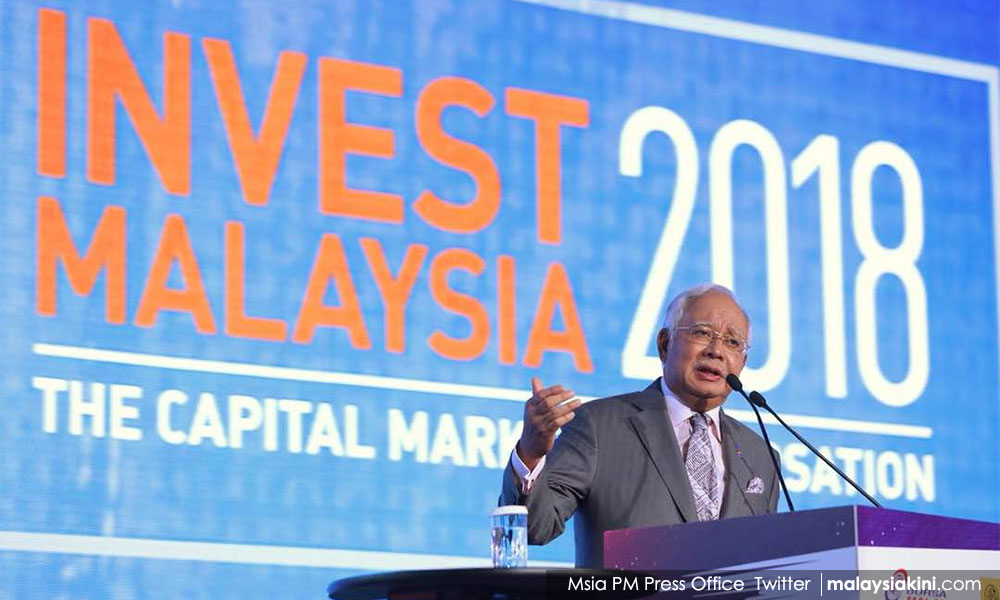

PM: Japan has more FDI here than China, but why no fuss?
Japan has more foreign direct investments (FDI) in Malaysia than China but no one is saying that the country’s sovereignty is being sold to Japan, Prime Minister Najib Abdul Razak pointed out today.
“Perhaps I can also take the opportunity to remind you that, while over time we have had RM63 billion in FDI stock from China and Hong Kong, we have had more, RM70 billion in fact, from Japan and you don’t hear anyone warning that we are selling our country to the Japanese.
"Of course not. They are most welcome here. So are investors from Africa, the Americas, China, the European Union, India, Saudi Arabia and from around the world,” Najib said during his keynote speech at the ‘Invest Malaysia 2018’ conference in Kuala Lumpur today...
Japan has more foreign direct investments (FDI) in Malaysia than China but no one is saying that the country’s sovereignty is being sold to Japan, Prime Minister Najib Abdul Razak pointed out today.
“Perhaps I can also take the opportunity to remind you that, while over time we have had RM63 billion in FDI stock from China and Hong Kong, we have had more, RM70 billion in fact, from Japan and you don’t hear anyone warning that we are selling our country to the Japanese.
"Of course not. They are most welcome here. So are investors from Africa, the Americas, China, the European Union, India, Saudi Arabia and from around the world,” Najib said during his keynote speech at the ‘Invest Malaysia 2018’ conference in Kuala Lumpur today.
Najib's comment is seen as in response to accusations by the opposition, including former prime minister Dr Mahathir Mohamad, who say the country is becoming increasingly economically indebted to China through its equity stake in local mega-development projects.
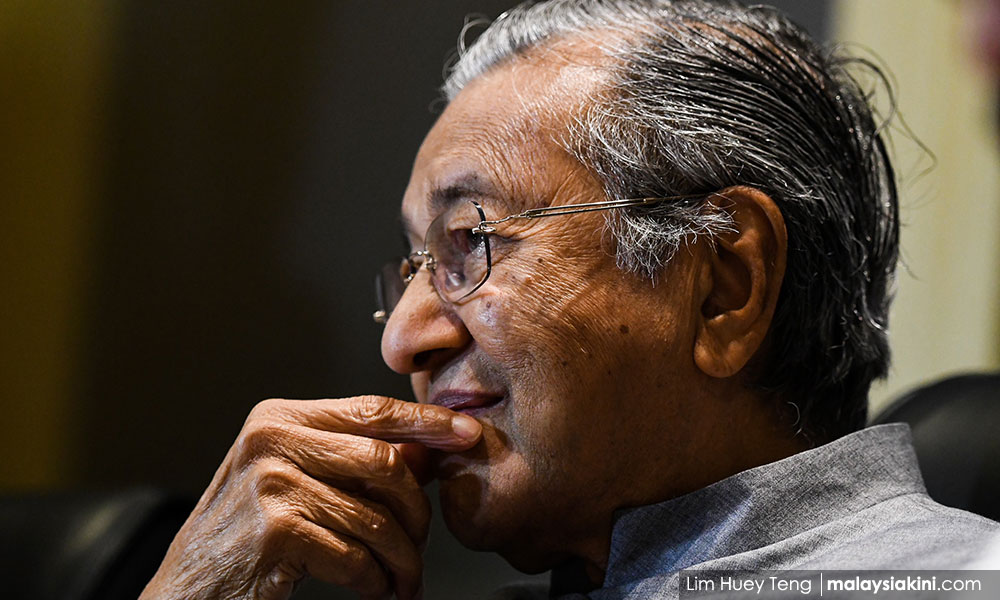
Najib said the opposition’s “irresponsible scare-mongering” about FDI from China being akin to selling Malaysia's sovereignty was “baseless nonsense”.
“My government will never sacrifice an inch of our sovereignty,” he said.
He also pointed out that Malaysian investment in China used to be bigger than China’s investment in Malaysia.
There are also currently more Malaysian investments overseas than FDI in the country, he added.
“So this is a two-way street. FDI levels vary over time, and such connections are part of, and the key to, a healthy and diversified economy,” he said.
Najib also said that his administration has always been a “business-friendly” government which welcomed FDI, revealing that it approved a net FDI of RM36.4 billion during the first nine months of 2017.
The prime minister conceded that Malaysia was affected by the challenging global economy a few years ago, compounded by the drastic fall in oil prices.
However, he said, the country’s economy was also sabotaged by the “concentrated campaign” against 1MDB, which was used as a tool to suggest Malaysia’s economy was collapsing.
“I am not going to brush over this issue. There were indeed failings at the company, there were lapses of governance. There was a valid cause for concern,” he said.
That is why he ordered “one of the most comprehensive and detailed investigations in Malaysia’s corporate history”, involving multiple authorities such as a bipartisan parliamentary body.
The company’s board has since been dissolved, its management team changed, its operations reviewed and its assets rationalised, Najib said.
Malaysia also weathered the challenges of the global economy because the government had put in place a far-reaching economic plan and taken “tough but necessary” decisions to protect the resilience of the economy, he said.
Najib pointed out that the World Economic Forum’s Global Competitiveness Index for 2017-2018 has ranked Malaysia very highly, while the International Monetary Fund (IMF) has praised Malaysia’s “sound macroeconomic policy responses in the face of significant headwinds and risks”.
The World Bank has also confirmed that Malaysia is on track and a survey co-authored by the Wharton School at the University of Pennsylvania has also awarded Malaysia as the ‘best country to invest in’, he said.
“There are certain politicians who would like to make you think that Malaysia is in danger of going bankrupt. Does it sound like it to you?
“I think not, and neither does the World Bank, the IMF or any credible independent agencies and economists.
“Quite the opposite, in fact. It is those politicians who are bankrupt of ideas. They are so desperate that they are willing to run down their own country for personal political gains,” he said.


Report this comment
Are you sure you want to delete this comment?
This action cannot be undone.