



Twitterjaya: Is a 'Ministry of Truth' in the offing?
As the gravity of the Anti-Fake News Bill begins to sink in, some Malaysians on Twitterjaya have expressed concern over the broad reach of the proposed law.
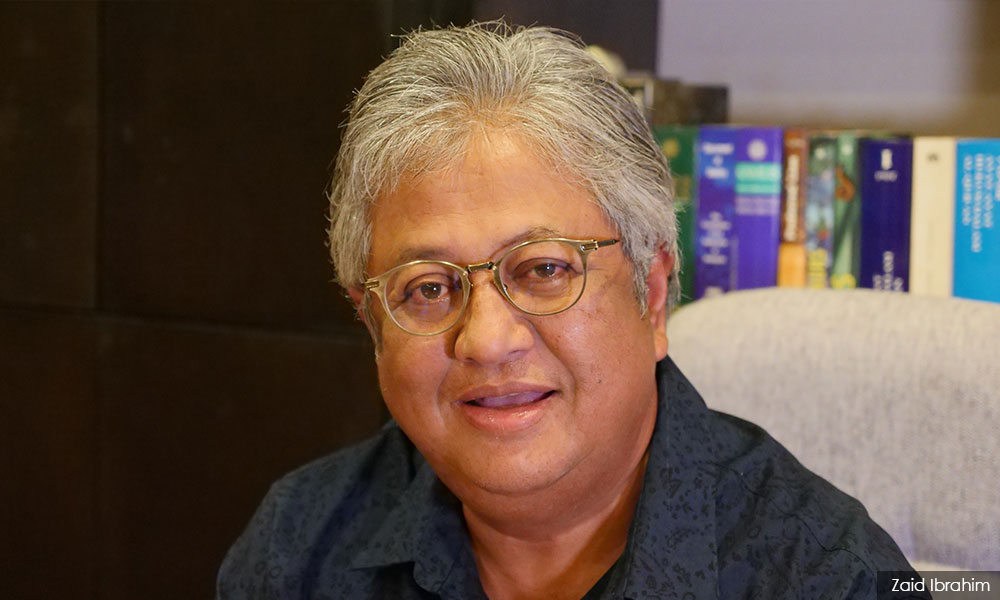
For instance, former cabinet minister and lawyer Zaid Ibrahim said the government could interpret fake news as materials that it does not like...
As the gravity of the Anti-Fake News Bill begins to sink in, some Malaysians on Twitterjaya have expressed concern over the broad reach of the proposed law.
For instance, former cabinet minister and lawyer Zaid Ibrahim said the government could interpret fake news as materials that it does not like.
"Under the new law, people who spread fake news can be jailed up to 10 years. The problem is, material which they do not like will be fake news.
"If you don't want to go to jail, vote PH (Pakatan Harapan)," Zaid said.
Lawyer K Shanmuga said Section 8A of the Printing Presses and Publications Act 1984 already has prescribed punitive measures to address false news - a maximum penalty of three years jail, RM20,000 fine or both.
"That is bad enough, but slightly better than this completely ridiculous law! #FreeSpeech," he wrote.
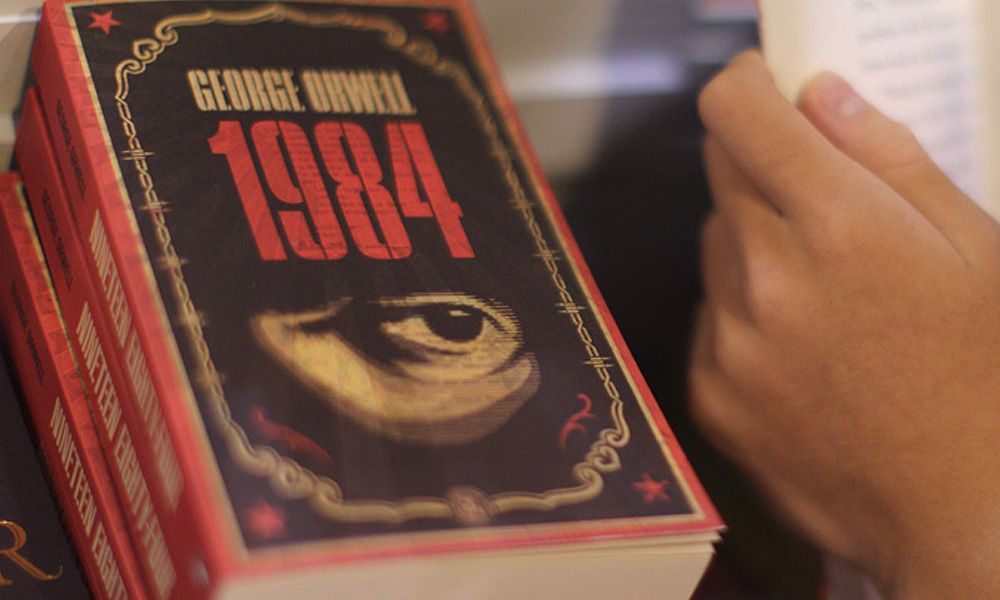
 Activist Michelle Yesudas pondered aloud if Putrajaya intends to establish a "Ministry of Truth" - a fictional arm of government made popular by George Orwell's famous book "1984".
"A deeply concerned Malaysian citizen would like to ask the Malaysian government if there are any plans to establish a 'Ministry of Truth', dedicated to harvesting 'true news' to determine the fake nature of 'fake news'," she asked.
Bill includes extra-territorial applications
Australian National University lecturer and Malaysia watcher Amrita Malhi noted that the bill includes extra-territorial applications and was tabled just ahead of the general election.
"Opposition campaigners have good access to international media and use it frequently to communicate with Malaysians and international audiences alike," she noted.
Lawyer's for Liberty executive director Eric Paulsen said that this provision was "excessive", noting that such provisions normally applied to piracy or terrorism.
"So technically, WSJ, NYT, The Guardian etc can be found liable in absentia," he wrote.
Another lawyer, Syahredzan Johan, believes that the bill would criminalise satire and parody altogether.
"It is wider than just 'news', it also covers information which is not traditionally 'news'.
"The bill is the death knell for satire and parody - your FakeMalaysiaNews, your @thetapirtimes, @kuasasiswa works etc," he wrote.
Unlike the much-criticised Section 233 (1) of the Communications and Multimedia Act 1998, the element of intent was not required under the new bill.
"All that is required is that the information is 'fake news' and it is knowingly done. The threshold is lower," Syahredzan said.
The editor-in-chief of Singapore-based New Naratif, Kirsten Han, also questioned the validity of the Malaysian government's definition of fake news - information what was "wholly" or "partly" false.
"This is such a broad definition. Who gets to decide what is 'false', much less 'partly false'?" she asked.
The Anti-Fake News Bill 2018 was tabled in Parliament for first reading today.


Report this comment
Are you sure you want to delete this comment?
This action cannot be undone.