


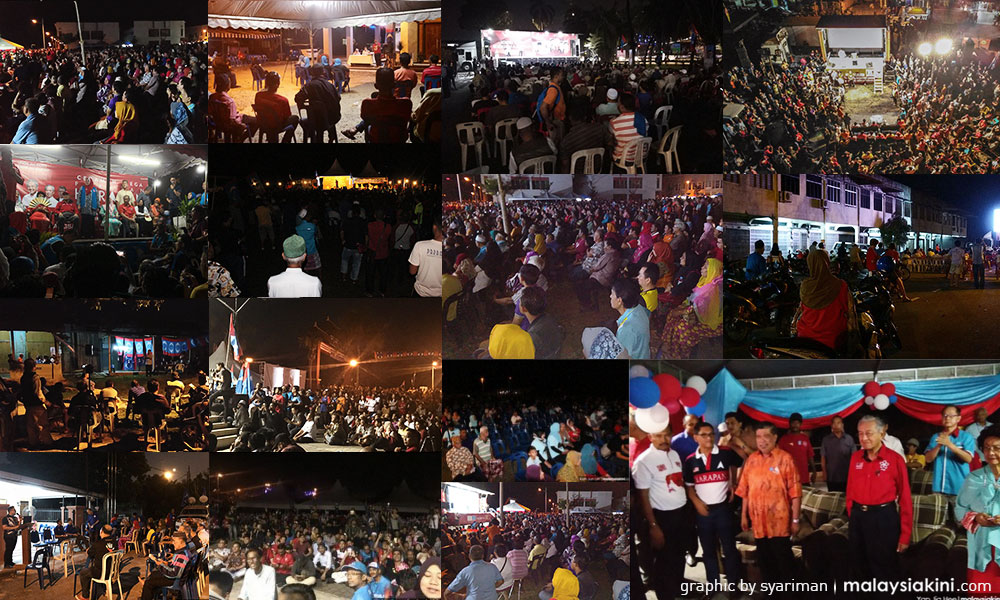

Deep in Malay heartland, Harapan gets down to brass tacks
GE14 | For many urban folk, the election season means one mega ceramah after another. However, such events have been noticeably less during the 14th general election, leaving many wondering why this campaign period has been a slow one.
But away from the media spotlight, on dirt roads and unlit streets, an all-out battle is taking place in the Malay and rural heartland.
In these areas, campaigning means old-fashioned canvassing or ceramah kelompok (group ceramah), which can be gruelling for candidates with limited resources.
For decades, BN, with its deep roots in these areas, has been the dominant force but it is now being challenged by Harapan on its own turf.
Bersatu, PKR and Amanah have taken the battle to BN in these areas, which will be instrumental in deciding whether the oft-repeated "Malay tsunami" against the ruling coalition can be generated.
DAP, which can do little in the Malay heartland, has been left to hold the fort in urban centres as it continues to hold mega ceramah sessions in those areas...
GE14 | For many urban folk, the election season means one mega ceramah after another. However, such events have been noticeably less during the 14th general election, leaving many wondering why this campaign period has been a slow one.
But away from the media spotlight, on dirt roads and unlit streets, an all-out battle is taking place in the Malay and rural heartland.
In these areas, campaigning means old-fashioned canvassing or ceramah kelompok (group ceramah), which can be gruelling for candidates with limited resources.
For decades, BN, with its deep roots in these areas, has been the dominant force but it is now being challenged by Harapan on its own turf.
Bersatu, PKR and Amanah have taken the battle to BN in these areas, which will be instrumental in deciding whether the oft-repeated "Malay tsunami" against the ruling coalition can be generated.
DAP, which can do little in the Malay heartland, has been left to hold the fort in urban centres as it continues to hold mega ceramah sessions in those areas
On the first day of campaigning in greater Johor Bahru, DAP's Iskandar Puteri candidate Lim Kit Siang drew some 4,000 people at his ceramah in Taman Ungku Tun Aminah, which DAP won comfortably in the last general election.
At the same time, PKR's Johor Bahru candidate Akmal Nasir was holding a low-key ceramah in Bandar Baru Uda (photo), a BN stronghold. Some 400 people turned up.
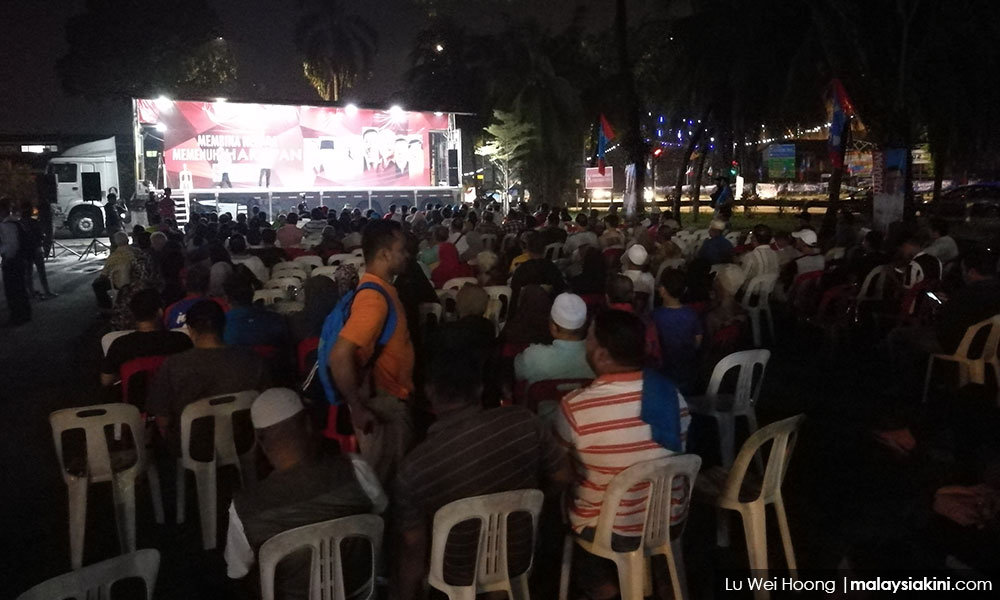
At the parliamentary level in the last general election, BN won 1,696 of the votes in the polling district there, compared with PKR's 701 votes.
Meanwhile, BN has been utilising the mosque network, which is deeply embedded in the local community.
For example, BN's Pulai candidate Nur Jazlan Mohamed today attend three tahlil prayer events in a span of three hours, on top of a slew of walkabouts.
In northern Johor, Bersatu's Muar candidate Syed Saddiq Abdul Rahman took a similar approach.
"For the five Muslim prayers, I try to visit five different mosques or surau a day," he told Malaysiakini.
If the opportunity permits, Syed Saddiq then stays back with the congregation to have a meal, which he said was the best time to speak honestly about politics.
At night, Syed Saddiq will go on a ceramah kelompok blitz, sometimes thrice a night, in the parit (trenches) which form the Malay heartland of the west coast of Johor.
Targeting 'grey areas'
In Malacca, where the opposition has been virtually non-existent beyond the towns, Harapan brought Bersatu president Muhyiddin Yassin into the rural heartland with two ceramah programmes in the polling districts of Kampung Pulau Ayer Limau and Pekan Nyalas. Both events drew around 200 people.
In the last general election, at the parliamentary level, BN won 1,042 out of the 1,614 votes in Pekan Nyalas, and 618 out of 843 votes in Kampung Pulau.
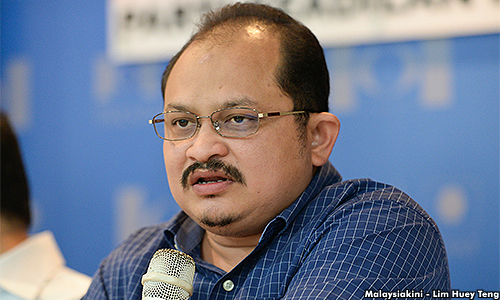
PKR's Hang Tuah Jaya parliamentary candidate and Rim state seat candidate Shamsul Iskandar (photo) is also attending up to four ceramah kelompok a night, mostly in "grey areas", some with as little as 30 people at one time.
They face a formidable and well-oiled BN machinery, which has for the longest time relied on grassroots campaigning instead of mega ceramah sessions.
For example, BN's Alor Gajah candidate Wong Nai Chee had a punishing schedule to meet all local machinery in 41 polling districts in just the first few days of campaigning.
In Negeri Sembilan, PKR's Port Dickson parliamentary candidate Danyal Balagopal Abdullah said his party was scaling back on mega ceramah in the state and is doing more focused campaigning such as walkabouts.
"We're focusing on the politics of personal touch, on top of internet publicity," said Danyal, who is contesting in a Malay-majority seat.
In the Malay-majority parliamentary seat of Jempol, BN’s Mohd Salim Sharif - who replaced controversial incumbent and former Felda chairperson Mohd Isa Mohd Samad - has been holding "small talks" and even a dodol-cooking event attended by only 30 people.
His opponent, Bersatu’s Kamarulzaman Kamdias, has also focused on Felda areas with similarly small-scale events.
Leading up to 'finale rally'
In Perak, DAP has held large rallies in places like Teluk Intan and Ipoh in the first half of the campaign period, with the thousands who showed up being featured on social media.
However, in places like Tanjong Malim, which has the highest concentration of Felda voters in the state, ceramah kelompok has been the flavour of the day (photo).
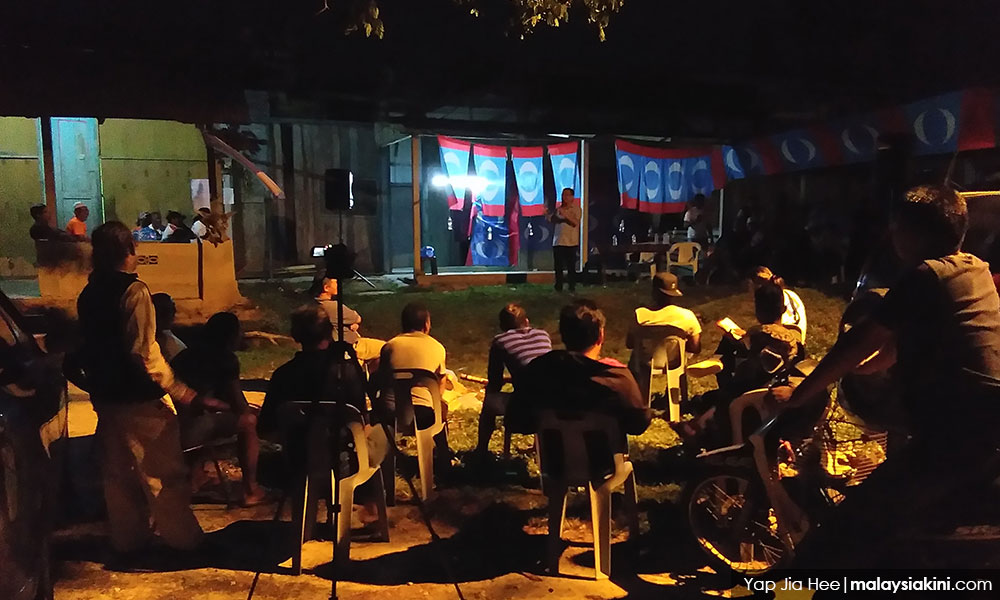
On the second day of campaigning, PKR's candidate Chang Lih Kang and his team ventured deep into the Malay villages of Ulu Slim to host such a ceramah.
In the last general election, BN won the Ulu Slim polling district with 463 votes, compared to PKR's 144 votes at the parliamentary level.
In Kedah, Harapan has adopted similar small-scale campaigning for the Malay heartland.
Pendang’s Bersatu candidate Wan Saiful Wan Jan, for example, had 12 items on his campaign schedule for today, starting from 9am.
This included visits to various people and places, prayers at local mosques, and ceramah kelompok. His schedule in the last few days was no less hectic.
PKR's Kulim-Bandar Baharu candidate Saifuddin Nasution Ismail (photo) has a similar schedule, which mostly allows him to meet voters personally.
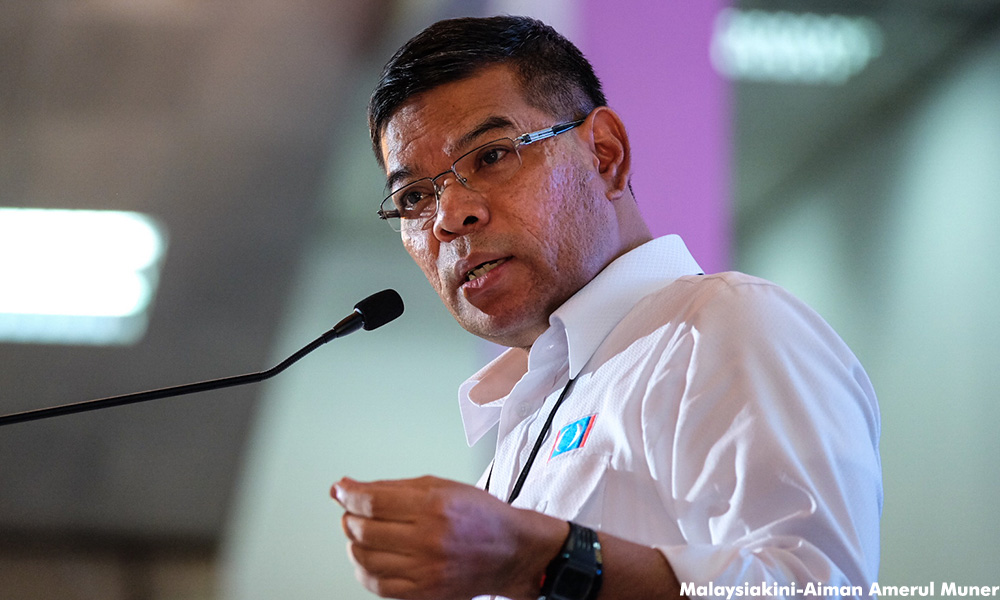
“I managed to cover six to seven programmes a day, and now I told them (my election machinery) to increase it to 10. I think I can reach ten,” he said.
Places such as Penang, Selangor and Kuala Lumpur, which have large population centres, continue to see a number of large-scale ceramah.
In the last general election, even though the opposition coalition picked up 15 new and mostly urban parliamentary seats in Peninsular Malaysia, it lost an equal number of mostly rural or semi-urban parliamentary seats.
The first half of the campaign this time around saw PKR, Bersatu and Amanah fighting in the Malay heartlands against BN and PAS, away from the spotlight, leaving DAP to hold the fort in urban centres.
Entering the second half of campaigning, the focus on mega ceramah sessions will likely return as Harapan caps off the campaigning with a "finale rally" in each state, where the party's top guns will be present.
In the final days of campaigning, Harapan needs to ensure that it can hold the urban front, despite having diverted resources into the rural areas and the Malay heartlands.


Report this comment
Are you sure you want to delete this comment?
This action cannot be undone.