


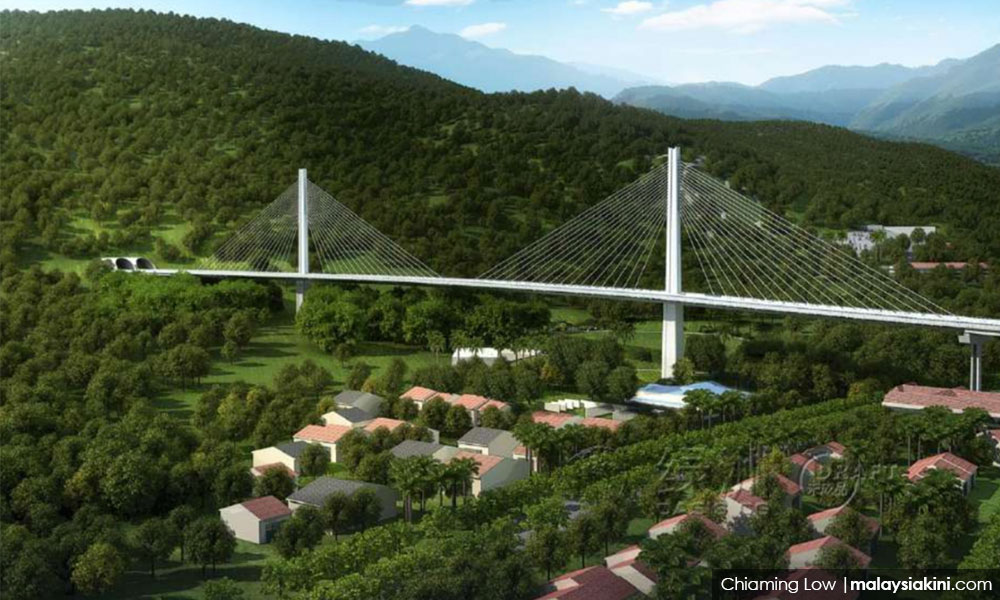

PSM: Many shortcomings in PIL 1 highway's EIA report
Parti Sosialis Malaysia is the latest group to oppose the Pan-Island 1 (PIL 1) highway project in Penang, following its review of the project's Environment Impact Assessment (EIA) report which is currently on display.
The party's central committee member Choo Chon Kai said among the shortcomings of the report was that it did not spell out the risks involved in tunnelling works.
This was crucial, he said, as half the length of the highway would be made up of tunnels...
Parti Sosialis Malaysia is the latest group to oppose the Pan-Island 1 (PIL 1) highway project in Penang, following their review of the project's Environment Impact Assessment (EIA) report which is currently on display.
The party's central committee member Choo Chon Kai said among the shortcomings of the report was that it did not spell out the risks involved in tunnelling works.
This was crucial, he said, as half the length of the highway would be made up of tunnels.
"The EIA fails to undertake a proper risk analysis of the drill and blast tunnelling process as there are fault zones and fragile hill slopes involved," Choo said in a press conference today.
"The report also failed to evaluate the impact of tunnelling on the underground water flow," he said, adding that there were no presentations of worst-case scenarios which is vital as the tunnelling works could affect the soil and trigger a collapse or subsidence.
Threats to nearby structures
Choo pointed out that according to the EIA report, areas that intersect with fault zones are "highly fractured and vulnerable to collapse".
This can damage both the work under construction and existing nearby structures such as condominiums, Kek Lok Si temple, the Air Itam dam (photo below) and the Bukit Bendera complex.
"But there is no further assessment on such threats," he said.
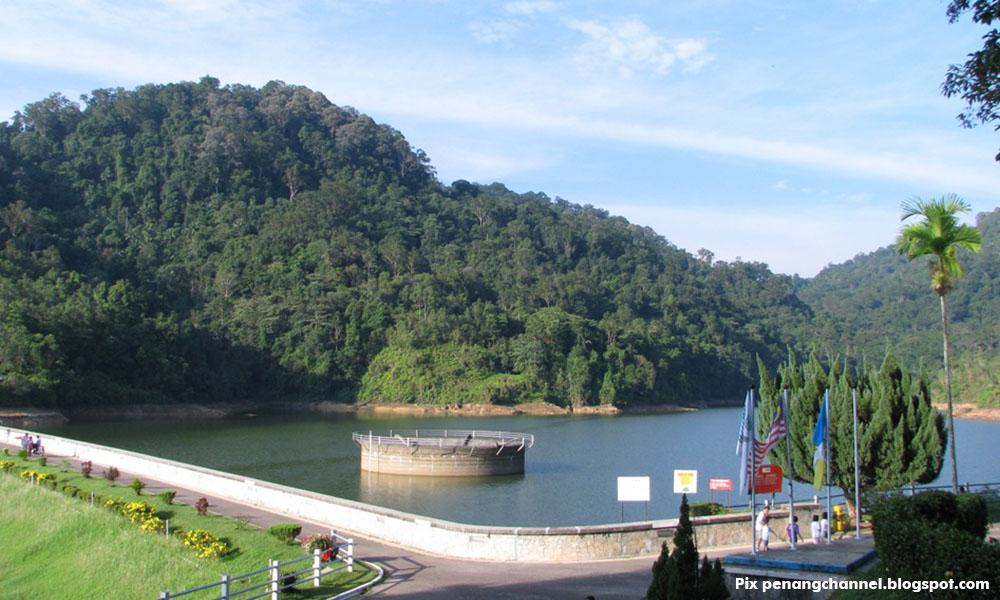
"The possible damage caused by the threat of collapse of the Air Itam dam, for example, is beyond mitigation," Choo warned.
The PIL 1 highway is a 19.5 km project, which includes 10.5km of tunnels in four sections, and costing RM8 billion.
Lacking worksite management
Choo went on to say that the EIA report did not properly present the preparations for worksite management.
For example, he said, it did not address the issue of massive volume of rock debris from the tunnelling process along the 10.5km length.
"While the EIA report recognises that noise levels from the project will affect schools and businesses, day and night, it offers no effective mitigation measures for those affected," Choo said.
He echoed the concerns of NGOs that the project is not a long-term solution to the traffic problem in Penang, as analysis shows that the highway would reach its full capacity by 2030.
"Considering that it may take seven years for the construction, it leaves barely four years of smooth traffic flow before it is back to the same problem of traffic congestion," Choo said.
"The PIL 1 highway poses long-term damage to the health, environment, and well-being of Penangites, in exchange for a short-sighted aim to resolve traffic congestion problem," he added.
‘Scrap the project, review PTMP’
Choo urged the state government to scrap the controversial highway project, and to review the Penang Transport Master Plan (PTMP), and have a "paradigm shift" in organising a proper transport plan, which includes moving people and not cars.
"Seriously look into alternative ways instead of harping on obsolete ideas of building more highways, like more integrated bus service networks," Choo said.
"The government should look seriously into this instead of spending more money to cater for interests of property developers," he added.
Several civil society groups and political parties have alleged that the project, a component of the RM46 billion PTMP, will "adversely" affect the quality of life of ordinary people and the environmental sustainability in Penang.
Chief Minister Chow Kon Yeow defended the project, saying new chemical engineering methods will be used for the tunnels which will not massively impact the environment.
Chow also said the state government has engaged some 17,000 people from various quarters to get their feedback on the project and will continue to conduct more sessions.


Are you sure you want to delete this comment?
This action cannot be undone.