


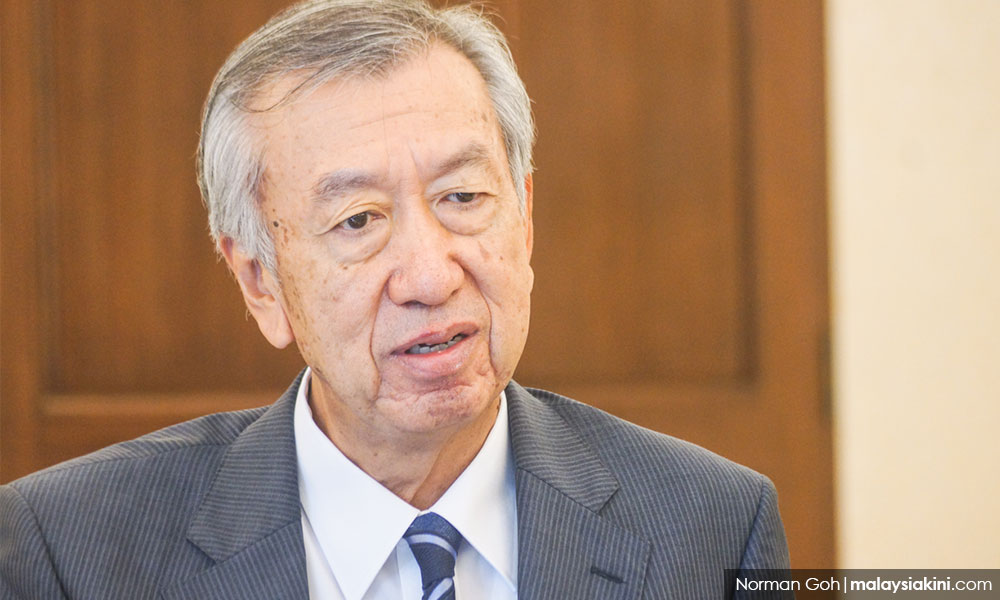

Japan ambassador moots East Asian aerospace industry
INTERVIEW | To build an Airbus A380 aircraft, major components of the aircraft are assembled in the manufacturing facilities in Germany, France, Spain and the UK.
These are then shipped thousands of kilometres for final assembly in Toulouse, France, before the majestic aircraft takes to the sky for its maiden flight....
INTERVIEW | To build an Airbus A380 aircraft, major components of the aircraft are assembled in the manufacturing facilities in Germany, France, Spain and the UK.
These are then shipped thousands of kilometres for final assembly in Toulouse, France, before the majestic aircraft takes to the sky for its maiden flight.
Now, with Prime Minister Dr Mahathir Mohamad working to revive his Look East Policy, Japanese ambassador to Malaysia Makio Miyagawa hopes that such cross-border collaboration can also be realised in East Asia.
“I have a dream to set up an aviation industry in Asia, which is good.
“If countries in East Asia get together to agree on setting up a joint company - a regional international company - and then agree that governments would purchase a certain number of aircraft when the aircraft is complete, the investors have the assurances that the products will be purchased by the governments.
“This assurance would encourage investors to invest in this project. I think now the Look East Policy would lead to a new Asian Airbus company. This is my dream,” he said, while carefully stressing that the dream is his own and not his government’s official position.
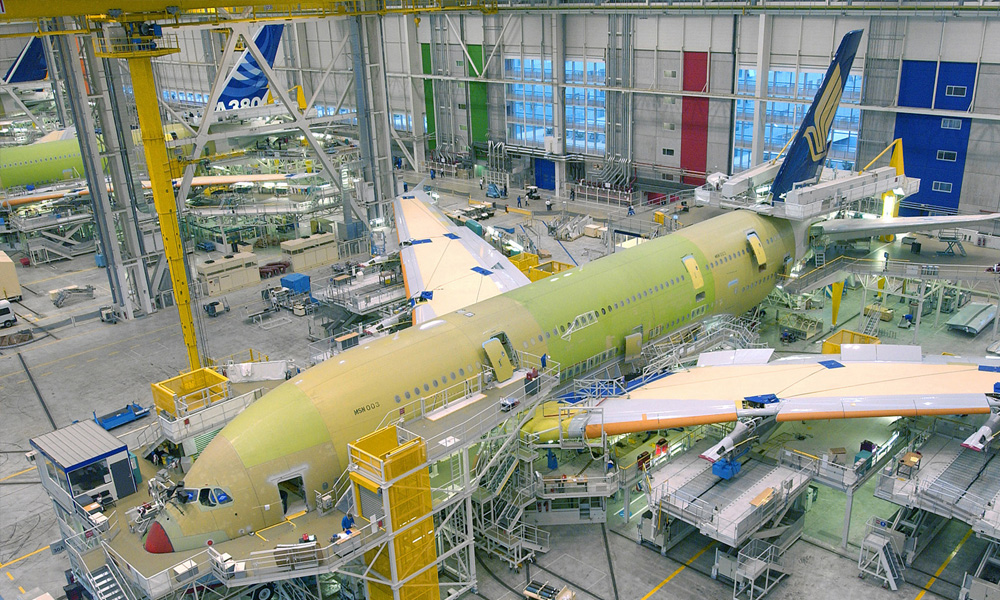
The European aerospace company Airbus is a consortium of several smaller European aerospace companies that were brought together by the need to compete with the scale of their US counterparts starting around the late 1960s.
Miyagawa told Malaysiakini in an interview on Sept 21 that while the Look East Policy will result in various collaborations between Malaysia and Japan, these collaborations ought to bear fruit in the form of new products and services in Asia.
This could take the form of automobiles, he said, but it could also be a regional aerospace industry churning out aircraft, rockets, and satellites.
The Look East Policy was Mahathir’s brainchild during his first premiership in 1981 where he urged Malaysia to emulate Japan’s developmental model.
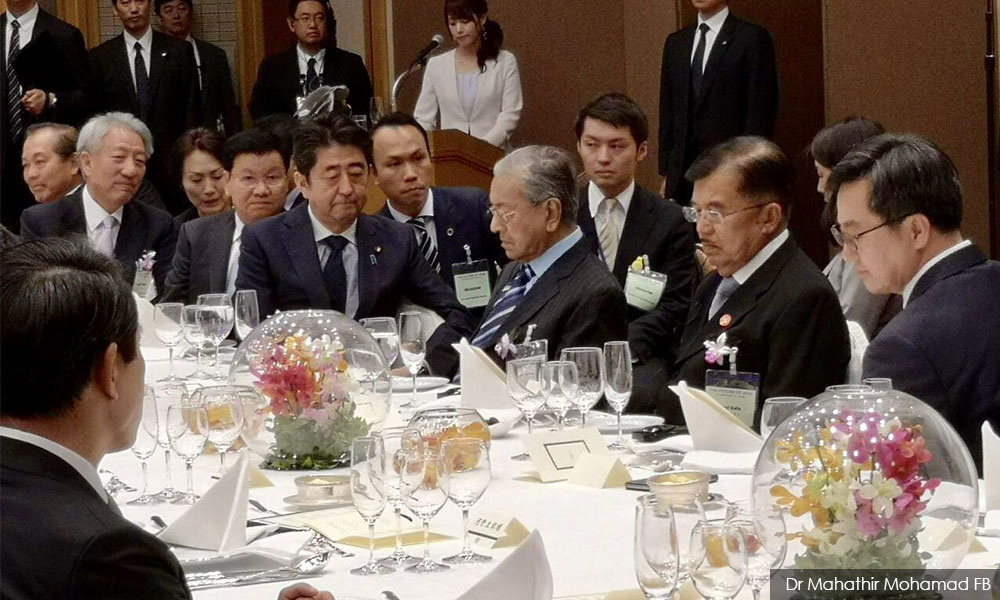
He mooted the policy again during his second stint as prime minister while on an official visit to Japan in June, just over a month after being sworn in to office. It was also his first overseas trip as the seventh prime minister of Malaysia.
Among others, Mahathir asked for assistance in the form of loans, as well as in the areas of human resource and technology.
More discussion needed
During his second visit to Japan in August, Mahathir’s entourage reportedly tapped Japanese automakers like Toyota, Nissan, and Daihatsu for help to set up a third national car brand for Malaysia.
However, Miyagawa said more discussion is needed to determine the type of assistance Malaysia needs to realise the new national car brand.
“Would Malaysia - or would the prime minister - need very advanced technology such as electric vehicles, or would the prime minister would like to first achieve a hybrid system as part of a national car project?
“Or rather more, would the prime minister like to establish a production base in Malaysia for sports cars or some luxurious cars?
“I think we would have to make a further intensive discussion and consultation on this matter,” Miyagawa said.
He added that there had been discussions with ministers on the matter, but the Japanese government needs to discuss it with Mahathir himself.
As for the Malaysia-Singapore High-Speed Rail (HSR) project that has now been deferred for two years, Miyagawa explained that it is a “common misunderstanding” that Japan is competing fiercely with China for the project.
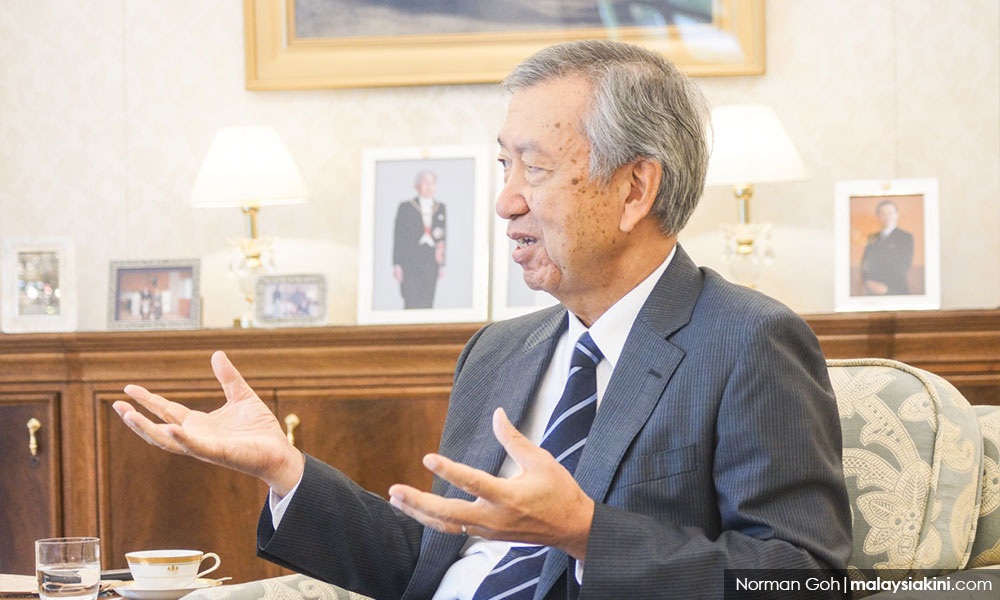
Miyagawa (photo) said Japan was only approached by Malaysia and Singapore for help on the technological and human resource development aspects of the project, and Japan responded positively as it had done before with countries like Taiwan, India, and even China.
“Our approach to any project including the HSR has always been whenever you need us - or Southeast Asian nations, particularly Malaysia and Singapore need us - we are very happy to do so.
“So if they want to defer two years, we are very happy to wait. In two years’ time, if you don't need us, we are very happy to withdraw from the project,” he said.
Miyagawa explained that despite what it seemed to be, Japan has no intention of competing with China for the project.
“Our approach to Southeast Asia has always been very consistent that whenever Southeast Asian nations need our help, we are very happy to offer.
“This assistance is not simply over money; our assistance is always to help Southeast Asian nations' people to acquire technology that we have developed, and to offer human resource development in Southeast Asia, so that the nations' engineers and scientists - and everyone - can start up their own business by themselves.
“By doing so - again consistently - we're all together to create a good region (that is) competitive with other regions around the world,” he said.


Are you sure you want to delete this comment?
This action cannot be undone.