



Most by-election analyses are biased, charges Ramasamy
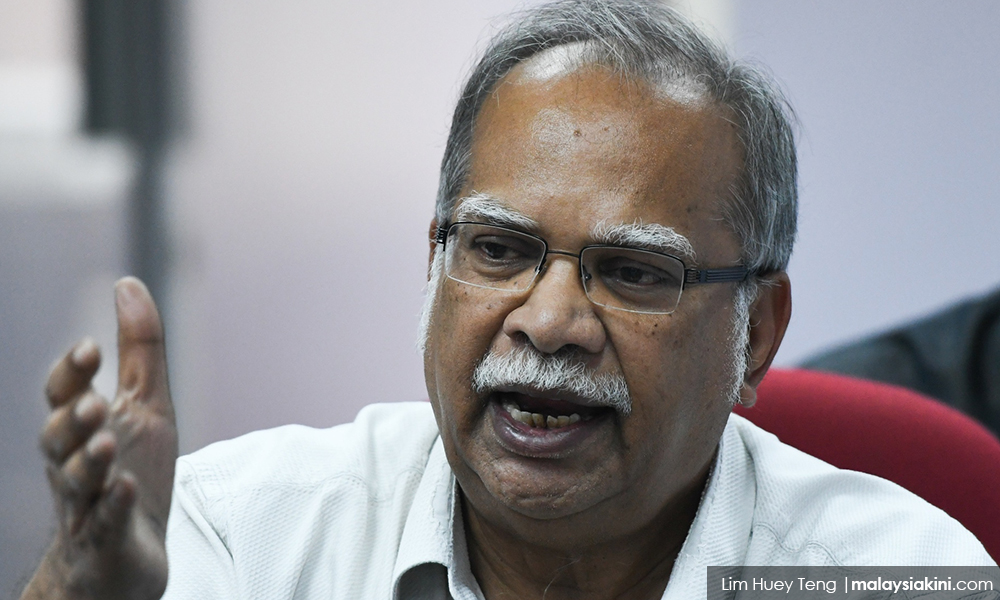
Penang Deputy Chief Minister II P Ramasamy has criticised the various analyses on the upcoming Semenyih by-election, saying that disregarding subjectivity in voters when analysing election results tend to make the analysis "biased".
"In Malaysia, most analyses on voting behaviour adopt the methodology where voters are somewhat seen as passive agents, a sort of dependent variable...
Penang Deputy Chief Minister II P Ramasamy has criticised the various analyses on the upcoming Semenyih by-election, saying that disregarding subjectivity in voters when analysing election results tend to make the analysis "biased".
"In Malaysia, most analyses on voting behaviour adopt the methodology where voters are somewhat seen as passive agents, a sort of dependent variable.
"In other words, external factors and structural causes, and not subjective feelings and thoughts of voters, are regarded as important," Ramasamy told Malaysiakini.
"This disregard of subjectivity amongst voters, among other things, means that analysis of elections tend to be biased."
Analysts have said that Pakatan Harapan needs to play on Malay sentiments if it wants to compete with the combined forces of BN and PAS in the coming Semenyih by-election.
"This is because Malay votes are key to winning Semenyih," Universiti Kebangsaan Malaysia senior political science professor Muhamad Nadzri Mohamed Noor had pointed out.
Ramasamy denied wanting to downplay the impact of national issues on the local people or underestimate how such issues affect their livelihood.
But he said that unlike the rural communities, the urban settlers in Semenyih might have some degree of rising expectations which might influence their choice of candidates.
"Rise in prices of consumer items, housing prices, transportation difficulties and others might impact the urban dwellers in varying ways," the former university don pointed out.
"It would be wrong to ignore the connectivity of national policies to urban living in places like Semenyih,"he said.
"But the overplay of national issues at the expense of local urban subjectivity will be a disservice to those in this urban constituency," he added.
Ramasamy acknowledged that analysing elections and their outcomes presents a formidable task which gives rise to different approaches with theoretical presuppositions.
He noted that voting patterns are different in urban and rural areas.
"In urban areas voters are much more aware of their surroundings and will tend to vote in terms of expecting some form of meaningful change given the nature of electoral competition," he said.
"In rural areas, there is always a tendency towards the status quo.
"In urban settings, national issues might be important, but they might not be over-determining as they will have to be mediated with the local objective situation and the subjectivity of voters," he added.
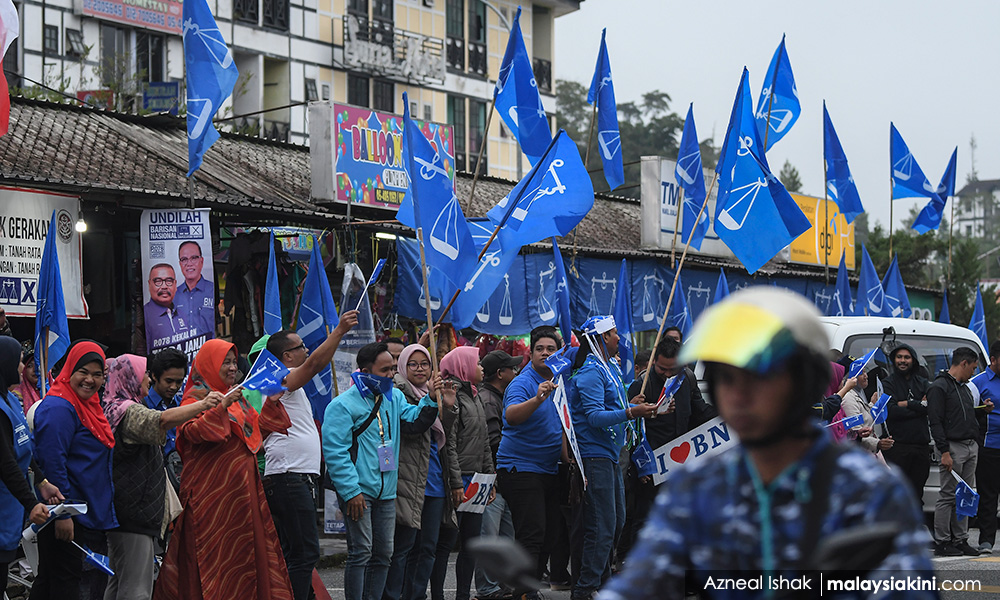
In the case of the Cameron Highlands by-election, Ramasamy said that rural voters, primarily the Orang Asli and Malays, were not "swayed by national issues as much as their own subjectivity rooted in the moral economy."
Ramasamy added they might have given the Umno candidate the majority of votes, but this was no indication of their preference for Umno or PAS, and neither were they terribly opposed to PH.
"The voters’ subjectivity was determined by their subsistence existence that predisposed them to adopt conservative political options rather than be swayed by the promises of political parties," he said.
"Race and religion merely reinforced the conservative subsistence ethic of the rural voters," he added.
Ramasamy emphasised that Semenyih is not Cameron Highlands, where DAP took a beating when its candidate lost to a local orang asli, a direct BN candidate.
In Cameron Highlands, BN candidate Ramli Mohd Nor won with 12,038 votes, beating out Harapan's M Manogaran, who garnered 8,800 votes.
Ramasamy said "Umno or PAS cannot expect a repeat of the earlier victory."
"Racial and religious extremism can be checked to some extent in the urban environment," Ramasamy said.
"A moral economy that functions in rural areas might not operate in urban areas. Lacking a similar ethic, urban workers might not have constraints to exercise their choice," he observed.
The death of Semenyih's incumbent Bakhtiar Mohd Nor, 57, due to a heart attack on Jan 11, paved the way for the Semenyih by-election.
Nomination is set for Feb 16, while voting will be on March 2.






Are you sure you want to delete this comment?
This action cannot be undone.