


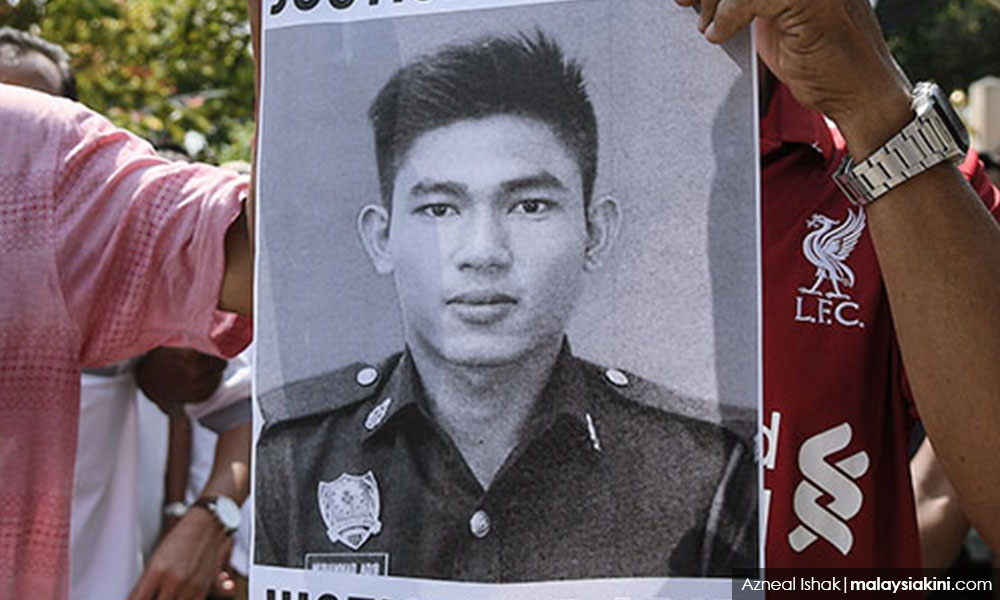

Doc: Takes longer than 18 seconds to drag 'sturdy' Adib out from van
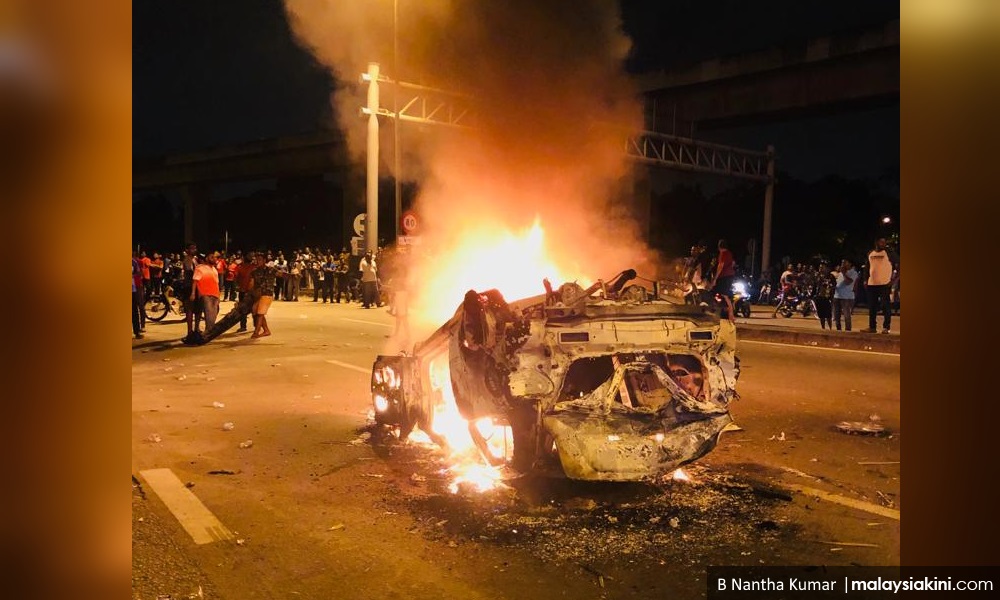
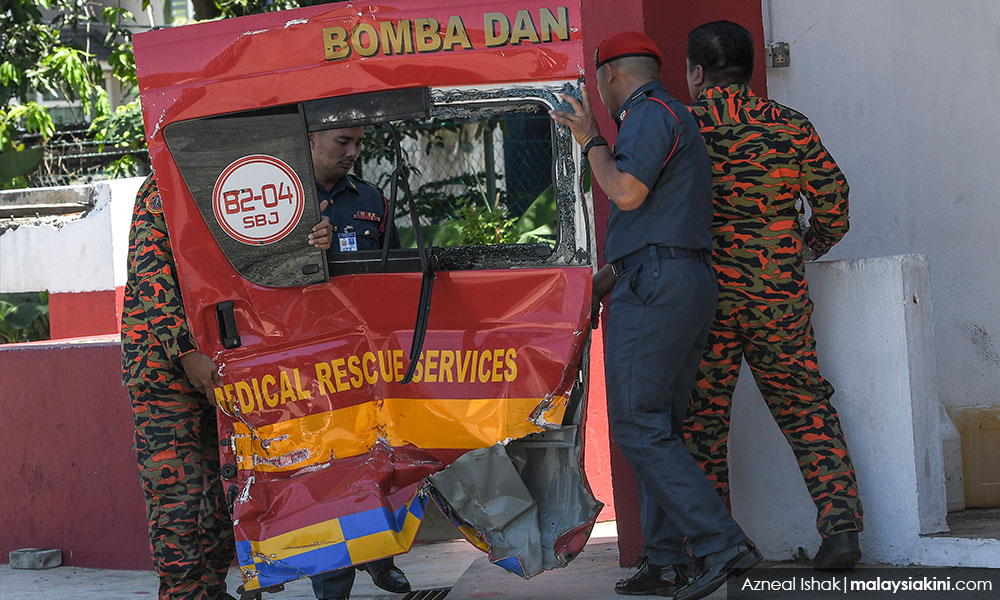
INQUEST | A forensics specialist said today that it would have taken more than 18 seconds to drag firefighter Muhammad Adib Kassim out of the Emergency Medical Rescue Services (EMRS) van he was in on the night of the Seafield temple riots last November.
Responding to lawyer Syazlin Mansor, representing the Housing and Local Government Ministry, Dr Ahmad Hafizam Hasmi of Hospital Kuala Lumpur said the 24-year-old firefighter, whom he described to be strongly built and a trained uniformed personnel, would have put up a fight...
INQUEST | A forensics specialist said today that it would have taken more than 18 seconds to drag firefighter Muhammad Adib Kassim out of the Emergency Medical Rescue Services (EMRS) van he was in on the night of the Seafield temple riots last November.
Responding to lawyer Syazlin Mansor, representing the Housing and Local Government Ministry, Dr Ahmad Hafizam Hasmi of Hospital Kuala Lumpur said the 24-year-old firefighter, whom he described to be strongly built and a trained uniformed personnel, would have put up a fight.
He also said the 46-second video recording of what transpired on the night of the riot did not show the deceased being dragged out.
The clip showed a Fire Rescue Tender (FRT) truck and EMRS van reversing to avoid an approaching mob.
Hafizam was testifying at the Shah Alam Coroner's Court, which is holding an inquest to determine Adib's cause of death.
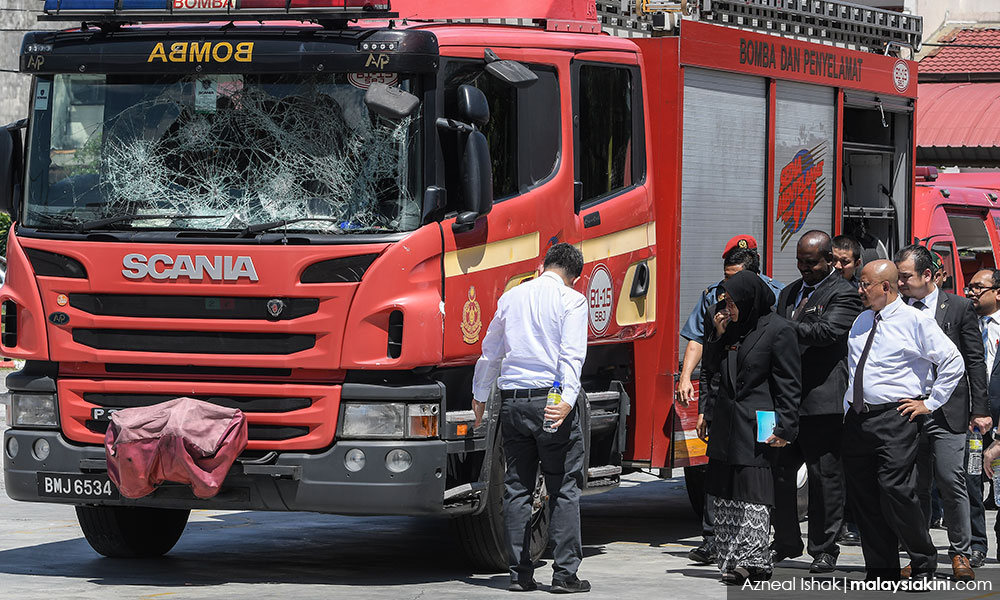
Syazlin: Why do you conclude that the injuries (on Adib) were not from being pulled (out from the front passenger seat of the EMRS van)?
Hafizam: The act of pulling someone of sturdy build and trained uniformed personnel would have produced more signs of injuries consistent with self-defence or fighting back.
The act of pulling someone (out of a vehicle) would have taken time. I was shown a 46-second video of the night of the incident in court.
From the first second (of the video) to the 28th second, it showed the victim still in the vehicle. We could not see the situation (clearly) as the recording was pointed (more) to the ground.
If we take into account the 46 seconds and minus 28 seconds, there would only be 18 seconds (left). In that 18 seconds, it would be too brief for any such matter (pulling Adib out) to happen.
The act of pulling out a person of sturdy build, who can defend himself, would take longer than 18 seconds in order for the victim to sustain his injuries (as discovered during the autopsy).
Syazlin: It does not take that long to drag someone out (of a vehicle) as it could happen in a flash. I could be pulled out in a single second.
Hafizam: I am taking into account a rough situation with someone with the capability to fight back or defend himself. (But) the possibility is there.
When Syazlin insisted that a person who was not expecting to be pulled out would not fight back, Hafizam dismissed this as impossible as the person would still have time to realise what was happening and put up a struggle.
“That probability is an impossibility. If (the person) was pulled roughly, even if he was unprepared, he would still realise it in time and fight back,” he said.
To Syazlin’s question on the possibility that Adib could have sustained a spiral fracture on the back of his spine if the EMRS passenger door had hit the right side of his back instead of his left, Hafizam said such fracture could only be caused by the movement of the ribs from the right side of his chest.
Hafizam: It (the spiral fracture) was caused by movement (from the front and against the chest). If the impact was direct, it would not have been a spiral fracture as there would be impact evidence on his right side of the back (instead of evidence of impact from the door being on his left side).
The fractures on the left back side (ribs) show direct impact from something straight (and hard). The spiral fracture on the back right side was caused by movement (of the ribs from the front side) and not direct trauma.
The spiral fracture here involved movement of the ribs. A person cannot cause his own ribs to sustain a spiral fracture.
On whether Hafizam had taken into account that Adib had been trained to enter and exit the EMRS van quickly, the HKL expert said the situation Adib had found himself in was not a normal one.
“I have taken that into account but in this situation, it is not a normal situation where the vehicle stops, its (front passenger) door opens normally and (Adib) exits safely.
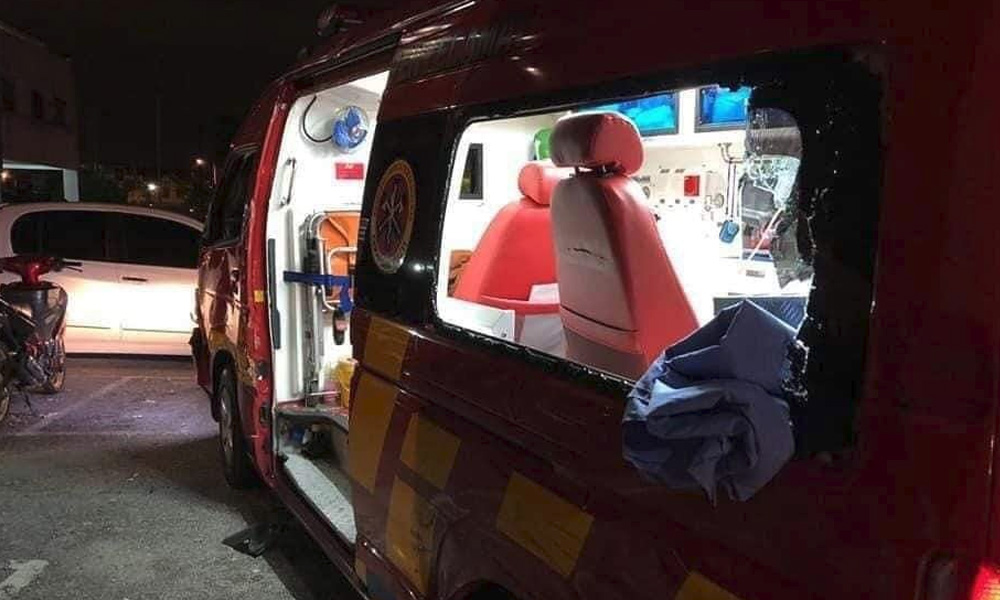
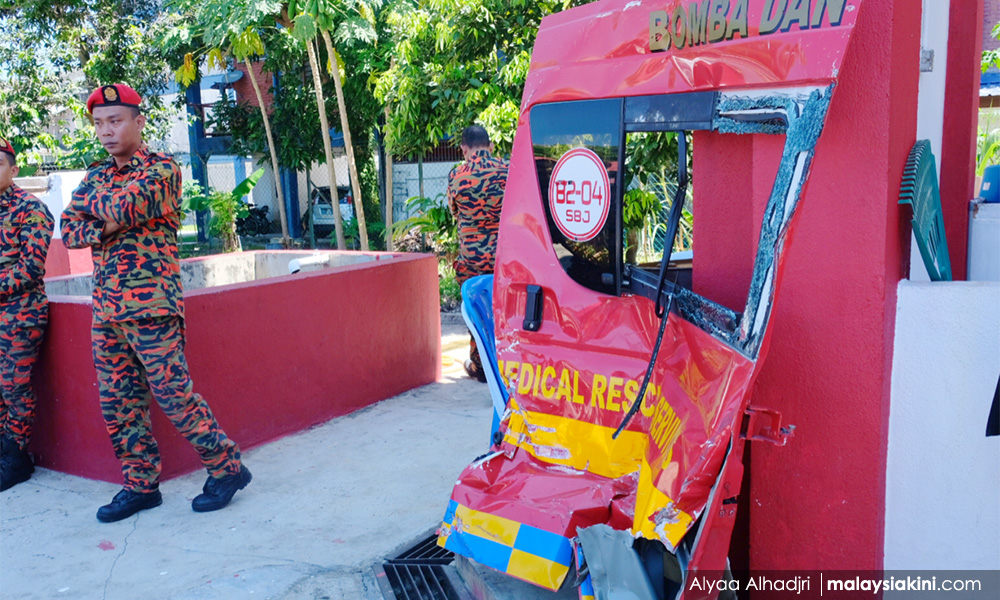
“Here (the Nov 27 temple riots), it was an unusual situation where the fire truck hits the (front of the) EMRS van with the possibility that the deceased had exited from the vehicle (EMRS van) himself in such an unusual situation. He may have exited in a hurry that he got hurt,” Hafizam said.
The court then replayed a 46-second video with Syazlin asking Hafizam whether the video disproved the probability of Adib being hit by the EMRS van as such an incident was not seen in the video.
Hafizam: I disagree as the theory (the probability of Adib being hit by the open front passenger door of the EMRS van) is (primarily) based on injuries on the deceased’s body and not on whether the victim was still in the van (as purported by the video) or at what point (in the video) was the victim seen inside the EMRS van in the video. For him to get injured, the victim must have been outside the EMRS van.
Syazlin: (Adib) suffered fractured ribs at the back (left side). You said that the left (passenger) door (of the EMRS van) had hit his back. But in the video, there was no open door. Your theory that the open door had hit the back of the deceased could not have happened.
Hafizam: There is a possibility the injuries were caused by being hit by the edge of the EMRS (van) door. In the video at the point pointed out by you (Syazlin), the vehicle (EMRS van) was hit (from the front by the fire truck) and Adib was not seen outside the vehicle.
We are in court to help ascertain how the incident happened. The time between the 28th second to the 46th second cannot aid the investigation (into how Adib sustained his injuries) to arrive at a conclusion how it happened.
What we are certain is that at the time of the recording, (the video) was not focused on the incident (as parts of the video showed it panning towards the ground and away from the fire fighting vehicles among others).
It (Adib being hit by the EMRS van’s open door) could have happened when the video camera was turned elsewhere.
When Syazlin pointed out that what Hafizam was saying in court seemed to go against what he had written in the official autopsy report for Adib, the expert replied that what he said in court is were opinions based on what he had been shown in court and questions directed to him in the proceedings.
Syazlin: In your report, you said that it could not be ascertained whether (Adib) was dragged out or came out (of the EMRS van) on his own. Here in court, however, you seem to be saying that he (Adib) came out on his own.
Hafizam: Before I issued that report, I could not conclusively prove that the deceased had exited (the EMRS van) himself or was pulled out. That is why I made that conclusion (in the report).
But based on questions (directed to me) in court and other information shown to me such as the recording (of the riots) and questions from the lawyers for the family of the deceased, I concluded from medical evidence and the situation that the victim had himself exited the (EMRS) vehicle.
The inquest before Coroner Rofiah Mohamad resumes tomorrow morning.


Report this comment
Are you sure you want to delete this comment?
This action cannot be undone.