
No human samples found on fire truck, EMRS van: Witness
INQUEST | No biological human traces were found on the fire truck and Emergency Medical and Rescue Services (EMRS) van that were at the scene of the Seafield temple riots on Nov 27 last year, testified science and forensic officer Mohamad Firdhaus Ramli.
The officer attached to the Criminal Division of the Chemistry Department told the Coroner’s Court this afternoon this was confirmed after an analysis of samples including paint specimens taken from the outside of both vehicles.
INQUEST | No biological human traces were found on the fire truck and Emergency Medical and Rescue Services (EMRS) van that were at the scene of the Seafield temple riots on Nov 27 last year, testified science and forensic officer Mohamad Firdhaus Ramli.
The officer attached to the Criminal Division of the Chemistry Department told the Coroner’s Court this afternoon this was confirmed after an analysis of samples, including paint specimens taken from the outside of both vehicles.
Firdhaus, 33, the 26th witness in the inquest into fireman Muhammad Adib Mohd Kassim's death, told Coroner Rofiah Mohamad that he took the samples after examining both vehicles on Dec 5 last year.
Inquest conducting officer Fatin Hadni Khairuddin: Did you find any other specimens on both vehicles?
Firdhaus: No.
Fatin: Did you look for human specimens on the vehicles?
Firdhaus: I did the examination (for human biological traces) but I did not find any biological evidence such as hair or blood.
Previously, the court heard various testimonies that said that the deceased, 24, may have been hit by the EMRS van as it reversed in tandem with the FRT fire truck to escape an angry mob on the night of the riots.
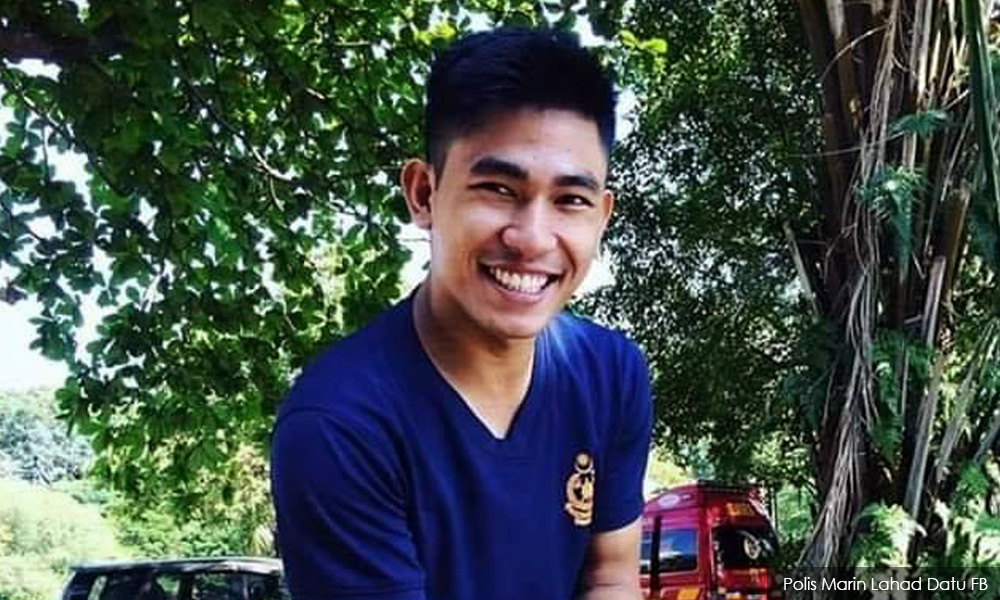
Adib passed away on Dec 17 at 9.41pm at the National Heart Institute after succumbing to injuries sustained on the night of the riots near the Seafield Sri Maha Mariamman in USJ25, Selangor.
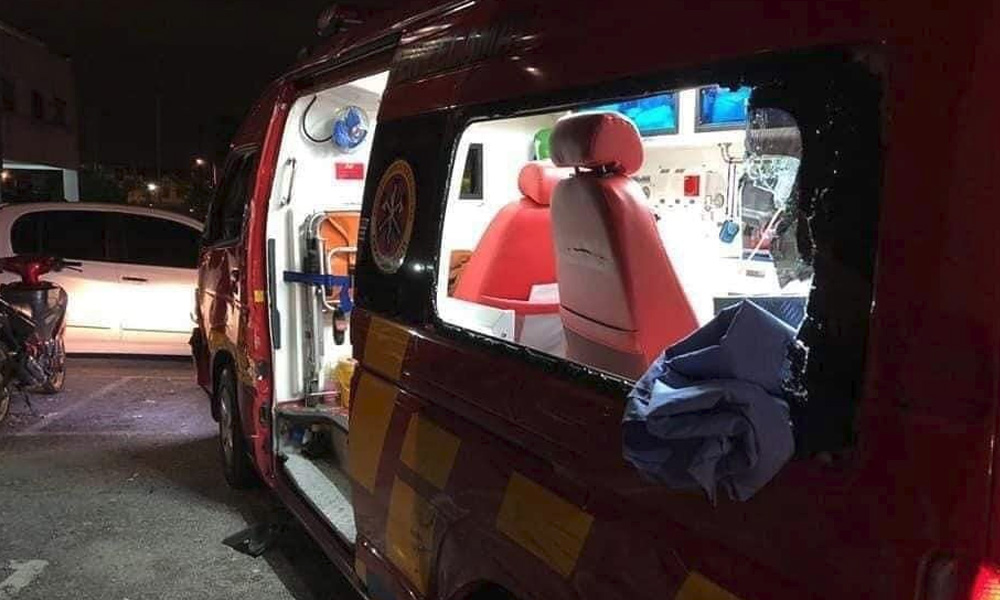
The inquest was ordered after two conflicting versions of his cause of death emerged. One version claimed he was hit by a Fire and Rescue Department vehicle, while the other said he was beaten up by a mob.
Firdhaus testified that based on the analysis of the samples by "forea transform infrared spectroscopy" (FTIS), he found that there was no evidence of any of the two vehicles colliding with a human being.
Fatin: Why do you say that there was no sign of collision with a human being?
Firdhaus: There was no physical evidence such as clothing, fibres or any biological evidence like hair and blood on the vehicles.
Fatin: Is it possible for a collision to still have taken place without leaving any biological traces on both vehicles?
Firdhaus: It could happen.
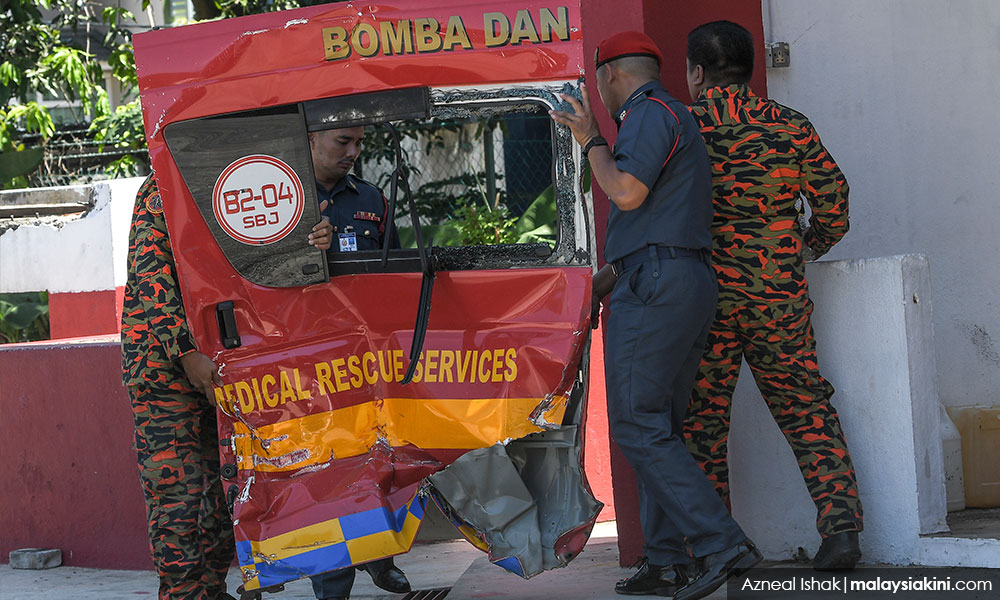
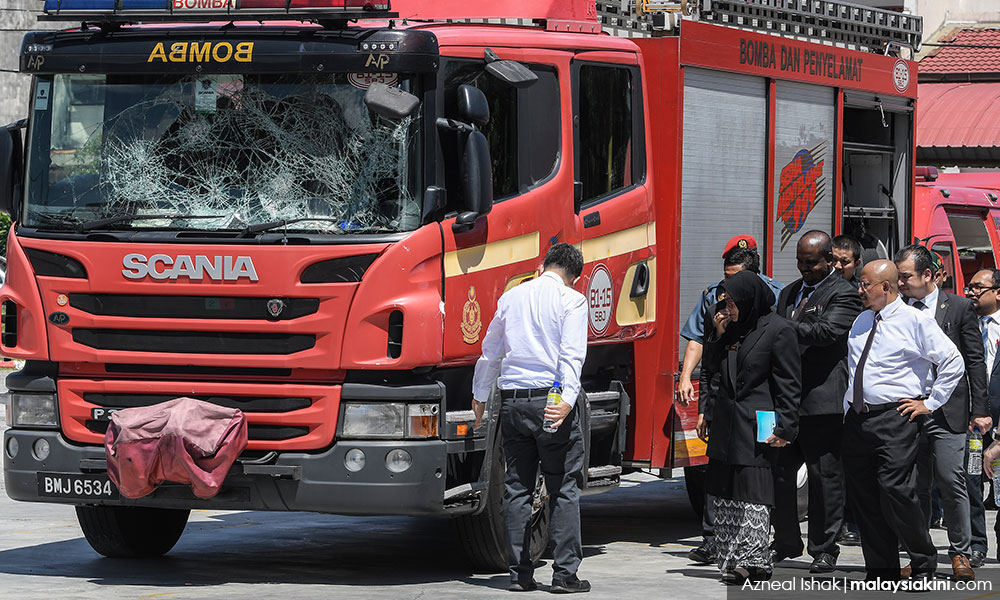
Firdhaus said that during his exterior examination of both the vehicles, he found damage on the rear left side of the fire truck and on left side view mirror of the EMRS van among others.
He said following the FTIS testing of the collected samples, he found that the damage on the fire truck's right rear side and EMRS van's left side was consistent with the probability of both vehicles hitting each other.
When Fatin, with the aid of two toy vehicles, demonstrated a possible sequence of events where the fire truck reversed into the front of the EMRS van causing it to spin around with its rear left end striking the truck, Firdhaus hesitantly admitted to the possibility.
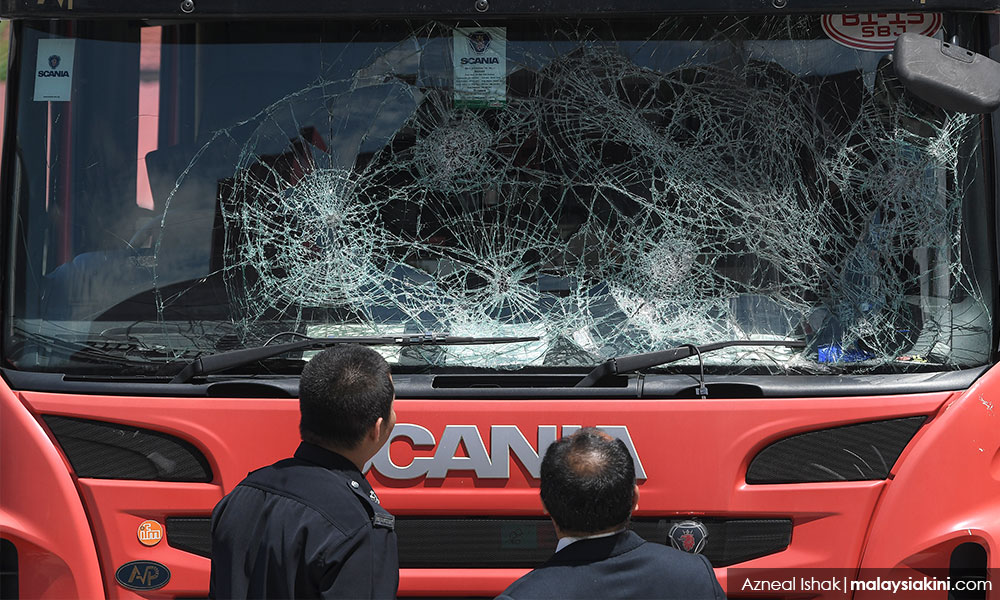
“The (possible) sequence (of events) is, however, outside the scope of my knowledge,” Firdhaus said.
Asked why he only examined the exterior part of the vehicles, Firdhaus replied it was because those were the only parts that needed to be examined for any physical evidence of a collision between vehicles or a vehicle-on-human impact.
Fatin: The police estimated that the vehicles were attacked by a group of rioters with weapons and their hands. You did not find any DNA on the vehicles?
Firdhaus: According to science, the Locard principle states that if there has been a collision, any contact must leave physical evidence. When I was examining (both vehicles), there was no biological evidence of this.
Fatin: In a situation where the vehicles were left in an exposed, external environment and not stored for a few days before any examination, could this cause the disappearance of biological evidence?
Firdhaus: In my opinion, it could disappear based on the environment such as rain. However, (whether this happened for the examination on Dec 5) is outside my knowledge.
The inquest resumes tomorrow.