
Lynas confident heavy metals didn't come from its plant
Lynas Malaysia is confident that heavy metal contamination in groundwater under its plant in Gebeng was not caused by rare earth processing.
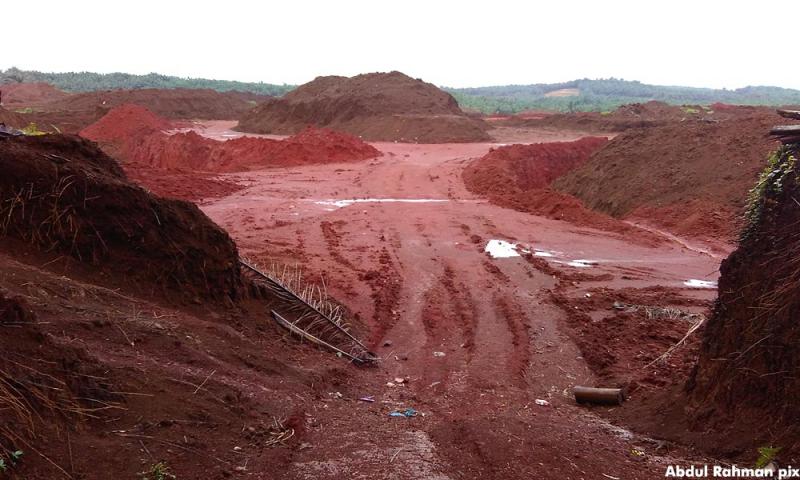
Instead, it suggested that the high heavy metal content is related to bauxite mining in the area in the same district of Kuantan.
"Lynas is confident that it is not possible for metals to migrate from Lynas residues to the groundwater because of the design of our storage facilities and our round-the-clock monitoring," said Ismail Bahri, who is in charge of radiation safety, regulations and compliance...
Lynas Malaysia is confident that heavy metal contamination in groundwater under its plant in Gebeng was not caused by rare earth processing.
Instead, it suggested that the high heavy metal content is related to bauxite mining in the area in the same district of Kuantan.
"Lynas is confident that it is not possible for metals to migrate from Lynas residues to the groundwater because of the design of our storage facilities and our round-the-clock monitoring," said Ismail Bahari, who is in charge of radiation safety, regulations and compliance.
Ismail cited a news article quoting scientists raising alarm over high concentration of heavy metals in water drawn downstream from bauxite mines.
He added that Kuantan soil is higher in nickel and chromium, compared to residue from the Lynas Advanced Materials Plant (Lamp).
Ismail (on right in photo, below) also reiterated that the government review report did not blame Lynas for the contamination.

Read more: Is groundwater under Lynas plant high in heavy metals? Yes, but…
Deputy Minister in the Prime Minister's Department Fuziah Salleh earlier said the Lynas plant is unsafe, not because of high radiation, but because it is contaminating the groundwater.
This is according to the government review committee findings that heavy metal content in groundwater under the Lynas plant spiked after operations begun.
“The committee found non-compliance in several heavy metals (nickel, lead, chromium and mercury) in groundwater to be concerning, especially for nickel and chromium…
“On March 15, 2016, nickel concentration at the GW13 monitoring station was at its highest at 96,100 μg/L, that is 1,281 times the Dutch Intervention Value of 75 μg/L,” states the report published last December.
Raising concern, the committee said some 50 households in the area access drinking water through wells.
The Lynas-commissioned Environment Impact Assessment report also noted "fluctuations" in heavy metal content in groundwater samples.
It reported levels of barium, lead, chromium, zinc and mercury shot up to far beyond the Dutch Intervention Level at various points from 2015 to 2018.
The Lynas plant began operations in 2013, while large-scale bauxite mining began in late 2014 and reached its peak in 2015 before mining licences were revoked due to severe pollution.
However, the government announced that bauxite mining will resume this month.


Are you sure you want to delete this comment?
This action cannot be undone.