


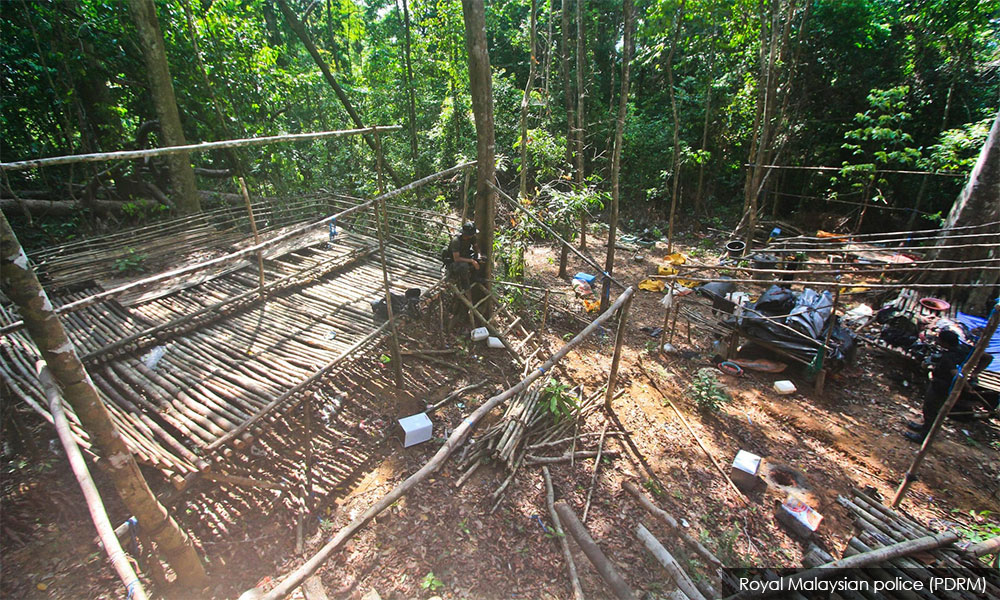

'We found graves on mission to destroy human trafficking camps'
WANG KELIAN RCI | A police commander told the Wang Kelian Royal Commission of Inquiry today that he discovered graves while on a mission to destroy human trafficking camps.
On Jan 19, 2015, MA Joeking headed a surveillance operation into the jungles of Wang Kelian after receiving information about human trafficking camps and possible illicit activity...
WANG KELIAN RCI | A police commander told the Wang Kelian Royal Commission of Inquiry today that he discovered graves while on a mission to destroy human trafficking camps.
On Jan 19, 2015, MA Joeking headed a surveillance operation into the jungles of Wang Kelian after receiving information about human trafficking camps and possible illicit activity.
Joeking's officer, Mohd Mossadique Azni, led a smaller 10-officer team into the actual camps.
The commander was informed by his subordinate that the team had their presence detected by the people at the camp, who were able to flee the scene.
The following day, Joeking attended a meeting chaired by the then-Perlis deputy police chief to brief his superiors on the previous day's mission. He showed them photographs and PowerPoint slides detailing what the operation uncovered.
During the meeting, the commander was instructed to "destroy the camps (musnahkan kem tersebut)."
Despite not being a specific reason for the order, he believes it was to prevent human traffickers from continuing to use the camps.
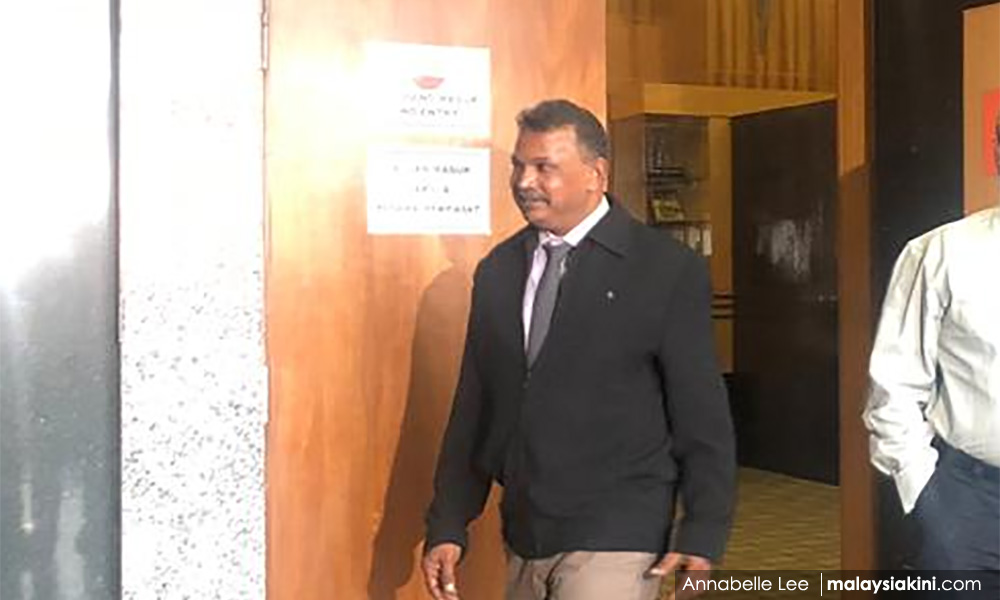
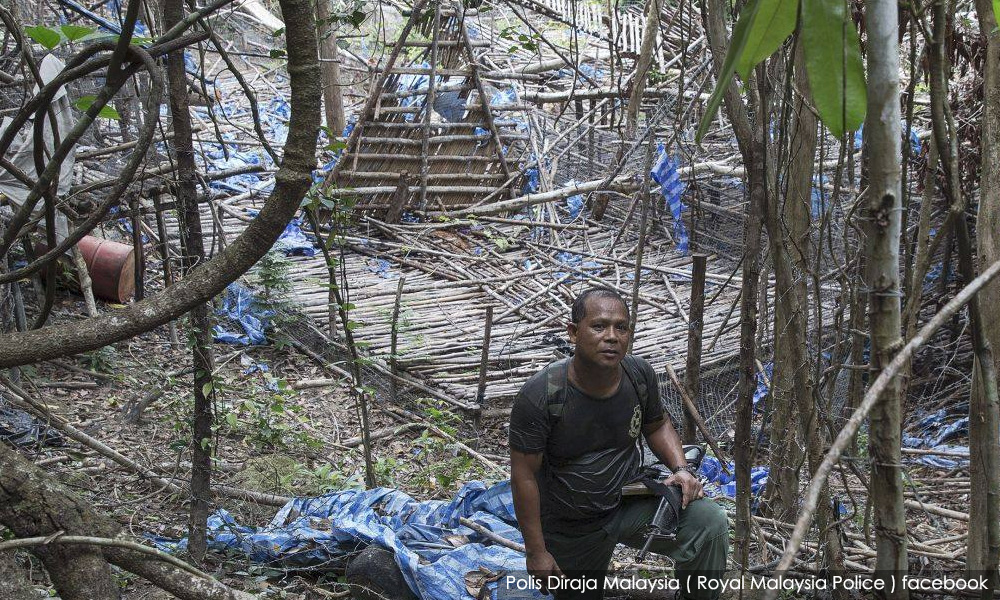
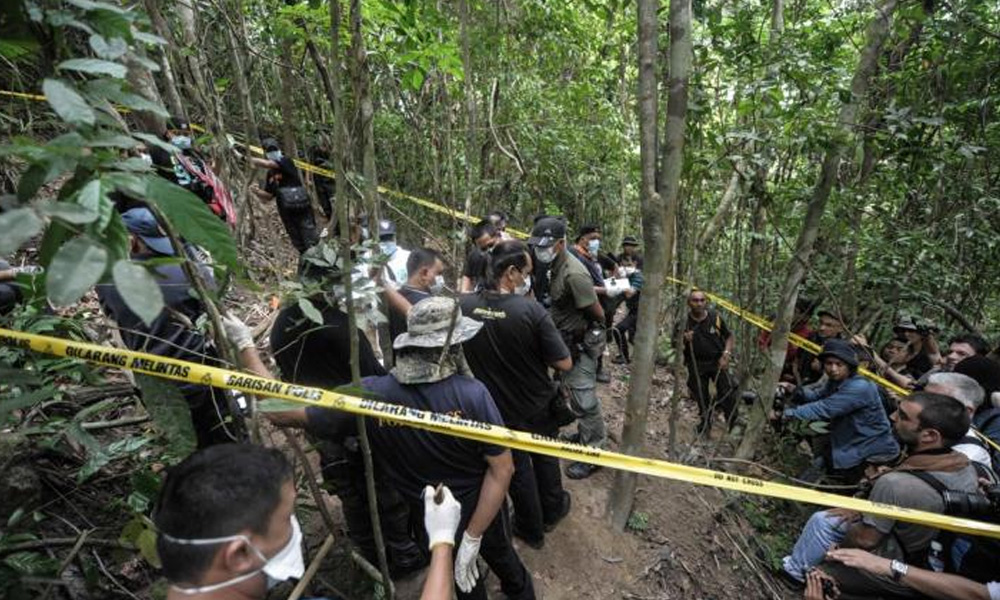
On Jan 21, Joeking (above) led a 30-officer team to destroy all structures at the human trafficking camps. They began by burning pieces of blue canvas found at the site.
However, he instructed his officers to stop burning or destroying anything after discovering several graves in the area.
“We were burning the canvases, but we stopped when we found the graves.
“(After that) we did not destroy any of the structures and let them be,” he told the RCI panel.
Read more: Cop: Superior ordered us to delete photos of Wang Kelian operations
When pressed to explain why he had flouted orders to destroy the camps, Joeking stated that he was surprised to find the graves, and wanted to probe them further.
“We found the graves and I did not want to destroy them further," he explained. "I wanted to do further investigation."
'Mossadique didn't hand me seized items'
Earlier, Joeking told the RCI that he did not receive any items seized by Mossadique's (below) team from the jungle camps during the Jan 19 mission.
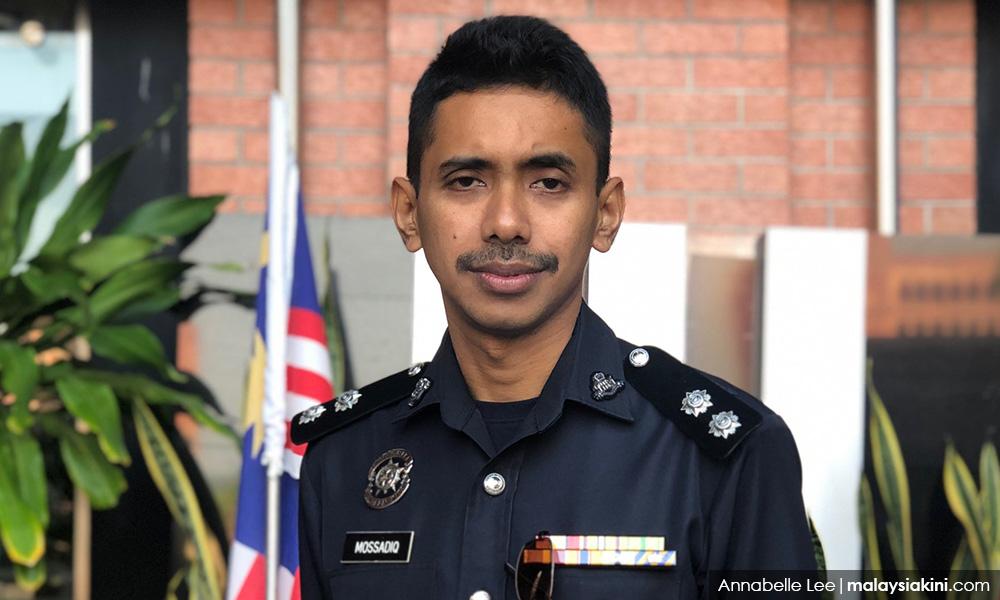
"No exhibits were ever handed to me.
"If they were handed to me, I would have included them in my report (about the operation),” he said after repeated questions from the panel.
Joeking also stated that he had questioned Mossadique after the operation if any items had been taken from the camps, to which the latter said there were none.
Yesterday, Mossadique told the RCI that he had instructed his team to search the camps after realising most people there had fled.
The search resulted in the seizure of several items – including a notebook scribbled in Thai, a Thai driver's license, a Nokia mobile phone, three SIM cards, a CD player and several CDs.
These exhibits were physically produced before the inquiry panel and identified by Mossadique.
He also revealed that he had kept the seized items at his desk for nine days before handing them over to ethics officer Mohd Azizie Mohd for safekeeping.
Migrants' story
Joeking told the inquiry that his team had managed to arrest a total of 38 foreign nationals from the Jan 19 mission. Six were detained by Mossadique’s team at a fenced structure within the jungle camp, while the rest were arrested while trying to escape from the jungle.
Of the 38, 22 were from Bangladesh while 16 were Myanmar nationals. None of the latter admitted to being Rohingya refugees.
One of the detainees recounted to Joeking how they had ended up at the camps.
“They told me that ‘agents’ had promised them jobs in Malaysia. They paid the agents about RM2,000 and they were taken on a ship before walking their way into the jungle to the camps.
“Once there, some were asked to pay more money if they wanted to enter Malaysia,” the police commander said.
The 38 were later sent to the Padang Besar district police headquarters and processed by the Smuggling Prevention Unit (UPP) at its depot.
When asked by inquiry commissioner Razali Ismail whether he considered the Jan 19 operation a “failure” since the police did not manage to arrest any of the traffickers, Joeking disagreed.
“In my opinion, it was successful because we were able to find out that there was a camp on the hill and we saved 38 lives.
“We only understood the matter after the operation,” he answered.
The Home Ministry set up the RCI back in January and appointed former chief justice Ariffin Zakaria to chair it.
Ariffin is assisted by former inspector-general of police Norian Mai along with five commissioners - former ambassador to Thailand Nazirah Hussin; former Public Accounts Committee deputy chairperson Tan Seng Giaw; former chief prosecutor Noorbahri Baharuddin; former Human Rights Commission (Suhakam) chairperson Razali Ismail; and former head of research in the Attorney-General’s Chambers, Junaidah Abdul Rahman.
The proceedings are being conducted by deputy public prosecutors Khairul Anuar Abs Halim and Saiful Hazmi Mohd Saad.
The inquiry has been given six months till September this year to prepare a report.
The public hearing will resume on Monday (Apr 22).


Are you sure you want to delete this comment?
This action cannot be undone.