




IPCMC: It's a flat 'NO' from the police
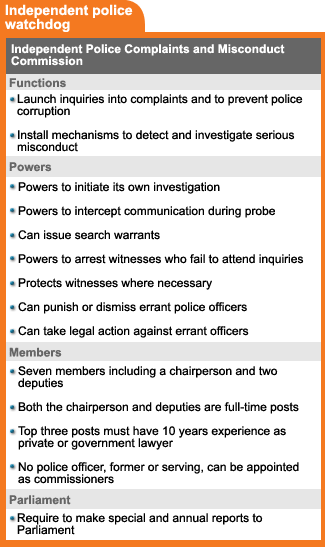
The police force today recorded its official rejection of the proposed Independent Police Complaints and Misconduct Commission (IPCMC), although it was put forward by none other than Prime Minister Abdullah Ahmad Badawi himself.
The police force today recorded its official rejection of the proposed Independent Police Complaints and Misconduct Commission (IPCMC), although it was put forward by none other than Prime Minister Abdullah Ahmad Badawi himself.
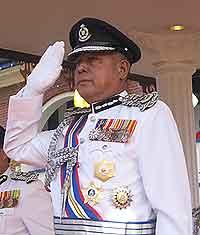 Inspector General of Police Mohd Bakri Omar said that 24 out of 125 recommendations by the Royal Police Commission have been rejected, the IPCMC among them.
He added that the police and various police organisations had made known their opposition to the IPCMC to the government, which includes a briefing for the prime minister.
"Following which, the government instructed the attorney-general to study and consider the best alternative to the proposal to establish the IPCMC," said Bakri in his speech to commemorate the 199th Police Day celebrations today.
He recommended that the powers of the Police Force Commission (SPP) as the disciplinary body be maintained, as stipulated under Article 140 of the Federal Constitution.
Bakri's Police Day speech was read out by all police contingents at state level. Copies of the speech were distributed to reporters during the national-level celebration at the Police Training Centre (Puspapol) in Kuala Lumpur this morning.
Police shocked
At the KL celebrations, which was attended by the premier, Bakri however read from a separate speech in which he touched on the challenges faced by the police last year but left out any mention of the IPCMC.
 "Without even having the chance to implement the recommendations by the Royal Police Commission, the police was shocked with yet another commission set up to investigate body search procedures while in the lockup," Bakri told a crowd of 1,000-odd police officers who were gathered at the function.
"The portrayal in the newspapers and electronic media completely did not side with the police. It was made to look as though the police had very little chance to reclaim its dignity."
In his address, Abdullah said he felt sad whenever he heard of the frustrations expressed by family members of police personnel about incidents of 'police bashing'.
"We must also understand, when there is criticism on our work [...] it shows that people appreciate our work and want us to do it properly," he appealed to the force, adding that the majority of critics are offering constructive criticisms.
PM keeps mum
Without elaborating, he said that the government would continue to undertake steps to further improve the force.
 "I will make sure that whatever benefits to the police force will continued to be done, regardless of what action needs to be taken," said Abdullah, to the applause of the crowd.
At a press conference later, Abdullah declined to comment when asked about the government's present position on the IPCMC.
"We will decide and we will tell you after we have decided," he said.
Of late, a large number of Barisan Nasional MP's have voiced their opposition to the IPCMC in Parliament on grounds that there are enough mechanisms to handle complaints against the police.
Backbenchers Club chairperson Sharir Abdul Samad and Minister in the Prime Minister's Department Nazri Abdul Aziz had both stated their conditional support for implementation of the new police watchdog.
The IPCMC is arguably the most powerful watchdog ever proposed in Malaysia. Unlike existing agencies, it reports not to the prime minister but directly to Parliament, which ensures its investigations are made public.
Meanwhile, Abdullah has backed the police top brass in its controversial decision on making it compulsory for all policewomen to wear the tudung (headscarves) at official parades as this is considered "part of the uniform".
However, he said that tudung is optional during normal police duties.


