



Migrant workers forced to live in jungle shacks after fleeing exploitation
SPECIAL REPORT | They left their homes in Bangladesh in anticipation of greener pastures in the city of Kuala Lumpur - but little did they know that their journey would force them to live in makeshift jungle shacks instead.
Although arriving via the government-to-government plus (G2G+) agreement between Dhaka and Putrajaya, Bangladeshi workers are still being exploited and trafficked by employers and agents.
Bangladeshi newspaper, Kaler Kantho, which had conducted an extensive coverage on the predicament faced by the Bangladeshis in Malaysia, found that to escape further abuse, the workers fled from their employers and become undocumented...
SPECIAL REPORT | They left their homes in Bangladesh in anticipation of greener pastures in the city of Kuala Lumpur - but little did they know that their journey would force them to live in makeshift jungle shacks instead.
Although arriving via the government-to-government plus (G2G+) agreement between Dhaka and Putrajaya, Bangladeshi workers are still being exploited and trafficked by employers and agents.
Bangladeshi newspaper, Kaler Kantho, which had conducted an extensive coverage on the predicament faced by the Bangladeshis in Malaysia, found that to escape further abuse, the workers fled from their employers and become undocumented.
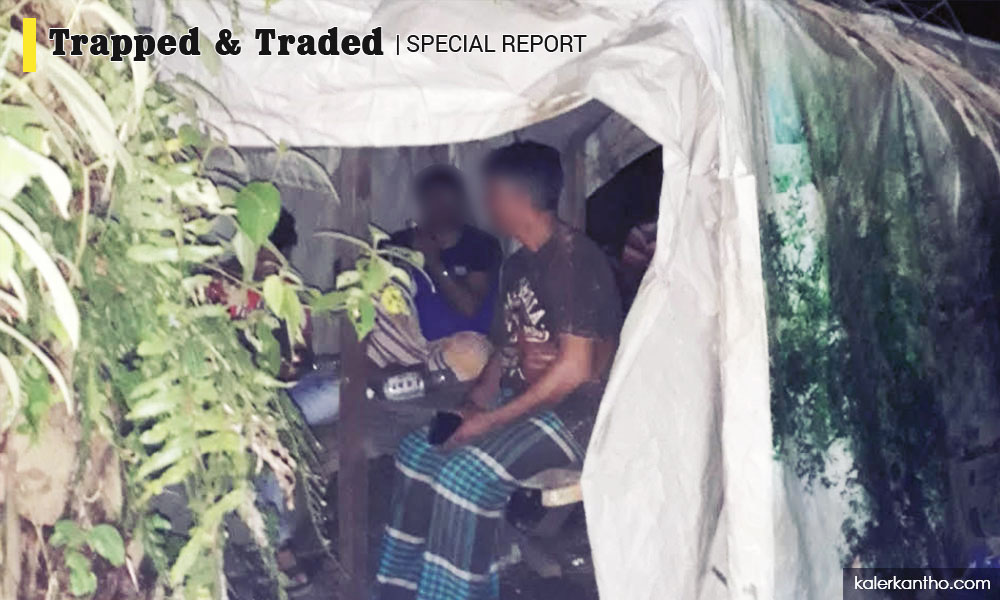
Investigations also revealed that to escape immigration detention, the workers, who mostly work at construction sites, disappear into peripheral jungles and palm oil plantations, where they build makeshift shacks covered in a plastic tarp.
One such shack was found in a palm oil grove along a major highway connecting Kuala Lumpur to a neighbouring state.
'Take turns to sleep to watch for snakes'
When Kaler Kantho visited the shack last year, some 16 men were taking shelter there, taking turns to sleep to keep watch against snakes and other wild animals.
“We lather mosquito-repellent all over our bodies and sprinkle snake-repellents all across our living quarters,” said one worker who wanted to be known as Al-Amin.
“Back home, the cows in my house live in better conditions,” added the worker from Barisal, south-central Bangladesh.
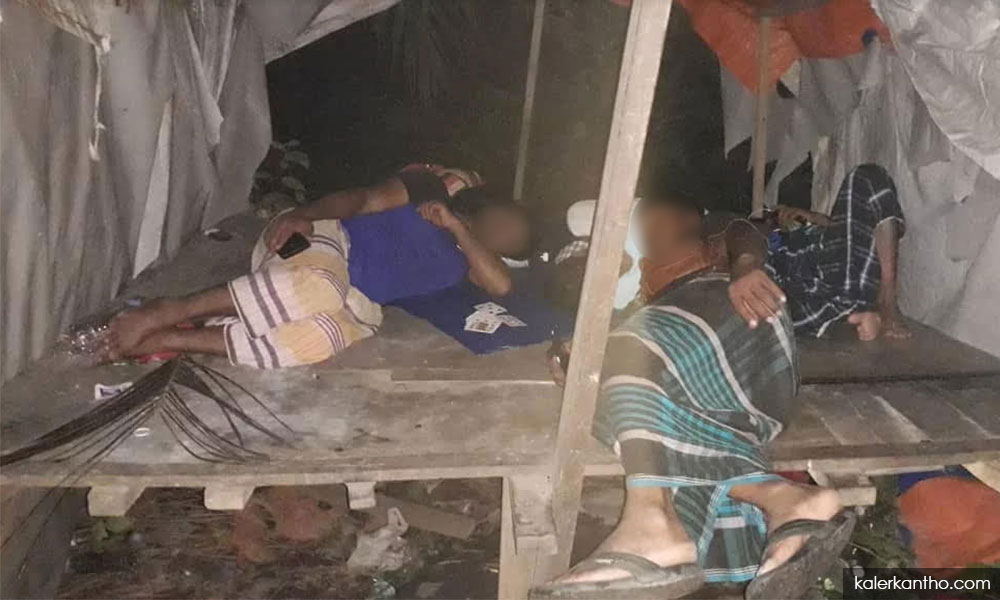
He also shares a shack with Iftekharul Alam and SM Monir, who had fled their employer in Kapar, Klang, to escape deportation.
The two workers were full of despair when met that night, struggling to control their emotions when recounting how they ended up in the jungle shack.
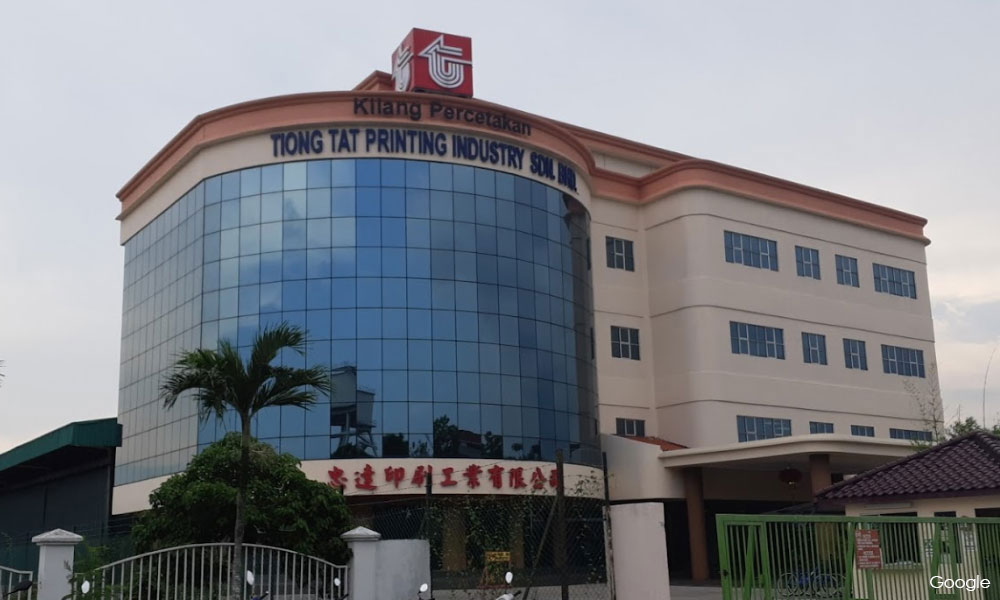
Their employer, Tiong Tat Printing, had terminated them for their involvement in a workers' protest against exploitation and a breach of contract by the printing factory.
'Security personnel tortured us'
Tiong Tat had recruited some 149 Bangladeshi workers via the G2G+ agreement, which promised workers would be paid a basic monthly salary of RM1,000 and up to RM500 for overtime.
But when they got their salaries, workers found that irregular deductions were made for items like utilities, lodging and purported loans.
For April 2018 for example, Monir’s April payslip shows he earned RM1,588.88 that month including overtime but due to deductions he was only paid RM1,188.88.
A total RM300 was deducted for loans, RM50 for utilities and another RM50 for lodging, according to his payslip sighted by Kaler Kantho.
“I have never taken any loan from the company, yet they deducted it from my pay every month. The contract had stated that lodging would be provided by the company, but they take money for it every month,” Monir said.
Iftekharul said they management placed some 16 to 20 workers in hostel rooms meant for four persons and for that each of them had to part with RM50 a month.
“If we protest, then security personnel would come in and torture the workers,” he said.
On Aug 12, 2018, the workers stopped work for one day to protest, after attempts to take up the matter with their employer and the Bangladesh High Commission had failed.
At the end of his tether, one worker posted a suicide threat on Facebook.
This prompted two labour officials from the High Commission to visit the factory and the workers said a meeting was held between the officials and Tiong Tat’s management.
High Commission: 'Workers breached rules'
Eventually, six workers were threatened with deportation. Four of them, including Monir and Ifthekharul, fled but the other two were captured and deported.
Monir and Ifthekharul said their colleagues were sent back to Bangladesh without their due salaries.
Tiong Tat did not respond to repeated attempts by Kaler Kantho and Malaysiakini to seek responses to the workers’ complaints and claims against it.
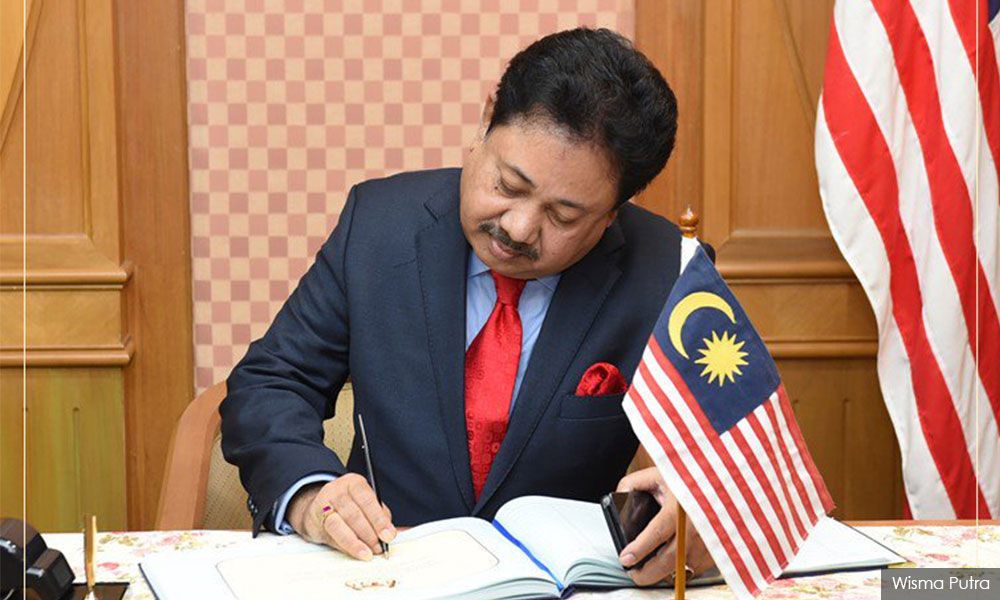)
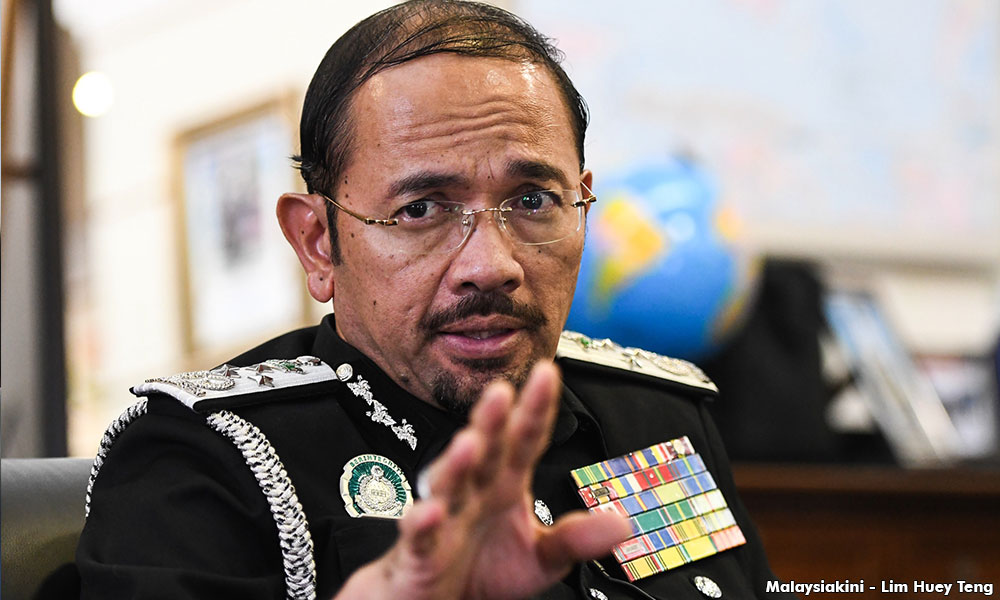
Bangladesh High Commissioner to Kuala Lumpur, Mohd Shahidul Islam (photo), said he would look into the matter.
Another High Commission official, Mohd Muksed Ali, confirmed they had visited Tiong Tat’s factory after being alerted on the complaints.
“We learned that the company (imposed) penalties from many workers’ pay cheques for talking on the phone, smoking cigarettes and not wearing the company sanctioned shoes,” he said.
Pressed on whether these are grounds for termination and deportation, Mohd Muksed said: “You see, there will be action if laws of the land are not followed. Not everyone was deported.”
Mohd Muksed insisted that the six workers were to be deported because “they broke company rules”.
According to the G2G+ contract, workers who commit criminal activities can be deported after their dues are paid.
'Cheated by broker'
The workers met by Kaler Kantho in the palm oil grove were caught in an endless cycle of abuse, some by Bangladeshi brokers operating in Malaysia.
Desperate to become legitimate again after fleeing, they part with thousands of ringgit to brokers who promise that they can obtain work permits.
One broker, whose name was mentioned by many of those seeking refuge in the jungle shack, was Kamal Chandra Das.
Mannan Miah from Noakandi village, Kishoreganj in Bangladesh, said he paid some RM12,000 to Kamal and lost every single sen.
“My dreams have been devoured by brokers. Never mind helping my family, I am scared for my own life.
“I work hard all day, yet I sleep in the jungle,” he said.

Another worker, Sunil Das, said he sold his only piece of land and paid RM5,000 to Kamal, who escaped with the money.
Sunil's parents, wife and five children, who are entirely dependent on him, are left in tatters without any money sent back home.
'Living in luxury'
In contrast, Kamal’s family is living a luxurious life in Kishoreganj, some 140 kilometres from Dhaka.
Kaler Kantho’s visit there last year found that Kamal owns three power plant steam operators, worth close to half a million ringgit, in Sarachar Bazaar, as well as 15 pieces of land totalling close to 10 acres in size.
The migrant workers who fell victim to Kamal said he had accumulated the assets over the last few years. Before he was a broker, he was a salesperson, they said.
Fearing a mob attack from the villagers for his fraudulent activities, Kamal is never seen in the area, and his businesses are allegedly run by his older brothers, they said.
)
The Das families’ neighbours claim that Kamal sends money from Malaysia. They also claim that their loved ones - some of whom never returned home - were duped by Kamal.
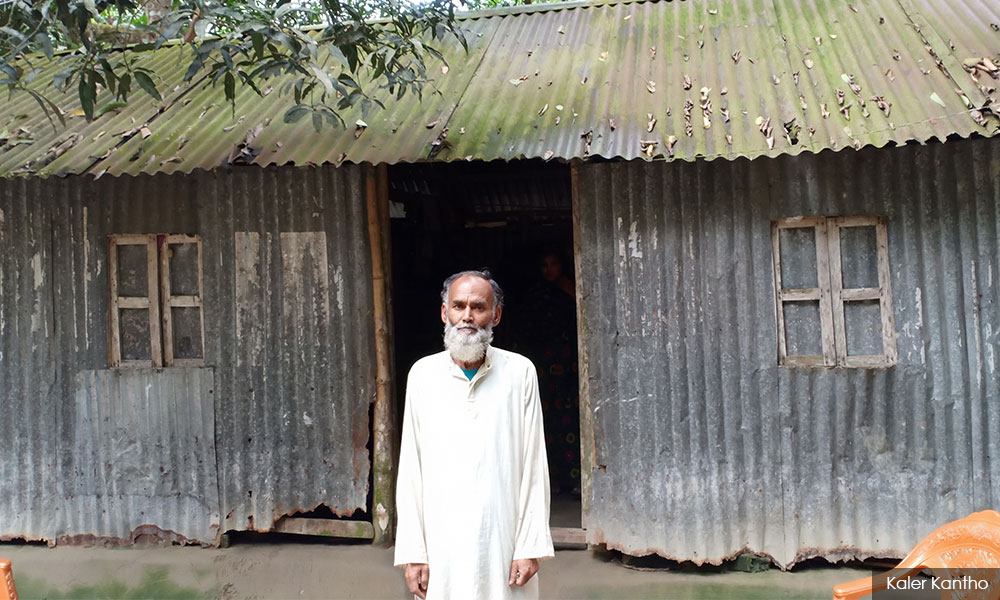
One of them was Aminul Islam (above), whose son Deen was allegedly scammed by Kamal. He said he was forced to send his grandsons to an orphanage because he could not provide for them without help from their father in Malaysia.
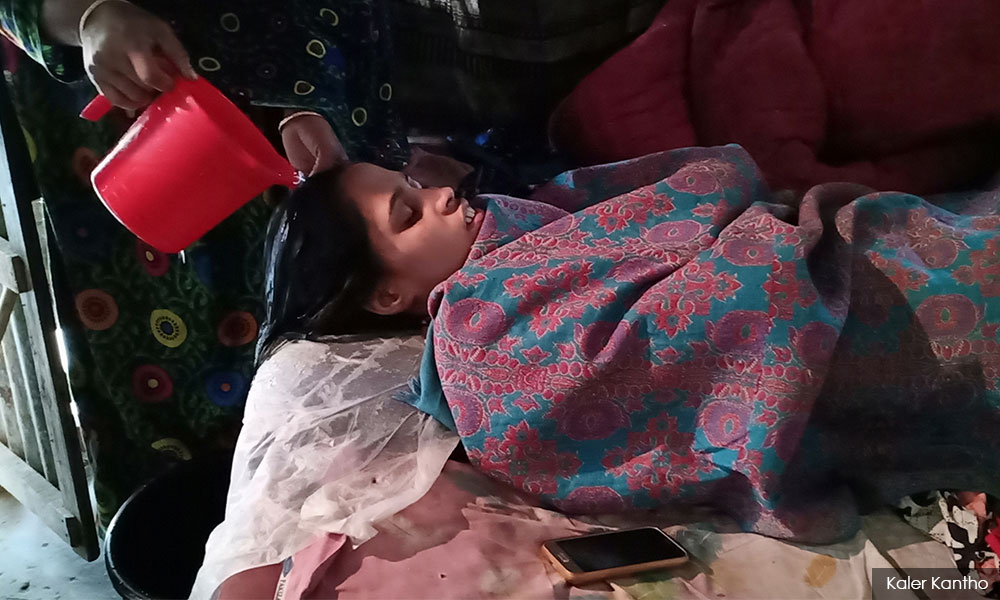
When Kaler Kantho visited the family, Deen’s wife (below) was in tears, shivering under a thin blanket.
She was running a high fever but could not afford medication. All her family could do was to pour water on her head in hopes of bringing down her temperature.
)
But when met, Kamal’s older brother Ajit denied the claims. He said none of the family’s properties belongs to Kamal.
“We had all these properties before he went to Malaysia We have no contact with him either,” he said, refusing to comment further about the claims of fraud.
However, Kamal's nephew, Rubel Das, claimed that Kamal refunded everyone who had paid him for permits.
Anwar Hossain, who lives in the shack in Malaysia, said he has received nothing but misery.
He showed Kaler Kantho a scar on his leg, purportedly from a snake bite he got a few months ago, when he was making his way to the shack one night.
“Thankfully, a few of my friends helped me dress the wound and get medicine, and I got better,” he said.
“This is what fate brings you when you trust liars like Kamal," Anwar added.
TRAPPED AND TRADED
Part 1: Exposed - 'trade' in Bangladeshi workers, slave-like work conditions
Part 2: At RM4,000 a head, Bangladeshi workers juicy prey for brokers
Part 3: Every day two Bangladeshi workers die every day
Part 4: Migrant workers forced to live in jungle shacks after fleeing exploitation
Photo essay: Trapped and traded: The story of exploited Bangladeshi workers


Report this comment
Are you sure you want to delete this comment?
This action cannot be undone.