


Anwar says 'inaccurate interpretation' of Quran, hadith, led to intolerance
PKR president Anwar Ibrahim today noted that "inaccurate interpretations" of certain Quranic verses and hadiths or teachings of Prophet Muhammad SAW had partly contributed to obstacles in interactions between Muslims and non-Muslims.
Responding to questions raised at a regional conference on peaceful co-existence, Anwar said: "I do not in any way believe that Islam reaffirms, condones cruelty (kezaliman) towards any person."
"Which ulama made such interpretations?...
PKR president Anwar Ibrahim today noted that "inaccurate interpretations" of certain Quranic verses and hadiths or teachings of Prophet Muhammad SAW had partly contributed to obstacles in interactions between Muslims and non-Muslims.
Responding to questions raised at a regional conference on peaceful co-existence, Anwar said: "I do not in any way believe that Islam reaffirms, condones cruelty (kezaliman) towards any person."
"Which ulama made such interpretations?
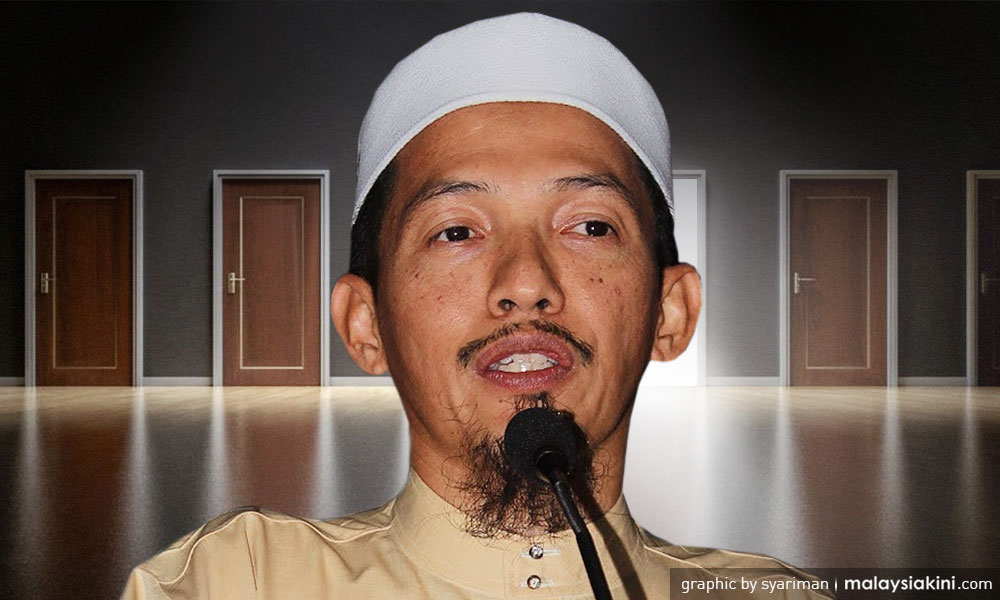
"The ones who (prominent thinker) Syed Hussein Al-Attas labelled as ‘noise makers' (tukang-tukang jerit) with inaccurate interpretations," said Anwar who responded to preacher Wan Ji Wan Hussin.
The Port Dickson MP also stressed that the religion itself is not to be blamed, but rather its teachings must be understood and seen as a strength for the society.
In discussing the topic of peaceful coexistence, Wan Ji noted that interpretations of certain Quranic verses or hadiths had been used to justify certain acts against non-Muslims, for example, to reject the appointment of a non-Muslim leader.
"Sometimes these interpretations could lead to animosity, so how do we adapt?" he questioned.
Asked to explain the prevalence of a siege mentality among the majority, Anwar said there was no reason - in Malaysia's case for its Malay-Muslim society - to feel threatened by the minority groups.
Anwar further laid the blame on irresponsible leaders, whom he claimed were only out to enrich themselves while stoking racial sentiments to gain support from the poor.
"The solution is to make the people realise, preach (to them) on universal humanistic values.
"Because it is impossible for the majority to be under siege, but what are the leaders doing?" he said.
Anwar earlier delivered a keynote address at the two-day conference hosted by think-tank Institut Darul Ehsan, in collaboration with Unisel, Indonesia's Habibie Centre and Japan's Sasakawa Peace Foundation.
Among others, the sessions highlighted challenges faced to foster peaceful co-existence and efforts organised by governments as well as other stakeholders towards overcoming the challenges.
Part of the discussions was framed around related conflicts in the region, including Myanmar's Rakhine state and the southern Philippines.
From Indonesia, NGO Dompet Dhuafa president Imam Rulyawan narrated how the foundation set up to manage zakat payments had benefited not only Muslims, but also non-Muslims through projects such as a "water ambulance" service in remote areas.
Indonesia's Tempo.co editor-in-chief Wahyu Dyatmika, meanwhile, shared the publication's commitment and the media's role to report on related issues, including the recent conflict in Papua.



Are you sure you want to delete this comment?
This action cannot be undone.